
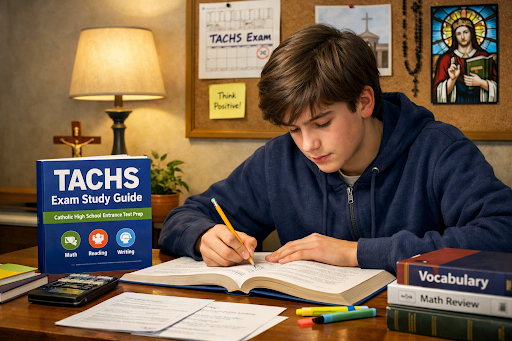
Thousands of eighth graders sit for the TACHS every year with mixed results. Here’s what separates the students who walk in confident from those who don’t.
Every fall, parents across New York start the same stressful search: how do I help my child prepare for Catholic high school admissions? The Test for Admission into Catholic High Schools—better known as the TACHS—is the gateway exam for dozens of Catholic secondary schools in the Archdiocese and Diocese of Brooklyn and Queens. In 2026, competition for seats hasn’t eased up. If anything, it’s tighter.
The TACHS covers four core areas: reading, mathematics, and ability (abstract reasoning). It’s not a test you can cram for the night before. Students who score in the upper percentiles typically start structured preparation at least eight to ten weeks out—and they use quality materials, not just whatever they pull off the first Google result.
Start With a Diagnostic, Not a Guess
One of the biggest mistakes families make is diving straight into content review without first knowing where the gap is. A full-length TACHS practice test taken under timed, exam-like conditions gives you a real picture of which sections need the most attention. Math computation might be strong—but the Ability section often surprises students who’ve never encountered pattern-based reasoning questions before.
The diagnostic approach works because it’s honest. Students stop studying what they already know and start spending time where it counts.
The Ability Section Is Where Points Are Left on the Table
Most prep guides spend 80% of their time on reading and math. That’s understandable—those subjects feel familiar. But the Ability section, which tests nonverbal reasoning and pattern recognition, is frequently where mid-range students lose ground. It rewards practice, not just intelligence. Running through a TACHS exam practice set specifically targeting the Ability section—multiple times—builds the pattern fluency that pays off on test day.
📌 Quick Tip: When reviewing wrong answers, don’t just mark them as missed—try to articulate why the correct answer is correct. That habit alone accelerates learning faster than rereading notes.
What the Official Source Says
The official TACHS Information Center publishes registration windows, test dates, and accepted school lists each year. Always verify registration deadlines directly through the official site—they can shift slightly year to year, and missing the window means waiting another full cycle.
Consistency Beats Intensity
Two weeks of daily 30-minute sessions consistently outperform a single weekend marathon. Spaced practice strengthens long-term retention, and for a timed test like the TACHS, familiarity with the question formats matters just as much as content knowledge. Students who’ve run through multiple Catholic high school entrance exam practice tests report feeling noticeably less anxious walking into the actual exam—not because the test got easier, but because nothing on it felt unfamiliar.
The TACHS is a high-stakes test, but it’s also a very learnable one. Start early, be strategic about what you practice, and use tools that reflect the actual exam format. That combination doesn’t guarantee a perfect score—but it puts your student in the best position to show what they’re capable of.