
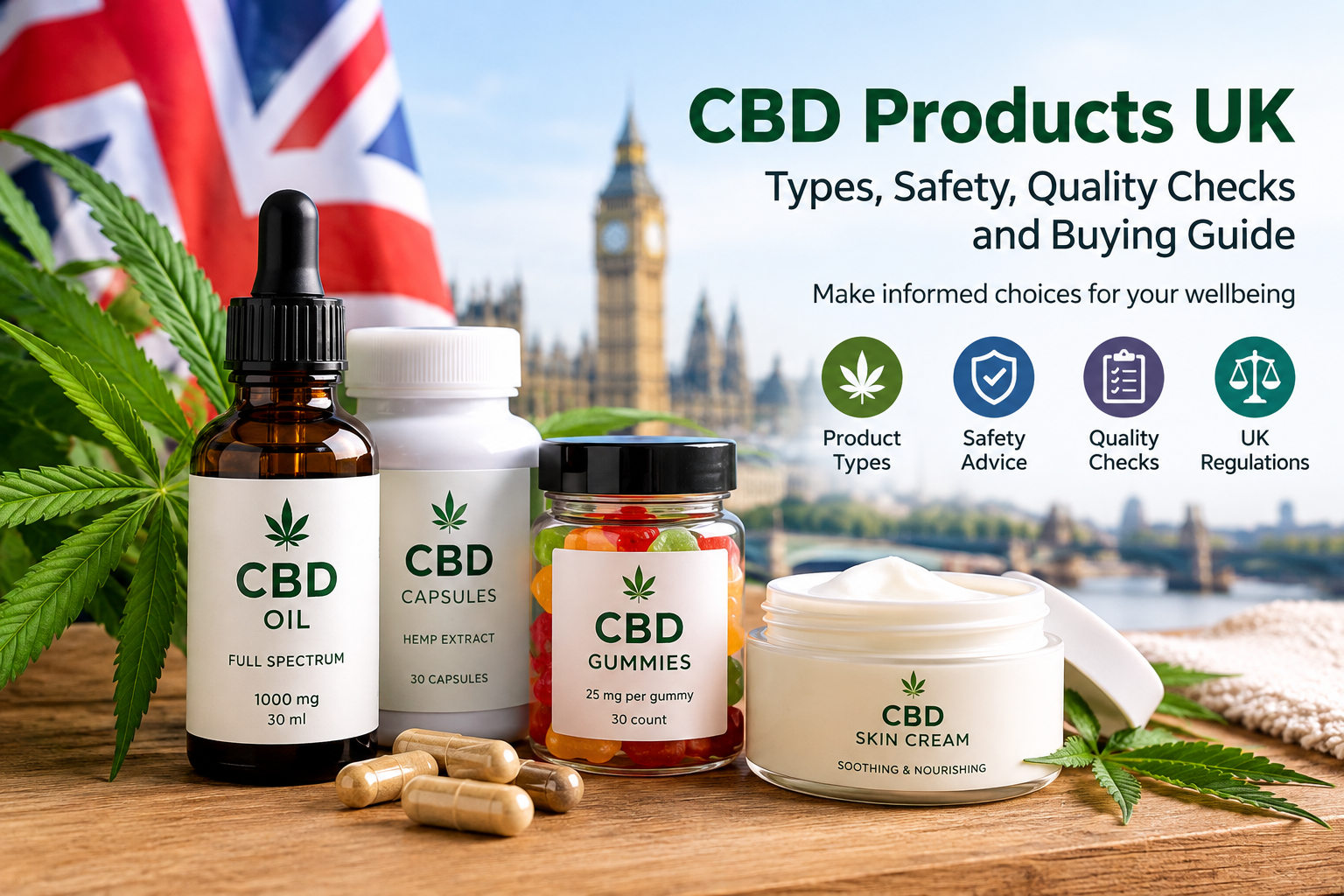
If you are researching CBD products UK, understanding the different product types, checking product quality and knowing the relevant regulations can help you make a more informed decision. CBD products are available in several forms, including oils, capsules, gummies and topical preparations. However, their ingredients, intended uses, safety considerations and legal requirements can differ significantly.
Whether you are comparing CBD oils, exploring topical products or simply learning what cannabidiol is, it is important to look beyond marketing claims. Product labels, reliable laboratory reports and current official guidance provide a more useful starting point than promises of quick results.
This guide explains what CBD products are, what to check before buying, how UK regulations work and which safety considerations consumers should understand.
What Are CBD Products?
CBD stands for cannabidiol, a compound found in the cannabis plant. It is different from THC, the cannabinoid commonly associated with the intoxicating effects of cannabis.
CBD products are made in different formulations and may contain other ingredients or cannabinoids. Their actual composition depends on the product and its manufacturing process.
Common examples include:
- CBD oils and drops
- CBD capsules and tablets
- CBD gummies and other edible products
- CBD creams, balms and topical preparations
- Products containing different combinations of hemp-derived compounds
Not every product has the same legal classification. An oil intended to be swallowed may be subject to different requirements from a cosmetic designed for use on the skin.
For an overview of the regulatory framework, read the UK Government’s official CBD guidance.
Types of CBD Products Available in the UK
1. CBD Oils and Drops
CBD oils are liquid products usually supplied in bottles with droppers. Their labels may state the total amount of CBD in the bottle, the concentration and the suggested serving size.
When comparing oils, check the amount of CBD per serving rather than relying only on a large number displayed on the packaging. Also review the full ingredient list, manufacturer’s details and relevant warnings.
A product with a higher concentration is not automatically better or more suitable for an individual. Personal circumstances, potential medication interactions and official safety advice should all be considered.
2. CBD Capsules
CBD capsules offer a pre-measured format. Some consumers find this convenient because the label may state the amount of CBD in each capsule.
Before buying, review the CBD content per capsule, additional ingredients, allergens and manufacturer information. Check the intended use and applicable regulatory status as well.
Do not assume that a capsule is safer simply because it contains a measured quantity.
3. CBD Gummies and Edible Products
CBD gummies, sweets and drinks are marketed as convenient alternatives to oils. However, products intended to be eaten or swallowed can fall under food regulations.
Check the amount of CBD per serving, the ingredients and the relevant safety information. Remember that consuming more than one CBD product in a day can increase total exposure.
In Great Britain, CBD extracts, isolates and foods containing them are generally treated as novel foods unless an applicable exception has been established. They require the appropriate authorisation before being legally placed on the market.
The Food Standards Agency’s CBD guidance explains the requirements and provides information about products linked to applications.
Important: A product appearing on the FSA’s public list of CBD food-product applications is not the same as receiving full authorisation. The FSA’s consumer guidance on CBD explains what consumers should understand about the list and product status.
4. CBD Creams and Topical Products
Topical CBD products include creams, balms and other preparations designed to be applied to the skin.
Their classification depends on their ingredients, intended purpose and claims. Check the ingredient list, directions, warnings and manufacturer details before use.
Be cautious of products advertised as curing pain, treating skin diseases or providing guaranteed medical benefits. Such claims may bring a product within medicines regulations.
The Advertising Standards Authority’s guidance on CBD-containing products explains why sellers must be careful about medicinal and health claims.
5. Full-Spectrum, Broad-Spectrum and CBD Isolate
These terms describe different CBD formulations.
- CBD isolate: A formulation intended to contain highly purified CBD.
- Broad-spectrum CBD: Generally describes CBD alongside selected additional hemp-derived compounds, with THC removed according to the manufacturer’s specifications.
- Full-spectrum CBD: Generally refers to a formulation containing CBD and other hemp-derived compounds; THC may also be present.
Terminology can vary between manufacturers, so the product description alone is not proof of its contents.
If cannabinoid content is important to you, look for reliable laboratory reports that identify the sample tested and show the relevant results.
How to Choose CBD Products in the UK
Choosing a CBD product should involve more than comparing prices or selecting the strongest advertised formula.
Check the Product Label
Before buying, look for:
- The product name and type
- The amount of CBD per serving, where applicable
- A complete ingredient list
- The manufacturer’s or responsible business’s details
- Batch or lot identification, where applicable
- Directions for use and relevant warnings
- Expiry or best-before information, where relevant
If essential information is missing, unclear or impossible to verify, consider looking for a product with better documentation.
Look for a Certificate of Analysis
A certificate of analysis, often called a COA, is a laboratory report showing the results of tests performed on a sample.
Depending on the product, the report may include measurements of CBD, other cannabinoids, THC and selected contaminants.
A useful report should identify the laboratory, the product or batch tested, the date and the substances measured. A report for a different product or an unidentified sample does not prove what is inside the item you intend to buy.
Independent testing can provide useful evidence, but it does not automatically prove that a product is legally authorised, appropriate for everyone or effective for a medical condition.
Research the Manufacturer
Look for clear business details, transparent ingredient information and accessible customer support. A responsible seller should be able to answer reasonable questions about its product documentation and applicable requirements.
Be cautious if a seller makes extraordinary health promises, refuses to provide basic product information or uses testimonials as its main evidence.
Customer reviews can describe individual experiences, but they cannot establish that a product is safe or effective for everyone.
Compare Products Carefully
When comparing CBD products, consider the full formulation, amount per serving, ingredient quality, available testing information and regulatory status.
A lower price does not necessarily mean better value, and a higher CBD concentration does not necessarily mean better results.
For edible products, also consider the total amount of CBD you could consume from all sources during the day.
Is CBD Legal in the UK?
CBD products do not all follow one simple set of rules. Their legal status depends on their composition, intended use, product category and applicable regulations.
In Great Britain, CBD extracts, isolates and foods containing them are generally classed as novel foods unless an applicable exception applies. The relevant products require authorisation before being legally placed on the market.
The government’s published guidance states that products must also meet other legal requirements, including those relating to labelling, safety and controlled substances. A retailer selling a product does not, by itself, establish that the product complies with every requirement.
Regulatory developments can change. On 19 October 2026, the government published an update concerning proposed recommendations for the first three CBD novel-food applications. The final authorisation decisions remain a separate step. Read the official update on proposed CBD novel-food authorisations for the latest information.
Consumers and businesses should check the current guidance applicable to their location, including any differences affecting Northern Ireland.
Is CBD Safe to Use?
CBD should not be assumed to be risk-free simply because it is derived from a plant or sold as a consumer product.
Safety can depend on the formulation, amount consumed, other ingredients, individual circumstances and possible interactions with medicines.
The UK Food Standards Agency advises healthy adults to limit CBD consumption from food to 10 mg per day. It advises children under 18, people who are pregnant or breastfeeding, people trying to conceive and people taking medication to avoid CBD unless directed otherwise by a healthcare professional.
Read the FSA’s CBD consumer advice for the current recommendations.
CBD may cause adverse effects and interact with medicines. If you take medication, have a medical condition or are unsure whether CBD is appropriate for you, speak with a qualified healthcare professional before using it.
Do not stop prescribed medication or replace medical treatment with CBD based on an online article, testimonial or product advertisement.
Common Mistakes to Avoid When Buying CBD
Believing Every Health Claim
Claims that CBD cures diseases, guarantees better sleep or treats a medical condition should not be accepted without appropriate evidence and regulatory compliance.
For products that are not licensed medicines, medicinal claims can create serious regulatory problems. The ASA’s CBD advertising guidance explains the restrictions that apply to advertising claims.
Assuming Every Product Is THC-Free
The composition of CBD products can vary. If THC content matters to you, check reliable product-specific testing information rather than relying entirely on a marketing label.
Ignoring the Amount Consumed
Using several products containing CBD can increase total exposure. Check the amount per serving and consider the combined amount from all products consumed in a day.
Confusing an Application With Approval
A product linked to a regulatory application has not necessarily received full authorisation. Check the current official status rather than relying on a seller’s claim or an outdated list.
Buying Without Checking the Ingredients
Products may contain carrier oils, flavourings, preservatives or other ingredients. Review the full list, especially if you have allergies or sensitivities.
CBD Products UK: A Pre-Purchase Checklist
Before buying, ask yourself these questions:
- Can I identify the manufacturer or responsible business?
- Is the complete ingredient list available?
- Can I establish the amount of CBD per serving?
- Is relevant laboratory information available for the product or batch?
- Have I checked the current regulatory status for the product category?
- Have I read the safety warnings and considered whether CBD is appropriate for me?
- Am I avoiding unsupported medical claims and unrealistic promises?
- If it is an edible product, have I checked the relevant FSA guidance and daily-intake advice?
If you cannot verify essential information, take time to investigate before purchasing.
Frequently Asked Questions About CBD Products UK
What are CBD products?
CBD products contain cannabidiol, a compound found in the cannabis plant. Common formats include oils, capsules, gummies and topical preparations. Their ingredients, intended uses and regulatory requirements vary.
Are CBD products legal in the UK?
Some CBD products may be marketed legally when they meet all applicable requirements. CBD foods are subject to novel-food rules, so consumers should check current official guidance and product status rather than assuming that every product on sale is compliant.
How can I check CBD product quality?
Review the full ingredient list, amount of CBD per serving, manufacturer details, relevant laboratory reports and regulatory status. Laboratory reports can provide useful evidence but do not replace other checks.
Can CBD products contain THC?
Some formulations may contain THC or other cannabinoids. Actual contents depend on the product and manufacturing process. Review product-specific laboratory information if cannabinoid content is important to you.
Can I use CBD while taking medication?
CBD may interact with medicines. The FSA advises people taking medication to avoid CBD unless under medical direction. Ask a healthcare professional before using it.
What is the recommended daily amount of CBD in the UK?
The FSA advises healthy adults to limit CBD consumption from food to 10 mg per day. This is precautionary consumer guidance, not a personal treatment recommendation. Check the current official advice for further details.
Are CBD oils better than capsules?
Neither format is automatically better. They differ in formulation, ingredients and convenience. Compare product information and consider safety and regulatory requirements instead of assuming that one format is superior.
Can CBD products treat medical conditions?
Do not assume that a CBD food or cosmetic can treat a disease. Medicinal claims must meet the relevant legal and evidential requirements. Discuss health concerns with a qualified healthcare professional.
Final Thoughts
Choosing among CBD products UK requires more than comparing prices, packaging or advertised strength. Consumers should understand the product category, check ingredients and laboratory documentation, review current regulations and take safety advice seriously.
Reliable information matters in a market where formulations differ and marketing claims do not always explain the full picture. Official guidance is a useful starting point for understanding product requirements and consumer recommendations.
The most responsible approach is to verify what a product contains, understand the limits of available evidence and seek professional advice if CBD may not be suitable for you.
Disclaimer:
This article is for general informational purposes only and does not constitute medical or legal advice. Regulations and official guidance can change. Check current authoritative sources before making a purchasing decision.
Also read… Thenighttimes.co.uk