
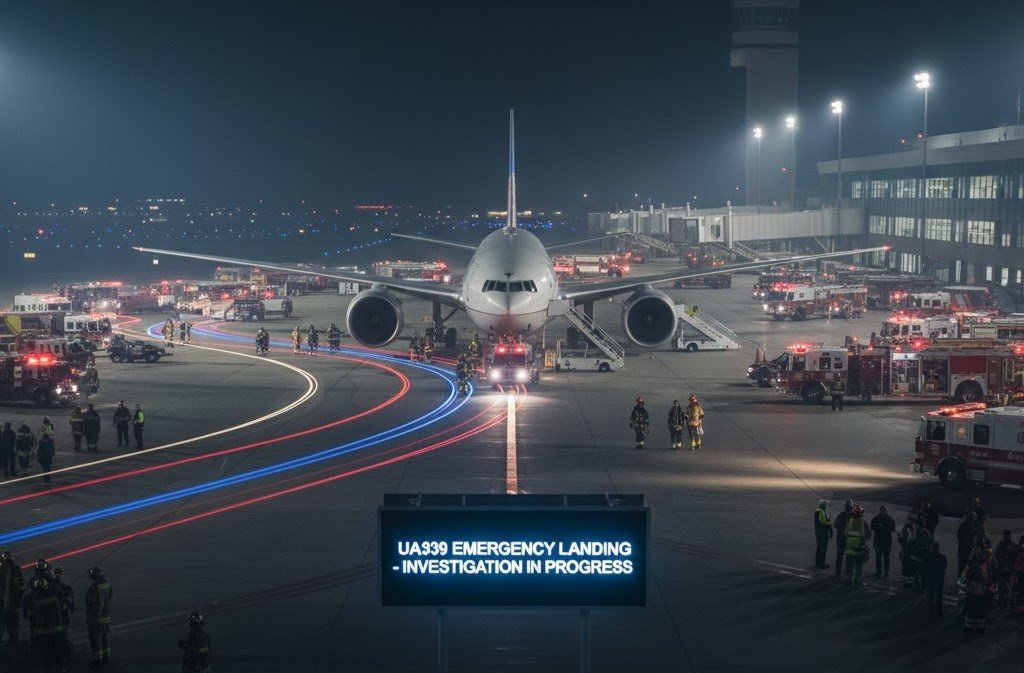
On September 28, 2025, what began as a routine transatlantic journey aboard United Airlines Flight UA939 from London Heathrow (LHR) to San Francisco International Airport (SFO) quickly transformed into a mid-air emergency. Passengers on board a Boeing 777-200ER faced unexpected airframe vibrations that prompted the crew to take decisive action, declaring an emergency and returning safely to London. This incident not only tested the skill and judgment of the flight crew but also highlighted the safety protocols that ensure commercial aviation remains one of the safest forms of travel today.
Timeline of Events on Flight UA939
UA939 departed London Heathrow in the afternoon with 271 passengers and 13 crew members. Less than an hour after takeoff, while cruising over northern England at approximately 31,000 feet, pilots detected unusual vibrations. The origin of these vibrations was unclear, prompting the crew to follow strict safety procedures.
The decision to declare an emergency — the official United Airlines Flight UA939 emergency — enabled priority handling from air traffic control and emergency teams on the ground. The aircraft entered a holding pattern to allow the pilots to assess the situation and consult with airline operations.
Understanding the Cause of the Emergency
The United Airlines Flight UA939 emergency was triggered by significant vibrations affecting the aircraft’s airframe. While the exact source of the vibrations was initially undetermined, safety protocols dictated a cautious approach.
Engine Shutdown and Safety Protocols
After monitoring the vibrations, the flight crew shut down the left-hand engine as a precautionary measure. This is a standard procedure in aviation emergencies to prevent potential escalation of mechanical issues. The aircraft then conducted a controlled fuel dump to reduce landing weight, ensuring a safe approach back to Heathrow.
Crew Response and Professionalism
The flight crew’s response exemplified the importance of training and quick decision-making. Pilots communicated clearly with passengers, explaining the situation while maintaining calm, and coordinated with air traffic control and emergency services. Cabin crew ensured passenger safety and comfort during the holding pattern and eventual diversion.
The ability of the crew to manage this situation effectively prevented any injuries and ensured the safe landing of UA939 — a testament to United Airlines’ commitment to safety and crew preparedness.
Passenger Experience During the UA939 Emergency
Although mid-air emergencies are stressful, passengers on UA939 reported feeling reassured by the professionalism of the crew. Real-time updates from the cockpit and attentive cabin service helped alleviate panic. After landing safely, ground teams assisted passengers with rebooking and accommodations, which are standard procedures following such incidents.
This event highlighted the importance of communication and preparedness in ensuring passenger confidence during unforeseen situations.
Aviation Safety and Regulatory Considerations
Following the United Airlines Flight UA939 emergency, both the airline and regulatory bodies such as the FAA and the UK CAA launched investigations to determine the root cause of the vibrations and to ensure that similar situations are mitigated in the future.
Incidents like UA939 are critical for improving aviation safety standards. Data collected from these events informs maintenance schedules, crew training programs, and operational procedures, making future flights even safer.
Lessons Learned from UA939
The UA939 incident reinforces several key principles of aviation safety:
-
Preparedness Is Key: Flight crews are rigorously trained to handle emergencies, from mechanical anomalies to in-flight medical situations.
-
Communication Matters: Timely updates to passengers reduce panic and improve overall response during emergencies.
-
Maintenance and Inspections Are Vital: Regular inspections ensure that potential airframe or engine issues are identified early.
-
Emergency Procedures Work: Controlled actions such as engine shutdowns and fuel dumps prevent escalation and ensure safe landings.
Impact on Air Travel and Passenger Safety
While incidents like UA939 are rare, they provide a valuable case study for the aviation industry. Airlines can analyze such emergencies to refine procedures, optimize crew training, and enhance passenger safety protocols. For travelers, these events demonstrate that commercial flights are highly regulated and that crews are trained to manage unexpected situations efficiently.
Conclusion
The United Airlines Flight UA939 emergency was a rare but illustrative example of aviation safety in action. From the sudden onset of airframe vibrations to the decisive actions of the flight crew, every step reflected industry standards designed to protect passengers and crew. No injuries occurred, and lessons from the event are now contributing to improvements in safety protocols worldwide. This incident underscores the professionalism of commercial pilots and the reliability of modern aircraft systems, reaffirming passenger confidence in air travel.
5 FAQs About United Airlines Flight UA939 Emergency
1. Why was the emergency declared on UA939?
The flight crew detected unexpected airframe vibrations, prompting the official declaration of an emergency to ensure maximum safety for passengers and crew.
2. Did Flight UA939 land safely?
Yes, the aircraft returned safely to London Heathrow without any injuries reported.
3. What caused the vibrations on UA939?
While the full investigation is ongoing, the vibrations originated from the aircraft’s airframe, leading the crew to shut down one engine as a precaution.
4. How does United Airlines handle passengers after such emergencies?
Passengers are assisted with rebooking, accommodations, and care through established airline protocols.
5. Will this incident affect future flight safety?
Yes, data from UA939 will contribute to maintenance, training, and emergency response procedures, helping prevent similar issues in the future.