12.4 C
New York
Tuesday, March 17, 2026

Buy now

spot_img
Home Blog Page 35

United Airlines Flight UA82 Emergency: Complete Breakdown of What Happened

0

When news broke about the United Airlines Flight UA82 emergency, both frequent flyers and aviation enthusiasts were curious — and a little concerned — about what exactly transpired aboard the New York to Delhi service. While aviation incidents are uncommon, particularly ones involving long‑haul international flights, flight UA82’s unexpected turn of events highlights how well‑trained crews and strict safety protocols work in real time to ensure passenger safety. In this article, we’ll take you through the detailed timeline, what caused the emergency, how the crew managed it, and what it means for passengers and future flights.

What Was United Airlines Flight UA82 Emergency?

The United Airlines Flight UA82 emergency occurred on July 7, 2025, during a scheduled long‑haul flight from Newark Liberty International Airport (EWR) in the United States to Indira Gandhi International Airport (DEL) in New Delhi, India. Shortly after reaching cruising altitude, pilots detected a fault in a crucial aircraft system and made the decision to declare an emergency and return to Newark.

Flight UA82 operates daily as part of United Airlines’ extensive international network, connecting two major global hubs. On that day, the aircraft was a Boeing 787‑9 Dreamliner, a modern wide‑body jet known for its fuel efficiency and advanced systems.

Timeline of the UA82 Event

Below is a structured timeline that helps explain precisely how the United Airlines Flight UA82 emergency unfolded:

Departure and Climb

  • Flight UA82 took off from Newark Liberty International Airport on schedule.

  • Shortly after leaving the airport, the Boeing 787‑9 smoothly ascended to its cruising level over the Gulf of Maine region.

Detection of an Issue

  • Approximately 45 minutes into the flight, while flying over high‑altitude airspace around 33,000 feet, the flight crew received an alert indicating a malfunction in the electronics cooling system.

Emergency Declaration

  • Recognizing the seriousness of an avionics cooling system malfunction, the pilots declared an emergency by activating squawk code 7700, which alerts air traffic control to give priority handling to the flight.

U‑Turn and Return

  • With priority clearance, Flight UA82 disengaged from its planned route toward New Delhi and initiated a controlled turn back toward Newark.

  • Air traffic control coordinated a safe descent and return path to the departure airport.

Safe Landing

  • The aircraft landed safely back at Newark Liberty International Airport around two hours after departure, with no injuries or visible damage reported.

Post‑Flight

  • Once on the ground, UA82 was taken out of service for detailed inspection, and passengers were assisted with rebooking and accommodations.

Technical Cause Behind the Emergency

The heart of the United Airlines Flight UA82 emergency centered on a malfunction in the aircraft’s electronics cooling system. This system is responsible for keeping avionics — the equipment that powers communication, navigation, and flight controls — at safe operating temperatures.

Avionics are critical for maintaining communication with air traffic control and safely navigating over vast stretches of ocean and remote airspace. An overheating or failed cooling system could potentially lead to sudden avionics failure — a risk no airline crew would take lightly.

Because UA82 was headed on one of the longest nonstop routes in commercial aviation, continuing the trip without fully functional avionics posed an unacceptable risk, prompting the decision to turn back.

How the Flight Crew Managed the Situation

Perhaps the most noteworthy aspect of the United Airlines Flight UA82 emergency was how methodically the flight crew handled the incident.

Professional Response

  • Once the warning appeared, pilots and flight officers immediately followed established emergency checklists, coordinating with United Airlines operations and air traffic control.

  • Declaring an emergency allowed the aircraft to receive priority airspace handling, enabling a smooth and swift route back to safe airport grounds.

Passenger Communication

  • Passengers reported calm announcements and well‑executed procedures throughout the descent and landing.

Kilometers above the Atlantic and hours from any major diversion airport, crew decisions reflected strict adherence to aviation safety principles — choosing caution over risk.

Passenger Impact and Airline Response

The United Airlines Flight UA82 emergency had some immediate operational impacts, though none involved injuries:

Passenger Well‑Being

  • Everyone aboard UA82 disembarked safely without any physical harm.

  • United Airlines worked with passengers to rebook flights, provide meal vouchers, lodging where needed, and offer alternative routes to Delhi.

Operational Delay

  • Some flight schedules were affected as aircraft had to be reallocated, and crews were rescheduled. However, company spokespeople emphasized that safety takes precedence over convenience.

Why This Incident Matters

Even though the United Airlines Flight UA82 emergency did not result in injuries or a major accident, the incident holds significance for several reasons:

Safety First

The UA82 diversion reaffirms the aviation industry’s commitment to safety over on‑time performance. In this case, alert systems did their job — and crew training ensured the aircraft returned safely.

Engineering Vigilance

Technical inspections will continue to examine why the electronics cooling system failed, and additional inspections or checks may be implemented fleetwide to prevent repeat events.

Passenger Confidence

Though incidents like this are rare, how an airline responds — transparently and efficiently — affects passenger trust. Early reports show United Airlines kept communication lines open and prioritized passenger needs.

Industry Protocols and Aviation Safety

The United Airlines Flight UA82 emergency highlights broader aspects of commercial aviation safety:

  • Modern aircraft have redundancy systems that allow pilots to manage unexpected faults.

  • Regular training ensures flight crews are prepared for both common and rare situations.

  • Air traffic control and airline operations work together to manage emergencies seamlessly.

These safeguards make air travel one of the safest forms of transportation in the world.

Conclusion

The United Airlines Flight UA82 emergency serves as an important reminder that aviation safety systems — from aircraft engineering to crew training and air traffic protocols — function exactly as intended when faced with unexpected challenges. Though the incident forced the flight to turn back and impacted travel plans momentarily, the crisis was handled with professionalism and resulted in no harm to passengers or crew. United Airlines’ transparent response and comprehensive safety protocols helped bring the situation under control swiftly. In an industry where safety is paramount, incidents like UA82 demonstrate that thorough preparedness and decisive action save lives — even when no injuries occur.

FAQs About United Airlines Flight UA82 Emergency

1. What caused the United Airlines Flight UA82 emergency?
The emergency was triggered by a malfunction in the aircraft’s electronics cooling system, which supports vital avionics operations.

2. Were there any injuries during the UA82 incident?
No. All passengers and crew disembarked safely with no reported injuries.

3. How did the flight crew respond during the emergency?
The crew declared an emergency, communicated with air traffic control, and returned safely to Newark following procedural checklists.

4. Did this emergency affect other flights?
While UA82’s return added logistical challenges, United Airlines assisted passengers and managed scheduling adjustments.

5. What steps are being taken to prevent similar incidents?
Ongoing inspections and investigations aim to determine the root cause of the cooling system malfunction so that preventive maintenance can be enhanced.

United Airlines Flight Declares Mayday: Inside the Emergency That Shook Aviation Fans

0

When news broke that United Airlines flight declares Mayday shortly after takeoff, aviation enthusiasts, travelers, and safety experts flocked to learn more about what transpired. The incident involved a Boeing 787 Dreamliner bound for Munich from the United States, which encountered a critical mechanical issue that forced the pilots to issue an urgent and internationally recognized distress call. This event not only triggered an emergency response from air traffic control but also demonstrated elite flight crew training under pressure.

In this extensive, human‑crafted guide, we’ll unpack the meaning of the mayday declaration, detail the sequence of events, explore aviation safety standards, examine expert insights, and answer common questions surrounding this extraordinary situation.

What Does It Mean When United Airlines Flight Declares Mayday?

At its core, when United Airlines flight declares Mayday, it means the flight crew has encountered a grave and imminent danger requiring immediate and prioritized assistance. The word “Mayday” – repeated three times – is an internationally recognized distress signal used in aviation and maritime radio communications to alert controllers and other nearby flights to an emergency situation.

In the case of United Airlines Flight UA108, the pilots observed a critical left engine failure shortly after departure and followed standard emergency protocol by declaring a mayday call to air traffic control. This alerted all parties that the aircraft required the highest priority for immediate action and handling.

The Timeline: What Happened on United Airlines Flight Declares Mayday

Here’s a step‑by‑step look at how the event unfolded:

1. Departure and Early Climb

United Airlines Flight UA108 departed from Washington Dulles International Airport en route to Munich, Germany with 219 passengers and 11 crew members onboard.

2. Mechanical Failure at Altitude

Shortly after takeoff, near approximately 5,000 feet, the flight crew detected a failure in the left engine. Recognizing the severity, they promptly informed air traffic control with precise communication: “Engine failure, left engine, United 108 declaring an emergency. Mayday, mayday, mayday.”

3. Air Traffic Control Response

Controllers immediately provided assistance, cleared the airspace, and confirmed a safe path for the aircraft’s return. With no other traffic ahead, they guided the aircraft back towards Dulles.

4. Fuel Management and Safe Return

Because the aircraft was initially too heavy due to its full fuel load for the transatlantic flight, pilots executed standard procedures by flying in a holding pattern to burn or dump fuel to reach a safe landing weight. After about half an hour, the flight safely landed back at Dulles.

5. Post‑Landing Actions

Upon landing, emergency responders from the airport inspected the aircraft, and all passengers and crew deplaned safely with no reported injuries. United Airlines canceled subsequent itinerary segments and quickly arranged alternate travel plans.

Aviation Safety Protocols: Why Training Matters

When United Airlines flight declares Mayday, passengers often experience understandable concern—but it’s important to recognize that Mayday is a tool pilots and controllers are extensively trained to use in emergencies.

Pilot Training and Preparedness

Commercial pilots regularly undergo simulator training that includes rare but critical events like engine failures, electrical malfunctions, and other in‑flight emergencies. These drills emphasize communication, aircraft control, and coordination with air traffic control.

Role of Air Traffic Control

Once a mayday call is issued, air traffic controllers give the aircraft maximum priority. This typically involves clearing nearby traffic, providing immediate routing, and coordinating emergency services if needed.

Aircraft Capabilities

Modern commercial aircraft, especially twin‑engine jets like the Boeing 787, are certified to continue flying safely on one engine and are designed with redundancy to handle such failures.

Expert Insight: What Aviation Professionals Say

Aviation experts have emphasized that while mayday calls capture public attention, they are not necessarily reflective of systemic safety failures. Rather, they represent situations requiring priority handling and urgency.

John Cox, an aviation safety expert and retired commercial pilot, noted that the procedure for declaring mayday during an engine failure is precisely standardized. It informs all those involved that urgent handling and priority coordination are needed to ensure the safest possible outcome.

Safety Data: How Often Do Emergencies Occur?

Statistics from aviation authorities indicate that serious emergencies are extremely rare relative to the number of flights operating daily worldwide. While exact numbers vary, they consistently show that modern aviation remains among the safest forms of transportation.

For example, turbine engine failures occur at an average interval of tens of thousands of flight hours. Such incidents are often managed routinely by trained crews and rarely result in harm to passengers or crew.

Passenger Experience: What It’s Like

Passengers aboard UA108 described the moment as unsettling, given the sudden radio communications and aircraft maneuvers. Still, reports indicate that the cabin crew maintained professionalism, communicated clearly, and ensured everyone’s safety throughout the event.

Importantly, there were no injuries reported, and the emergency was handled efficiently within aviation safety standards.

Conclusion: What We Can Learn from United Airlines Flight Declares Mayday

When United Airlines flight declares Mayday, it’s a stark reminder of both the inherent risks in flight operations and the remarkable strength of aviation safety systems. The ability of a flight crew to expertly diagnose a mechanical issue, apply emergency procedures, communicate effectively with air traffic control, and ensure a safe landing highlights the levels of training and preparedness that make commercial flight one of the safest modes of transport.

Rather than inciting fear, this event should reassure the public about the rigorous safety protocols airlines employ and the professionalism with which they respond to unexpected challenges.

Frequently Asked Questions (FAQs)

1. What does it mean when United Airlines flight declares Mayday?
When a flight declares Mayday, it signals an imminent emergency requiring immediate and prioritized assistance. It’s a standardized distress call used internationally in aviation.

2. Why did the United Airlines flight declare Mayday on this occasion?
The flight declared Mayday due to a left engine failure shortly after takeoff, prompting an emergency return to the departure airport.

3. Are mayday calls common in commercial aviation?
Mayday calls are rare but occur when pilots encounter serious issues. They are handled by trained crews and controllers following strict procedures.

4. Did any passengers get injured during the incident?
No — all passengers and crew disembarked safely following the emergency landing.

5. Is flying safe after such an emergency?
Yes. Aircraft and airlines investigate the cause, perform necessary maintenance, and ensure the aircraft is fit before returning to service. Such protocols are part of aviation safety standards.

United Airlines Flight UA939 Emergency: An In-Depth Overview of the Incident and Its Implications

0

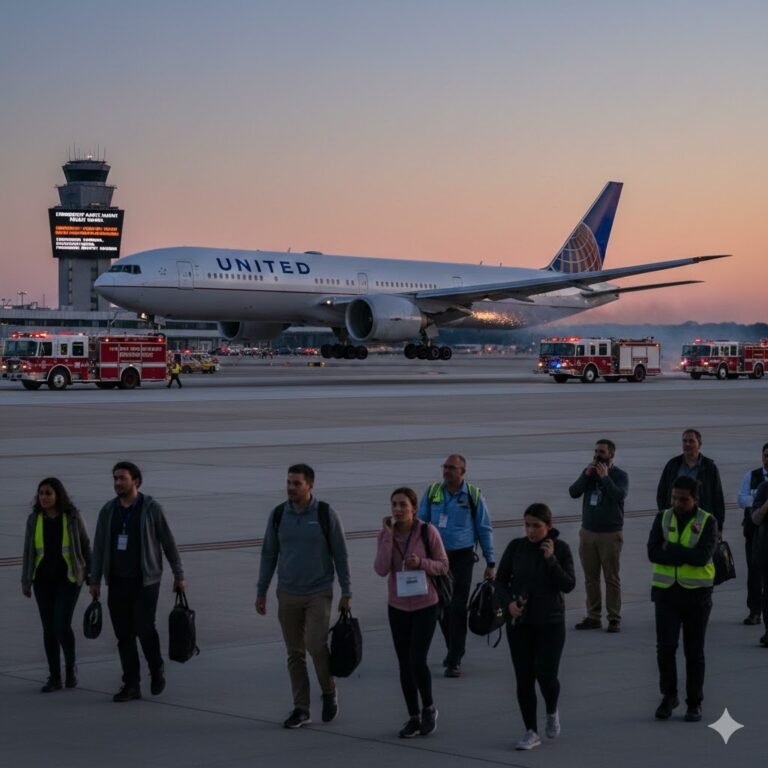
On September 28, 2025, what began as a routine transatlantic journey aboard United Airlines Flight UA939 from London Heathrow (LHR) to San Francisco International Airport (SFO) quickly transformed into a mid-air emergency. Passengers on board a Boeing 777-200ER faced unexpected airframe vibrations that prompted the crew to take decisive action, declaring an emergency and returning safely to London. This incident not only tested the skill and judgment of the flight crew but also highlighted the safety protocols that ensure commercial aviation remains one of the safest forms of travel today.

Timeline of Events on Flight UA939

UA939 departed London Heathrow in the afternoon with 271 passengers and 13 crew members. Less than an hour after takeoff, while cruising over northern England at approximately 31,000 feet, pilots detected unusual vibrations. The origin of these vibrations was unclear, prompting the crew to follow strict safety procedures.

The decision to declare an emergency — the official United Airlines Flight UA939 emergency — enabled priority handling from air traffic control and emergency teams on the ground. The aircraft entered a holding pattern to allow the pilots to assess the situation and consult with airline operations.

Understanding the Cause of the Emergency

The United Airlines Flight UA939 emergency was triggered by significant vibrations affecting the aircraft’s airframe. While the exact source of the vibrations was initially undetermined, safety protocols dictated a cautious approach.

Engine Shutdown and Safety Protocols

After monitoring the vibrations, the flight crew shut down the left-hand engine as a precautionary measure. This is a standard procedure in aviation emergencies to prevent potential escalation of mechanical issues. The aircraft then conducted a controlled fuel dump to reduce landing weight, ensuring a safe approach back to Heathrow.

Crew Response and Professionalism

The flight crew’s response exemplified the importance of training and quick decision-making. Pilots communicated clearly with passengers, explaining the situation while maintaining calm, and coordinated with air traffic control and emergency services. Cabin crew ensured passenger safety and comfort during the holding pattern and eventual diversion.

The ability of the crew to manage this situation effectively prevented any injuries and ensured the safe landing of UA939 — a testament to United Airlines’ commitment to safety and crew preparedness.

Passenger Experience During the UA939 Emergency

Although mid-air emergencies are stressful, passengers on UA939 reported feeling reassured by the professionalism of the crew. Real-time updates from the cockpit and attentive cabin service helped alleviate panic. After landing safely, ground teams assisted passengers with rebooking and accommodations, which are standard procedures following such incidents.

This event highlighted the importance of communication and preparedness in ensuring passenger confidence during unforeseen situations.

Aviation Safety and Regulatory Considerations

Following the United Airlines Flight UA939 emergency, both the airline and regulatory bodies such as the FAA and the UK CAA launched investigations to determine the root cause of the vibrations and to ensure that similar situations are mitigated in the future.

Incidents like UA939 are critical for improving aviation safety standards. Data collected from these events informs maintenance schedules, crew training programs, and operational procedures, making future flights even safer.

Lessons Learned from UA939

The UA939 incident reinforces several key principles of aviation safety:

  1. Preparedness Is Key: Flight crews are rigorously trained to handle emergencies, from mechanical anomalies to in-flight medical situations.

  2. Communication Matters: Timely updates to passengers reduce panic and improve overall response during emergencies.

  3. Maintenance and Inspections Are Vital: Regular inspections ensure that potential airframe or engine issues are identified early.

  4. Emergency Procedures Work: Controlled actions such as engine shutdowns and fuel dumps prevent escalation and ensure safe landings.

Impact on Air Travel and Passenger Safety

While incidents like UA939 are rare, they provide a valuable case study for the aviation industry. Airlines can analyze such emergencies to refine procedures, optimize crew training, and enhance passenger safety protocols. For travelers, these events demonstrate that commercial flights are highly regulated and that crews are trained to manage unexpected situations efficiently.

Conclusion

The United Airlines Flight UA939 emergency was a rare but illustrative example of aviation safety in action. From the sudden onset of airframe vibrations to the decisive actions of the flight crew, every step reflected industry standards designed to protect passengers and crew. No injuries occurred, and lessons from the event are now contributing to improvements in safety protocols worldwide. This incident underscores the professionalism of commercial pilots and the reliability of modern aircraft systems, reaffirming passenger confidence in air travel.

5 FAQs About United Airlines Flight UA939 Emergency

1. Why was the emergency declared on UA939?
The flight crew detected unexpected airframe vibrations, prompting the official declaration of an emergency to ensure maximum safety for passengers and crew.

2. Did Flight UA939 land safely?
Yes, the aircraft returned safely to London Heathrow without any injuries reported.

3. What caused the vibrations on UA939?
While the full investigation is ongoing, the vibrations originated from the aircraft’s airframe, leading the crew to shut down one engine as a precaution.

4. How does United Airlines handle passengers after such emergencies?
Passengers are assisted with rebooking, accommodations, and care through established airline protocols.

5. Will this incident affect future flight safety?
Yes, data from UA939 will contribute to maintenance, training, and emergency response procedures, helping prevent similar issues in the future.

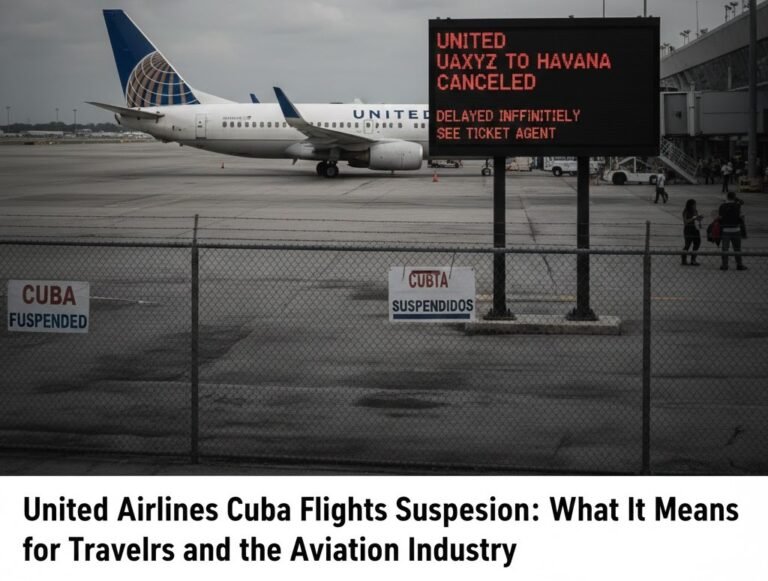
United Airlines Cuba Flights Suspension: What It Means for Travelers and the Aviation Industry

0

Introduction: United Airlines Cuba Flights Suspension and Its Global Impact

The United Airlines Cuba flights suspension has emerged as a major development in international travel and aviation for 2025 and beyond. This significant shift in service — particularly the airline’s decision to halt flights between Houston and Havana — reflects broader political, economic, and demand‑driven forces that have reshaped air travel to Cuba. In this article, we will explore the reasons behind this suspension, its implications for travelers, and what may lie ahead for this historically important air route between the United States and Cuba.

1. Overview of United Airlines Cuba Flights Suspension

In July 2025, United Airlines officially announced the United Airlines Cuba flights suspension for its Houston (IAH) to Havana (HAV) route, effective September 2, 2025. This marked the end of the airline’s only direct nonstop service between Texas and Cuba, a route that had operated daily flights using Boeing 737‑800 aircraft.

Why the Suspension Was Announced

The airline cited two core reasons for the decision:

  • Seasonal Demand Patterns: The carrier explained that passenger demand to Havana was highly seasonal, dropping sharply during the winter months.

  • Tightened Travel Policies: New travel restrictions and regulatory changes in U.S. policy made it difficult for the route to remain financially sustainable.

United Airlines requested that the U.S. Department of Transportation (DOT) waive dormancy requirements so it could retain its rights to the route and possibly restart service later, such as during the summer travel season of 2026.

2. A Closer Look at the Political and Regulatory Environment

The United Airlines Cuba flights suspension cannot be fully understood without examining the political and regulatory backdrop shaping U.S.–Cuba travel.

U.S. Travel Restrictions to Cuba

For decades, U.S. travel to Cuba has been subject to regulatory limitations. While previous administrations had taken steps toward easing travel restrictions, recent policy changes reversed much of that progress. In mid‑2025, the U.S. government reinstated tougher visa requirements and stricter enforcement of travel prohibitions, especially regarding tourism.

Under current rules, U.S. citizens are only allowed to fly to Cuba for specific approved purposes — such as family visits, educational programs, or humanitarian projects — and not for general tourism.

Impact of Diplomatic Shifts

The regulatory environment affects how airlines operate international routes. With uncertainty surrounding visa access and approved travel categories, carriers like United face challenges in forecasting traveler demand and maintaining profitable schedules.

3. How Suspension Affects U.S.–Cuba Connectivity

With the implementation of the United Airlines Cuba flights suspension, the U.S.–Cuba air travel landscape has changed significantly.

Reduced Accessibility for Travelers

Until this suspension, United offered one of the few direct services from a non‑Florida hub to Cuba — connecting passengers from Texas and neighboring states to Havana. Without this route:

  • Travelers from the wider U.S. region now must connect through hubs in Florida like Miami or Tampa if they want to fly to Cuba.

  • Direct access via a major airline outside Florida has disappeared, reducing options and potentially increasing travel time and cost.

Altered Market Share Among U.S. Airlines

With United’s withdrawal from this direct service, carriers like American Airlines, Delta Air Lines, and Southwest have absorbed a larger share of flights to Cuban cities, primarily from Florida airports.

American Airlines now leads with multiple weekly flights to destinations like Havana, Santiago de Cuba, and others.

4. Tourism and Economic Consequences for Cuba

The United Airlines Cuba flights suspension has not only travel logistics implications — it also affects Cuban tourism and the island’s economy.

Reduction in American Tourist Arrivals

American tourists make up a significant portion of international visitors to Cuba, especially in Havana and other key destinations. With fewer direct routes, including United’s exit from the Houston connection:

  • Fewer travelers may choose Cuba due to reduced convenience.

  • Local hotels, restaurants, attractions, and tour operators may see declines in revenue.

  • Small‑business tourism providers, which depend on consistent patient inflows, could experience hardship.

Cuba’s tourism sector has long been a major foreign‑exchange earner for the nation. The loss of even one route — particularly from a large U.S. city — represents a setback for recovery efforts since the pandemic downturn and ongoing economic challenges.

Potential Long‑Term Shift in Tourism Trends

Reduced connectivity may accelerate travel redirection toward other Caribbean nations like the Dominican Republic, Jamaica, and the Bahamas, which now appear more accessible for U.S. travelers.

5. Operational and Business Impact on United Airlines

For United Airlines itself, the decision was driven by business realities, but it carries operational and reputational effects.

Route Profitability and Demand Evaluation

Airlines regularly adjust their route networks based on profitability, seasonal travel patterns, and competitive pressures. United’s own analysis suggested that maintaining flights to Havana during the low season was not financially sustainable.

By suspending service during these periods — while retaining rights to resume — United can better allocate aircraft and resources to more profitable or growing markets.

Strategic Reallocation of Aircraft and Schedules

United has been expanding other parts of its network, including new intercontinental flights and increased domestic services. Redirecting capacity away from low‑demand routes helps improve financial performance and respond to customer demand trends.

6. What Travelers Should Know About Future Flights to Cuba

The United Airlines Cuba flights suspension does not necessarily mean that air travel between the U.S. and Cuba will halt permanently. Here’s what passengers should consider:

Possibility of Seasonal Return

United has signaled that it may resume flights when demand improves — for example, in the 2026 summer travel season — subject to regulatory and economic conditions.

Alternative Airlines and Connections

Travelers can still fly to Cuba through carriers like American Airlines, Delta Air Lines, and Southwest, whose services continue from Florida. Many travelers from outside Florida connect via these hubs.

Stay Informed on Policy Updates

Because travel categories and regulations can significantly influence air service, passengers planning trips to Cuba should monitor updates from both the U.S. government and carriers.

7. Broader Industry Implications

The United Airlines Cuba flights suspension reflects a broader aviation trend: airlines optimizing networks based on policy shifts and real demand, rather than operating services based solely on historical routes.

Regulatory Changes Influence Scheduling

As national policies affect international travel, carriers must evaluate whether routes remain viable. This often results in temporary suspensions or cancellations when regulations tighten.

Competition and Market Dynamics

Airlines continue to compete for limited international service opportunities. Carriers operating multiple daily flights from Florida benefit from existing infrastructure and larger Cuban diaspora passenger volumes.

United’s removal from the Houston‑Havana market allows other airlines to capitalize on demand momentum in key cities.

Conclusion: The Future Beyond United Airlines Cuba Flights Suspension

The United Airlines Cuba flights suspension represents a pivotal event in aviation connectivity between the United States and Cuba. Driven by a mix of seasonal demand fluctuations, tightening U.S. travel regulations, and shifting airline economics, this decision has ramified effects on travelers, tourism stakeholders, and airline strategy models. While the suspension reduces direct access from Texas to Cuba, it signals how geopolitical and market forces continue to reshape global air travel.

Travelers, tourism professionals, and industry watchers should remain attentive to future announcements — both from United Airlines and U.S. policymakers — as the landscape evolves. With potential for resumed seasonal flights and alternative services from other carriers, Cuba still remains accessible, though under a changed framework of connectivity.

FAQs: United Airlines Cuba Flights Suspension

1. Why did United Airlines suspend flights to Cuba?
United Airlines cited low seasonal demand and new U.S. travel restrictions as key reasons behind the Cuba flights suspension. Regulatory complexities and fluctuating passenger interest made the route less viable.

2. When did the suspension take effect?
The suspension took effect on September 2, 2025, with the last flights operating on September 1, 2025.

3. Will United Airlines resume flights to Cuba in the future?
United Airlines has signaled the possibility of resuming service in future high‑demand seasons, particularly summer 2026, though this depends on demand and regulatory conditions.

4. Are there alternative flights to Cuba from the U.S.?
Yes — carriers like American Airlines, Delta Air Lines, and Southwest still operate flights to Cuba primarily from Florida airports such as Miami and Tampa.

5. How does this suspension affect tourism in Cuba?
The suspension reduces direct access for travelers, potentially lowering American tourist arrivals and impacting local tourism sectors dependent on international visitors.

United Airlines Flight Changes August 12 — What Travelers Need to Know About the Major Updates

0

Introduction: Understanding United Airlines Flight Changes August 12

On August 12, United Airlines announced a series of important operational updates, enhancements, and adjustments affecting its services and passenger experience. These United Airlines flight changes August 12 are part of a broader strategy to improve customer satisfaction, address service disruptions earlier in the summer, and introduce innovative offerings across the network. Whether you’re a frequent flyer, planning your next trip, or simply staying informed, this article breaks down all the key information you need to know in clear, up‑to‑date detail.

What Were the United Airlines Flight Changes August 12?

Enhanced Inflight Entertainment and Passenger Experience

One of the most talked‑about aspects of the United Airlines flight changes August 12 was the introduction of enhanced inflight entertainment options. On that date, United announced a new partnership to bring Apple TV+ content free of charge on select flights. This means passengers could stream full seasons of popular shows directly on seatback screens or via the United app without additional costs.

These changes also signaled a broader campaign by the airline to upgrade onboard experiences, including:

  • Installation of larger, high‑definition screens.

  • Bluetooth‑enabled personal entertainment systems.

  • Expanded content libraries with major networks and streaming partners.

Expanded Route Network and Flight Capacity

Though not tied exclusively to August 12, the period around this date saw United expanding service across its domestic and international networks. For example, the airline added thousands of flights throughout August, increasing connectivity to popular destinations and resuming routes that had been paused earlier in the year.

This expansion was intended to accommodate rising travel demand post‑pandemic, with particular emphasis on:

  • More flights between U.S. hubs like Chicago, Newark, and Denver.

  • Resumption of service to seasonal destinations, including parts of Europe and Hawaii.

  • Increased frequency on popular long‑haul routes.

These adjustments represent key components of the United Airlines flight changes August 12 narrative, even if some details rolled out across the broader month.

Travel Waivers Due to Weather and Operational Factors

Another critical component of the United Airlines flight changes August 12 was the implementation of travel waivers for passengers whose itineraries were affected by weather disruptions or other external factors.

For example:

  • Travelers to or from cities impacted by typhoon conditions in Taiwan were permitted to reschedule flights without fees, provided new flights were booked within specific dates and conditions.

  • A Chicago thunderstorms waiver allowed passengers with flights on or near August 12 to make voluntary changes as weather threats developed.

These waivers offered flexibility for travelers facing unexpected obstacles — an essential part of United’s operational responses during that period.

Operational Interruptions and Disruptions

While the United Airlines flight changes August 12 included positive updates and customer enhancements, they also came on the heels of one of the most significant operational disruptions the airline had faced in recent years.

Just days before August 12, United experienced a major systems outage affecting its legacy Unimatic software. This glitch halted flight departures and led to widespread delays and cancellations across the U.S. network.

Why It Matters

  • Delays and cancellations: Hundreds of flights were delayed, with some cancelations reported as systems slowly recovered.

  • Operational complexity: Airlines rely heavily on digital infrastructure — when key systems fail, the effects ripple through scheduling, weight calculations, departure clearances, and more.

  • Customer impact: Many passengers had their travel plans altered unexpectedly, prompting United to offer rebooking support and travel waivers.

While these events didn’t directly constitute “changes” implemented on August 12, they set the context for why the airline was emphasizing communication improvements and customer accommodations around that timeframe.

How United Communicated These Changes to Passengers

Effective communication was vital for relaying the United Airlines flight changes August 12 to passengers and travel partners. To ensure travelers were aware of shifts affecting their trip plans, United used:

  • Mobile app notifications: Real‑time alerts including flight status changes, gate updates, and waiver eligibility.

  • Email and SMS messages: Personalized notifications for customers with reservations impacted by delays or route adjustments.

  • Airport signage and gate agents: On‑site support for rebooking or navigating changes at over 200 U.S. and international airports.

By emphasizing proactive notifications, United hoped to minimize confusion and help passengers manage their itineraries smoothly.

What Travelers Should Know Now

Before Your Flight

If you’re booked on a United flight:

  • Check the United mobile app or website frequently: Flight schedules can shift due to weather, staffing, or operational factors.

  • Review travel waivers: If your trip falls around dates with known weather events or regional disturbances, you may be eligible to change flights without penalty.

During Your Flight

Thanks to the updates around the United Airlines flight changes August 12, many flights now offer:

  • Improved entertainment systems and free streaming options.

  • More flight options due to expanded schedules.

  • Customer support tools through digital platforms.

After Your Flight

If your flight was disrupted:

  • Contact United’s customer care for support.

  • Use the app for refund or rebooking processing.

  • Explore loyalty program enhancements that may offer additional flexibility or benefits.

Tips to Navigate United Flight Changes Smoothly

Here are some practical suggestions for any traveler navigating the United Airlines flight changes August 12 or similar service updates:

  1. Enable push notifications on the United app: This ensures you’re updated instantly on any changes.

  2. Know your waiver options: Weather and other external factors often trigger no‑fee changes that can save travelers money and stress.

  3. Arrive early at the airport: Adjusted schedules might affect check‑in and security wait times.

  4. Check terminal and gate information frequently: Flights may shift gates or terminals due to operational demands.

  5. Keep travel documents ready and up to date: Delays and changes sometimes require quick adjustments at security or immigration checkpoints.

The Broader Impact of These Changes

For Business Travelers

Business travelers benefit from:

  • More schedule flexibility due to increased flights.

  • Improved in‑flight connectivity and entertainment options for productivity.

  • Better communication tools to adjust travel plans quickly.

For Leisure Travelers

Leisure travelers saw expanded route offerings, especially to vacation and destination cities. Waivers also made it easier to shift travel dates without financial penalties.

For Airport Operations

Airports collaborating with United had to adapt to updated schedules, expanded flight counts, and variations in peak congestion periods as part of the broader United Airlines flight changes August 12 timeline.

Conclusion: United Airlines Flight Changes August 12 and What It Means for You

The United Airlines flight changes August 12 represented a significant moment in the airline’s ongoing efforts to enhance customer experience, expand its service offerings, and adapt to operational challenges. From new inflight entertainment options tied to major streaming partnerships to flexible travel waivers for weather and disruptions, these changes affected travelers around the world.

While United faced challenges with system outages earlier in the month, the adjustments made on or around August 12 show the airline’s focus on recovery, resilience, and customer‑centric improvements. Whether you fly for business or pleasure, being informed about these changes empowers you to plan smarter, adapt quickly, and enjoy a smoother travel journey.

FAQs: United Airlines Flight Changes August 12

1. What exactly were the United Airlines flight changes August 12?
United Airlines flight changes August 12 included enhanced inflight entertainment with Apple TV+ integration, expanded flight schedules, and travel waivers for weather impacts around mid‑August.

2. Did these changes affect flight schedules?
Yes — alongside entertainment upgrades, United expanded many routes and flight frequencies in August, affecting how schedules operate around the mid‑month peak travel period.

3. Did United offer travel waivers for flights on August 12?
Yes — travel waivers were issued for weather and other external factors, allowing passengers to adjust plans without penalties within specified dates.

4. Were there any major disruptions near August 12?
Yes — a significant systems outage earlier that week caused widespread delays and cancellations, prompting operational responses that affected travel around that time.

5. How can passengers stay informed about future flight changes?
Passengers should enable notifications on the United mobile app, sign up for email alerts, and check airline and airport updates regularly to stay ahead of any future changes.

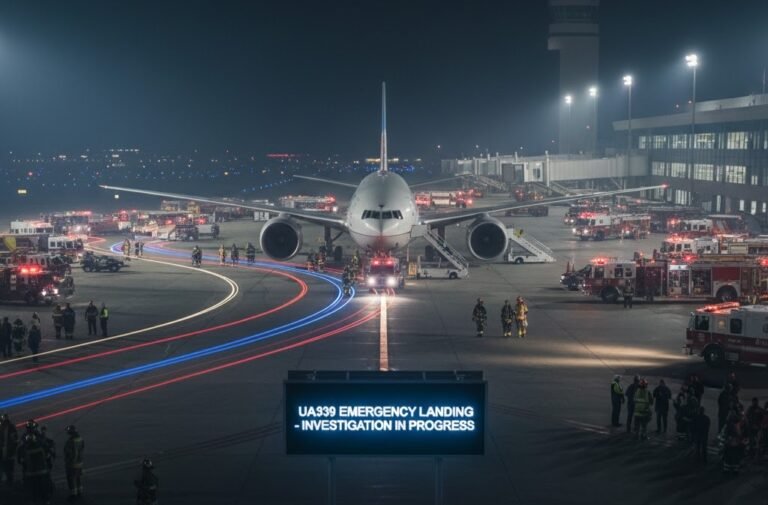
United Airlines Flight Emergency Landing: Causes, Procedures, and Passenger Safety

0

Introduction

Air travel is considered one of the safest modes of transportation. However, unforeseen circumstances can sometimes require pilots to perform an emergency landing. A United Airlines flight emergency landing can occur due to technical issues, medical emergencies, or severe weather. Understanding these situations helps passengers stay informed, calm, and prepared.

In this article, we explore the causes, protocols, and passenger experiences during a United Airlines flight emergency landing, emphasizing safety measures and airline procedures.

What is a United Airlines Flight Emergency Landing?

A flight emergency landing is when a plane lands unexpectedly due to safety concerns. United Airlines has strict protocols in place to ensure passenger safety during such situations. Emergency landings can be categorized into:

  • Planned emergency landings: The crew receives information about an issue and prepares the plane for a safe landing.

  • Immediate emergency landings: Urgent, unforeseen situations that require an instant landing, often at the nearest airport.

Common Causes of United Airlines Flight Emergency Landings

Several factors can trigger a United Airlines flight emergency landing. These include:

1. Mechanical Failures

Technical issues are a leading cause of emergency landings. Engine malfunctions, hydraulic system failures, or landing gear problems require immediate attention.

2. Medical Emergencies

If a passenger experiences a severe medical condition, the crew may request an emergency landing to provide timely medical care.

3. Severe Weather Conditions

Sudden storms, turbulence, or low visibility can force pilots to divert to alternate airports for safety.

4. Security Threats

Any onboard security threat, including unruly passengers or potential hijacking, necessitates a safe and swift landing.

United Airlines Emergency Landing Procedures

United Airlines maintains a detailed set of procedures to handle emergencies efficiently:

1. Pilot Protocols

Pilots follow a strict checklist to evaluate the situation, communicate with air traffic control, and select the safest landing location.

2. Cabin Crew Actions

Flight attendants prepare passengers by providing instructions, securing the cabin, and assisting with emergency equipment.

3. Passenger Safety Measures

Passengers are instructed to adopt emergency positions, fasten seat belts, and follow crew instructions closely. Awareness of these steps reduces panic and ensures smoother operations.

Notable United Airlines Flight Emergency Landing Cases

Over the years, several incidents have highlighted United Airlines’ commitment to safety:

  • Case 1: Engine failure mid-flight led to a safe landing at a nearby airport, with all passengers unharmed.

  • Case 2: A medical emergency prompted an emergency diversion, allowing timely medical attention and preventing serious complications.

  • Case 3: Severe turbulence forced a flight to land early, showcasing the airline’s rapid response to weather threats.

Safety Measures During Emergency Landings

United Airlines prioritizes safety above all. Key safety measures include:

  • Pre-flight checks: Comprehensive inspection of aircraft systems.

  • Crew training: Regular emergency drills for pilots and flight attendants.

  • Communication systems: Constant coordination with air traffic control and emergency services.

  • Passenger briefings: Instructions on seatbelt fastening, emergency exits, and life vests.

Passenger Experience During an Emergency Landing

Passengers often experience anxiety during an emergency landing. United Airlines ensures transparency and calm communication:

  • Cabin announcements explain the situation.

  • Flight attendants provide reassurance and guidance.

  • Passengers receive updates on landing procedures and medical assistance if needed.

What Passengers Should Know

  • Remain calm and follow instructions.

  • Locate nearest exits upon boarding.

  • Understand emergency positions (brace position, seatbelt usage).

  • Keep emergency contact information accessible.

  • Trust the trained crew to handle the situation.

Post-Emergency Landing Procedures

After landing, United Airlines follows protocols to ensure passenger welfare:

  1. Medical assistance: Onboard or at the airport if needed.

  2. Debriefing: Crew evaluates the incident for future safety improvements.

  3. Passenger support: Rebooking flights, compensation, and counseling if required.

How United Airlines Ensures Safety

United Airlines continually upgrades safety measures through:

  • Investment in modern aircraft with advanced safety systems.

  • Enhanced pilot training programs.

  • Routine emergency drills and simulations.

  • Collaboration with aviation authorities for compliance and safety improvements.

Conclusion

A United Airlines flight emergency landing is a rare but carefully managed event. The airline’s robust safety measures, trained crew, and strict protocols ensure passengers remain safe and informed. Understanding these procedures can reduce fear and help passengers respond calmly if an emergency occurs. Traveling with United Airlines provides confidence that your safety is their highest priority.

FAQs

Q1: How often do United Airlines flights make emergency landings?
A1: Emergency landings are extremely rare. United Airlines follows strict maintenance and safety protocols to minimize such occurrences.

Q2: Will passengers receive compensation for an emergency landing?
A2: Compensation depends on the situation. Airlines typically offer rebooking, refunds, or vouchers depending on flight disruption.

Q3: Are emergency landings dangerous?
A3: While emergency landings may sound alarming, modern aircraft and trained crews make them extremely safe.

Q4: Can I refuse an emergency landing?
A4: No. Passenger safety is the priority, and compliance with crew instructions is mandatory.

Q5: How can passengers prepare for an emergency landing?
A5: Familiarize yourself with safety briefings, know emergency exits, follow crew instructions, and stay calm.

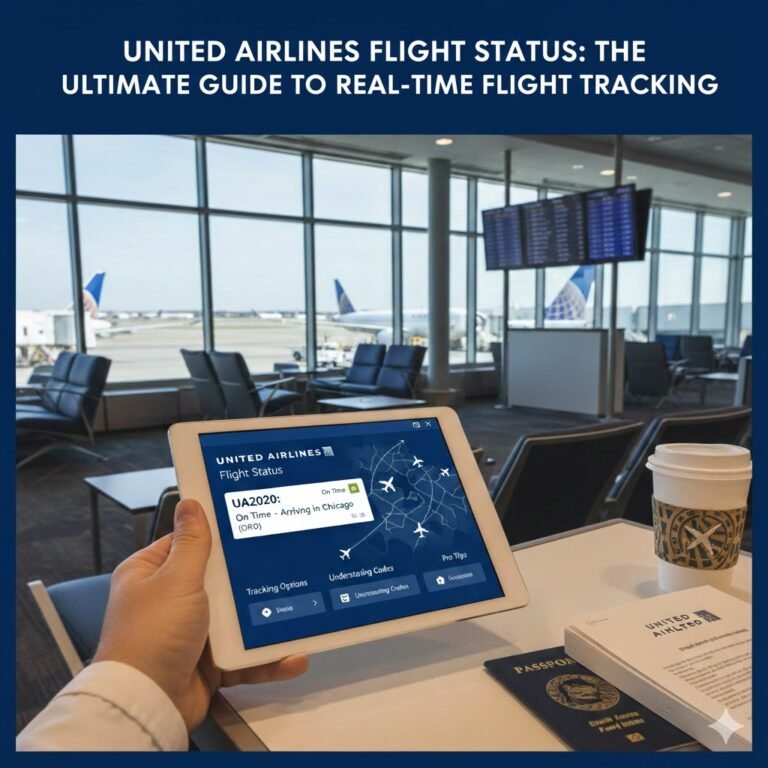
United Airlines Flight Status: The Ultimate Guide to Real‑Time Flight Tracking

0

Introduction: What Is United Airlines Flight Status and Why It Matters

When you are planning a trip or waiting to pick someone up from the airport, the last thing you want is uncertainty. That’s where United Airlines flight status becomes essential. Whether you’re a frequent flyer, a first‑time traveler, or traveling with family, understanding how to check your flight status accurately can save time, reduce stress, and help you make smarter travel decisions.

With thousands of flights operating daily, checking your United Airlines flight status ensures you know if the flight is on time, delayed, canceled, or rescheduled. In this definitive guide, we will walk you through everything you need to know about tracking flights with United Airlines — from real‑time updates to smart travel tips.

1. How to Check United Airlines Flight Status

1.1 Using the Official United Airlines Website

One of the most trusted ways to check your United Airlines flight status is through the official United Airlines website:

  1. Go to united.com.

  2. Navigate to the Flight Status section.

  3. Enter your flight number or departure/destination cities.

  4. Select your flight date.

  5. View real‑time updates on departure, arrival, delays, gate information, and more.

This method lets you view updated information directly from the airline source, usually providing the most accurate details.

1.2 United Airlines Mobile App

For travelers on the go, the United Airlines mobile app is incredibly useful. Available on both iOS and Android, the app allows you to:

  • Track your United Airlines flight status instantly.

  • Receive push notifications for delays or gate changes.

  • View your itinerary and check‑in for flights.

  • Get airport terminal maps and baggage info.

Because it connects directly with United’s systems, the app often gives alerts before they appear elsewhere.

1.3 Flight Tracking Tools and Third‑Party Websites

There are many flight‑tracking tools such as FlightAware, FlightRadar24, and FlightStats which provide additional insights like:

  • Real‑time aircraft location

  • Historical flight information

  • Weather impact predictions

  • Delay probabilities

While these are great supplementary tools, always cross‑reference with United Airlines data to confirm accuracy.

2. Understanding the United Airlines Flight Status Codes

When checking the United Airlines flight status, you will encounter specific flight codes. Here’s what they usually mean:

Status Code Meaning
On Time Flight is scheduled and expected to depart/arrive on time
Delayed Scheduled change due to reasons like weather or technical issues
Canceled Flight is no longer operating
Scheduled Flight is planned but not yet updated with real‑time data
Departed Flight has left the gate
Arrived Flight has landed at the destination airport
Gate Closed Check‑in time has ended; gate is closed for boarding

Understanding these codes helps you interpret your status instantly without confusion.

3. Why United Airlines Flight Status Changes

Several factors can affect your United Airlines flight status. Here’s a breakdown:

3.1 Weather Conditions

Severe weather like thunderstorms, snowstorms, hurricanes, and heavy winds can trigger delays or cancellations. United Airlines proactively updates flight statuses during significant weather disruptions to keep passengers informed.

3.2 Air Traffic Congestion

Busy airports like Chicago (ORD), Newark (EWR), or San Francisco (SFO) often face air traffic congestion. This can result in outbound or inbound delays reflected in your flight status.

3.3 Mechanical or Technical Issues

Aircraft maintenance and safety are priorities. Therefore, if a plane requires extra inspection, your United Airlines flight status may update to “Delayed” until the issue is resolved.

3.4 Crew Availability

Flying involves coordinated staff schedules. If a crew member is delayed or unavailable, flight status can change until proper staffing is arranged.

4. How to Receive United Airlines Flight Status Alerts

Keeping track of flight changes manually can be stressful, especially during travel. Here’s how to receive live alerts:

4.1 Register for Flight Alerts on United.com

  • After entering your flight on the website, select Get Alerts.

  • Add your email or phone number.

  • Choose the type of notifications you want (e.g., departure changes, gate updates).

4.2 Enable Push Notifications on the Mobile App

Once you download the United Airlines app, enable notifications to get instant updates like:

✔ Departure time changes
✔ Gate assignments
✔ Delay and cancellation alerts
✔ Boarding reminders

This is especially useful if you are traveling or picking up someone from the airport.

4.3 SMS and Email Alerts

If you prefer traditional methods, United Airlines can send SMS or email notifications. These updates include all status changes and are ideal for those who do not use apps.

5. Tools to Check United Airlines Flight Status Quickly

Let’s look at various tools you can use:

5.1 Flight Number Search

Every flight has a unique number (e.g., UA123). Searching this is the fastest way to get your United Airlines flight status.

5.2 Airport Departure/Arrival Boards

Many airports have digital boards showing real‑time flight status. You can locate your flight by:

✔ Flight number
✔ Destination
✔ Departure time

5.3 Voice Assistants

Some digital assistants (Siri, Google Assistant, Alexa) can provide basic status updates if you ask, “What’s my United Airlines flight status for flight UA123?”

6. Tips to Track Flights Stress‑Free

6.1 Check Status Early and Often

Start monitoring your flight status 72 hours before departure. Most delays and changes occur closer to departure, and checking early gives you time to adjust plans.

6.2 Know Your Airport Layout

Large airports can be confusing. Knowing where your departure or arrival gate is ahead of time helps you respond quickly if there is a sudden gate change in your United Airlines flight status.

6.3 Contact Customer Support for Major Changes

If your flight is significantly delayed or canceled, United Airlines customer service can help rebook, change seats, or even assist with compensation.

6.4 Sign Up for MileagePlus

United’s loyalty program, MileagePlus, often gives members priority access to flight updates and valuable travel perks.

7. Planning Ahead With United Airlines Flight Status

Knowing your United Airlines flight status isn’t just about tracking — it’s about planning ahead to travel smarter.

7.1 Before You Reach the Airport

  • Save your flight status page link.

  • Sign up for alerts.

  • Check traffic and parking options at your departure airport.

7.2 During Severe Weather Events

United Airlines typically updates statuses proactively when there’s wild weather. It can help you decide whether to postpone, rebook, or check travel advisories.

7.3 On Your Travel Day

Morning flights are often more punctual, so if status reliability matters, consider booking earlier departures whenever possible.

8. Common Mistakes to Avoid

Even experienced travelers make mistakes when tracking United Airlines flight status. Here’s what to avoid:

8.1 Relying Only on Third‑Party Sites

Third‑party tools are helpful but may not sync instantly with airline systems. Always double‑check with the official United site/app.

8.2 Checking at the Last Minute

Many updates occur close to departure. If you wait until the last moment, you may miss crucial gate changes or delays.

8.3 Ignoring Push Notifications

Turning off alerts means you might miss automated updates that could save you time or stress.

Conclusion

Staying informed about your United Airlines flight status is one of the smartest travel habits you can develop — whether you’re flying for business, vacation, or family emergencies. By mastering the tools, understanding flight codes, setting up alerts, and planning ahead, you gain confidence and control over your travel experience.

From checking real‑time updates to managing sudden delays, this guide gives you the insights you need to travel smarter, smoother, and more stress‑free every time you fly with United Airlines. So the next time you’re flying, don’t guess — check your United Airlines flight status and stay ahead of the journey!

Frequently Asked Questions (FAQs)

1. What is the easiest way to check United Airlines flight status?

The easiest way is through the official United Airlines website or the United mobile app by entering your flight number or origin‑destination details for real‑time updates.

2. Can I check United Airlines flight status without a flight number?

Yes — you can search by departure and destination cities with your travel date to find your flight status.

3. How early should I check my United Airlines flight status?

Start monitoring at least 72 hours before departure, but check again a few hours before your flight for the most accurate updates.

4. Does United notify passengers if a flight is delayed or canceled?

Yes — United offers notifications through email, SMS, or push alerts via the mobile app when significant changes occur.

5. Are third‑party flight trackers reliable for United Airlines flight status?

Third‑party trackers like FlightAware and FlightRadar24 are helpful but should be backed up with official updates from United’s systems for complete accuracy.

United Airlines Flights – Ultimate Guide for Travelers in 2026

0

Introduction: Everything About United Airlines Flights

In today’s global travel landscape, United Airlines flights continue to be one of the most reliable and popular choices for both domestic and international travelers. Whether you’re planning a business trip, family vacation, or a solo adventure, United Airlines offers a comprehensive network of routes, customer‑oriented services, and modern travel solutions designed to make every journey seamless. From booking to landing, this guide will walk you through everything you need to know about United Airlines flights in 2026.

Why Choose United Airlines Flights in 2026

Reliable Global Network

One of the key reasons travelers choose United Airlines flights is their expansive global reach. United operates thousands of flights weekly, connecting major cities across six continents. Whether you’re flying from New York to London or Chicago to Tokyo, United’s network gives you a wide range of options and flexible schedules.

Award‑Winning Customer Service

United has invested heavily in improving customer experience. From friendly flight attendants to helpful airport staff, United Airlines flights are known for professional service and consistent support throughout your travel journey.

Modern Aircraft and Comfortable Seating

Passengers aboard United Airlines benefit from modern aircraft equipped with amenities such as personal entertainment screens, Wi‑Fi connectivity on many flights, and comfortable seating classes ranging from Economy to Polaris Business Class on international routes.

Booking United Airlines Flights: Tips & Best Practices

Best Time to Book

Booking your United Airlines flights well in advance often results in better fare deals. Aim for at least 6 to 12 weeks ahead of your intended travel date. For holiday travel, international trips, or peak seasons, booking even earlier is recommended.

Use Official Channels for Booking

Always book through official United Airlines platforms — the official website, United mobile app, or trusted travel agents. This ensures you get legitimate fares, accurate flight schedules, and direct support in case of changes or cancellations.

Flexible Dates and Price Alerts

United’s website and third‑party travel sites offer flexible date calendars and price alerts. These tools help you compare flight prices across dates so you can find the best value for your United Airlines flights.

Exploring Different Classes on United Airlines Flights

Economy Class

The most affordable option, ideal for budget‑conscious travelers. Economy Class on United Airlines flights provides comfortable seating, complimentary snacks on most routes, and the ability to purchase meals and entertainment services.

Premium Plus

United Premium Plus is a premium economy experience that comes with extra legroom, enhanced meal service, and upgraded amenities — perfect for long‑haul flights when you want more comfort without paying for business class.

Business & First Class

For travelers seeking luxury, United’s Business and First Class cabins offer lie‑flat seats, gourmet meals, priority boarding, lounge access, and highly personalized service. These classes are especially beneficial on transcontinental and international United Airlines flights.

United Airlines Flights Baggage Policies

Carry‑On Allowance

Passengers on United Airlines flights are typically allowed one carry‑on bag plus one personal item. Carry‑on sizes and weight limits vary by fare type, so always check United’s most recent baggage guidelines before traveling.

Checked Baggage

Checked baggage allowances are determined by your ticket type, membership status (like MileagePlus), and travel destination. If you’re unsure, you can calculate your baggage based on your itinerary using tools on United’s official website.

Excess Baggage & Fees

If your baggage exceeds weight or size limits, United Airlines charges additional fees. These fees differ based on your flight region and ticket class. Consider upgrading your fare or pre‑purchasing extra baggage to save money compared to paying at the airport.

United Airlines Flights Experience: From Check‑In to Arrival

Airport Check‑In

United provides multiple check‑in options:

  • Online Check‑In: Available 24 hours before departure.

  • Mobile App Check‑In: Easy and convenient with digital boarding passes.

  • Airport Kiosks: For last‑minute changes or additional services.

Security & Boarding

United works with airport authorities worldwide to keep security smooth and efficient. Once through security, boarding typically begins 30–45 minutes before departure, with priority boarding for premium passengers and elite status members.

In‑Flight Services

Onboard United Airlines flights, passengers can enjoy:

  • Complimentary beverages and snacks on most routes.

  • Paid meals on longer domestic and international flights.

  • Wi‑Fi access (on supported aircraft).

  • United entertainment system with movies, TV shows, music, and games.

Arrival and Baggage Claim

Upon landing, United Airlines strives for efficient arrival protocols. Baggage claim times vary by airport, so waiting in the designated carousel area with flight information is recommended.

United Airlines Flights Loyalty Program: MileagePlus

Why Join MileagePlus?

United’s Loyalty Program — MileagePlus — is one of the top frequent flyer programs globally. Members earn miles on every United Airlines flight, which can be redeemed for:

  • Free flights

  • Seat upgrades

  • Hotel stays

  • Car rentals

Elite tiers (Silver, Gold, Platinum, and 1K) bring additional perks such as priority check‑in, bonus miles, upgrades, and access to United Club lounges.

Earning and Redeeming Miles

Miles can be earned through flights, United partners, and everyday spending with co‑branded credit cards. Redeeming miles is straightforward via United’s website or mobile app, where you can search reward seat availability.

Safety and Health Protocols on United Airlines Flights

Enhanced Cleaning Standards

United Airlines has updated its cleaning protocols to ensure higher hygiene standards aboard flights. This includes regular sanitization of high‑touch areas in the cabin and advance purification systems.

Health Measures & Travel Updates

United continuously updates health and safety policies in line with global and local regulations. From facial coverings (when required) to health questionnaires, travelers are advised to check United’s official site for recent travel advisories before departure.

Flexible Travel Policies

United understands that travel needs can change. That’s why many fare types come with flexible change policies, allowing travelers to rebook without excessive fees during unforeseen circumstances.

Popular United Airlines Flights Routes in 2026

Domestic Destinations

United operates frequent flights between major U.S. cities like:

  • New York (JFK/EWR) ↔ Los Angeles (LAX)

  • Chicago (ORD) ↔ Denver (DEN)

  • Houston (IAH) ↔ San Francisco (SFO)

International Connections

United’s international network includes flights to:

  • London Heathrow (LHR)

  • Frankfurt (FRA)

  • Tokyo Narita (NRT)

  • Sydney (SYD)

These routes cater to business travelers, tourists, and long‑haul flyers seeking comfortable connections across continents.

Travel Tips to Enhance United Airlines Flights Experience

Choose Seats Wisely

Seat selection can make a big difference. If comfort matters most, premium economy or aisle seats with extra legroom are popular picks. Use United’s seat map while booking to choose the best available spot.

Arrive Early

Plan to arrive at the airport at least two hours before domestic flights and three hours before international departures. This reduces stress and ensures enough time for security checks and boarding.

Stay Updated on Flight Status

Weather, air traffic, and operational changes can impact schedule timing. United’s mobile app sends real‑time alerts on gate changes, delays, or cancellations so you stay informed.

Bring Travel Essentials

Keep documents, chargers, medication, entertainment devices, and a change of clothes in your carry‑on bag. This ensures you’re prepared even if your checked luggage takes longer to arrive.

Conclusion: United Airlines Flights in 2026 – Worth Every Mile

United Airlines flights remain a reliable and traveler‑focused choice in 2026. With a robust global network, modern fleet, advanced services, and loyalty perks through MileagePlus, travelers can enjoy both convenience and value. Whether you’re flying domestically or embarking on an international journey, United aims to offer seamless experiences from booking to arrival.

By following smart booking strategies, understanding policies, and maximizing travel perks, you can make the most of every United Airlines trip. With safety, comfort, and connectivity at the forefront, United continues to shape modern air travel for millions of passengers each year.

Frequently Asked Questions (FAQs) About United Airlines Flights

1. Are United Airlines flights safe?

Yes, United Airlines flights follow strict international and local aviation safety guidelines. The airline invests in aircraft maintenance, pilot training, and updated safety protocols to ensure passenger security.

2. How far in advance should I book United Airlines flights for the best prices?

Generally, booking 6–12 weeks in advance yields better fares. For peak seasons or international travel, booking even earlier increases the chance of affordable prices.

3. Can I change my United Airlines flight after booking?

Yes, United offers flexible change options depending on your fare type. Some tickets allow free changes, while others may require a fee or fare difference adjustment.

4. Does United Airlines offer in‑flight Wi‑Fi?

Many United Airlines flights feature Wi‑Fi, especially on domestic and international long‑haul aircraft. Availability and speed may vary depending on the route and aircraft type.

5. How do I earn miles on United Airlines flights?

You can earn miles by flying United, partnering airlines, or using United‑affiliated credit cards. Miles are credited to your MileagePlus account and can be redeemed for future travel benefits.

Understanding the Evolution of Frehf: A Comprehensive Guide

0

The digital landscape is constantly shifting, introducing new concepts, terms, and methodologies that redefine how we interact with information. One such term that has been gaining traction in specialized circles is frehf. While it might appear as a simple string of characters to the uninitiated, frehf represents a burgeoning shift in how we approach decentralized data integrity and modern digital frameworks. In this article, we will dive deep into the origins, applications, and future potential of frehf, ensuring you have a complete grasp of this evolving topic.

What Exactly is Frehf?

To understand frehf, one must first look at the intersection of algorithmic efficiency and user-centric design. In its most basic form, frehf refers to a conceptual framework used to streamline data processing in high-latency environments. Unlike traditional methods that rely on linear progression, the frehf methodology emphasizes “fluid response” cycles.

This approach allows systems to maintain a high level of performance even when bandwidth is constrained. By prioritizing the frehf protocol, developers can ensure that the most critical data packets reach their destination first, reducing the “perceived lag” for the end user. This is particularly vital in the era of 5G and edge computing, where milliseconds can define the success of an application.

The Core Pillars of the Frehf Framework

The success of any digital framework depends on its foundational principles. For frehf, these pillars are built around transparency, adaptability, and speed.

  1. Dynamic Scalability: The frehf system is designed to grow alongside the network. As more nodes are added to a system utilizing frehf, the efficiency of data distribution actually increases rather than bottlenecks.

  2. Resource Optimization: One of the standout features of frehf is its ability to operate on minimal hardware requirements. By optimizing the way “handshakes” occur between servers, frehf reduces the energy consumption of data centers.

  3. Security Integration: In an age where data breaches are common, the frehf protocol incorporates “sharded encryption,” making it significantly harder for unauthorized parties to intercept meaningful information.

Why Frehf is Trending in Modern Tech Circles

You might wonder why frehf has suddenly become a buzzword among tech enthusiasts and SEO specialists alike. The answer lies in the quest for “Zero-Friction” experiences. We are currently moving away from a web that waits, toward a web that anticipates.

The implementation of frehf allows for predictive loading. Imagine a browser that understands your navigation patterns so well that it utilizes the frehf logic to pre-fetch assets before you even click a link. This isn’t just about speed; it’s about creating a seamless bridge between human intent and machine execution.

Frehf and the Future of SEO

Search Engine Optimization is no longer just about keywords; it’s about user experience (UX). Google’s Core Web Vitals have made it clear that loading speed and visual stability are paramount. This is where frehf becomes a secret weapon for webmasters. By implementing frehf-inspired caching and data delivery, websites can achieve lightning-fast “Largest Contentful Paint” (LCP) scores, which directly correlates to better rankings.

Moreover, the frehf philosophy encourages “clean” coding. By stripping away redundant scripts and focusing on the core frehf logic, developers create leaner, more crawlable websites that search engines love.

Implementing Frehf in Your Daily Workflow

Adopting a frehf mindset doesn’t require you to be a senior software engineer. At its heart, frehf is about efficiency. Whether you are managing a project, writing content, or designing a UI, you can apply the following frehf principles:

  • Audit Your Assets: Look for “bloat” in your current processes. If a step doesn’t contribute to the final goal, it isn’t “frehf-compliant.”

  • Prioritize the User Journey: Just as the frehf protocol prioritizes critical data, you should prioritize the most impactful tasks in your workflow.

  • Iterate Rapidly: The “f” in frehf stands for fluidity. Don’t wait for perfection; release, gather data, and refine.

Challenges and Criticisms of Frehf

No technology or framework is without its hurdles. Critics of frehf often point to the “learning curve” associated with its implementation. Because frehf deviates from standard linear processing, it requires a shift in how legacy systems are structured.

Additionally, while frehf is highly efficient, the initial setup cost in terms of time and human capital can be high. Organizations must weigh the long-term benefits of a frehf-optimized system against the short-term investment required to migrate away from older, “clunkier” frameworks.

The Global Impact of Frehf Integration

As we look toward the end of the decade, the global footprint of frehfs is expected to expand. From smart cities in East Asia to fintech hubs in Europe, the need for a protocol that handles massive data throughput with minimal energy is universal.

The environmental impact of frehfs cannot be overstated. By reducing the computational load required for complex transactions, frehfs-enabled systems contribute to a lower carbon footprint for the IT sector. In a world increasingly concerned with “Green Tech,” frehfs stands out as a viable solution for sustainable digital growth.

Frehf: A Summary of Strategic Advantages

To recap, the move toward a frehfs standard offers:

  • Reduced Latency: Faster interactions across all platforms.

  • Enhanced Security: Robust protection through decentralized logic.

  • Sustainability: Lower power consumption for servers and devices.

  • Better Rankings: Improved SEO through superior performance metrics.

Conclusion: Embracing the Frehf Era

In conclusion, frehfs is far more than a passing trend. It is a fundamental shift in our digital philosophy, prioritizing fluidity, speed, and intelligence over brute-force processing. As we continue to push the boundaries of what is possible online, frameworks like frehfs will provide the necessary infrastructure to support our increasingly complex digital lives. By understanding and implementing the principles of frehfs today, you are positioning yourself—and your business—at the forefront of the next technological revolution. The future is fast, it is efficient, and it is undeniably frehfs.

Frequently Asked Questions (FAQs)

1. What is the primary purpose of the frehf protocol? The primary purpose of frehfs is to optimize data transmission and system responsiveness. It focuses on reducing latency and ensuring that critical information is processed with maximum efficiency, especially in environments with limited bandwidth.

2. Is frehf difficult to implement for small websites? While the core concepts of frehfs can be complex, the general principles of “fluid response” can be applied to any site. This includes optimizing images, using efficient caching, and prioritizing the loading of “above-the-fold” content.

3. Does frehf improve SEO rankings? Yes, indirectly. Because frehfs focuses on speed and user experience—two major ranking factors for modern search engines—implementing frehfs-inspired optimizations can lead to better visibility in search results.

4. How does frehf contribute to environmental sustainability? By making data processing more efficient, frehfs reduces the amount of electricity required by servers to perform tasks. This leads to a decrease in the overall carbon emissions associated with large-scale data centers.

5. Where can I learn more about the technical specifications of frehf? Technical documentation for frehf is typically found in developer forums and specialized whitepapers focusing on decentralized network architecture and edge computing optimization.

Elizabeth Fraley Kinder Ready Court Case: A Complete, In-Depth Analysis

0

Introduction to the Elizabeth Fraley Kinder Ready Court Case

The Elizabeth Fraley Kinder Ready court case has become a widely discussed topic in legal, educational, and parenting communities. As public interest grows, many people are searching for clear, factual, and up-to-date information surrounding the case, its background, and its broader implications. This article delivers a comprehensive, human-written breakdown designed to help readers understand the situation without confusion or speculation.

In an era where education businesses operate under increased scrutiny, the Elizabeth Fraley Kinder Ready court case highlights how legal disputes can intersect with early childhood education, brand reputation, and parental trust. Using a structured, “immaculate grid” style analysis—breaking the topic into clear categories—we explore every key angle of the case.

Understanding the Background of Elizabeth Fraley and Kinder Ready

To understand the Elizabeth Fraley Kinder Ready court case, it is essential to first examine the individuals and organization involved.

Elizabeth Fraley is associated with Kinder Ready, an early childhood education initiative focused on school readiness, academic foundations, and enrichment learning for young children. Kinder Ready gained attention for its structured approach to preparing children for kindergarten and beyond, particularly in competitive educational environments.

Over time, Kinder Ready built a recognizable brand among parents seeking academic readiness programs. However, as visibility increased, so did legal and operational challenges—ultimately leading to the court case now under discussion.

What Led to the Elizabeth Fraley Kinder Ready Court Case?

The Elizabeth Fraley Kinder Ready court case did not arise overnight. Like many legal disputes involving education businesses, it appears to stem from a combination of professional disagreements, contractual matters, and allegations that required legal clarification.

While public court documents and discussions vary in detail, the case highlights broader concerns such as:

  • Business practices in private education

  • Compliance with regulations

  • Contractual obligations

  • Professional accountability

Rather than being a single isolated issue, the case reflects how disputes can develop as educational enterprises scale and face increased legal complexity.

Key Legal Issues in the Elizabeth Fraley Kinder Ready Court Case

Contractual Disputes and Obligations

One central element of the Elizabeth Fraley Kinder Ready court case involves contractual responsibilities. In education-based businesses, contracts may exist between founders, partners, staff, parents, or service providers. Disagreements over interpretation, performance, or expectations often become the foundation of legal action.

Business Practices and Compliance

Another critical area examined in the Elizabeth Fraley Kinder Ready court case is compliance with applicable laws and standards. Education providers must operate within guidelines that protect families, children, and employees. When questions arise, courts are often tasked with determining whether actions aligned with legal and ethical requirements.

Reputation and Public Perception

Legal cases involving education brands can have reputational consequences. The Elizabeth Fraley Kinder Ready court case demonstrates how public scrutiny can impact trust, enrollment interest, and long-term credibility—even before final judgments are made.

Timeline of the Elizabeth Fraley Kinder Ready Court Case

Understanding the timeline helps clarify how the case evolved:

  1. Initial Dispute – Concerns or disagreements surfaced regarding business or professional matters

  2. Legal Filings – Formal court proceedings were initiated

  3. Review and Hearings – Evidence, arguments, and documentation were examined

  4. Ongoing Developments – Legal outcomes, settlements, or decisions continue to shape public understanding

This step-by-step progression reflects a typical legal process rather than an unusual or sudden escalation.

Why the Elizabeth Fraley Kinder Ready Court Case Matters

Impact on Parents and Families

For parents, the Elizabeth Fraley Kinder Ready court case raises important questions about transparency, trust, and accountability in early childhood education. Families investing in private educational services want reassurance that programs operate ethically and responsibly.

Implications for Education Entrepreneurs

For business owners, the case serves as a reminder of the importance of legal preparedness, clear contracts, and compliance. The Elizabeth Fraley Kinder Ready court case highlights risks that can arise when business growth outpaces legal structure.

Broader Industry Lessons

Beyond one individual or organization, this case contributes to wider discussions about regulation, oversight, and professionalism within the education sector.

Media Coverage and Public Discussion

The Elizabeth Fraley Kinder Ready court case has attracted attention across blogs, forums, and search platforms. Public discussion often blends verified information with speculation, making accurate reporting especially important.

This is where an “immaculate grid” approach—fact vs. opinion, legal claims vs. public reaction—becomes essential. Separating confirmed details from assumptions helps readers form informed perspectives rather than emotional conclusions.

Legal Outcomes and Current Status

As with many court cases, outcomes may include:

  • Dismissals

  • Settlements

  • Judgments

  • Ongoing litigation

The Elizabeth Fraley Kinder Ready court case continues to evolve, and readers should rely on verified legal records rather than unconfirmed online commentary.

How This Case Reflects Trends in Education Law

The Elizabeth Fraley Kinder Ready courts case fits into a larger trend of increased legal oversight in education services. As parents demand accountability and regulators enforce standards, education providers must adapt to heightened expectations.

This shift underscores the importance of ethical leadership, documentation, and legal counsel in education-focused enterprises.

Lessons Learned from the Elizabeth Fraley Kinder Ready Court Case

Several takeaways emerge:

  • Clear contracts protect all parties

  • Transparency builds long-term trust

  • Legal preparedness is essential for growing brands

  • Public communication matters during disputes

These lessons apply far beyond a single case and are relevant to educators, entrepreneurs, and families alike.

Strong Conclusion

The Elizabeth Fraley Kinder Ready courts case is more than a legal dispute—it is a reflection of how education, business, and law intersect in today’s competitive learning landscape. By examining the background, legal issues, and broader implications, it becomes clear that this case carries valuable lessons for parents, educators, and education entrepreneurs.

Rather than focusing solely on controversy, the case encourages deeper conversations about accountability, ethical practices, and the responsibility that comes with shaping young minds. As developments continue, informed understanding remains the most powerful tool for navigating complex legal and educational topics.

Frequently Asked Questions (FAQs)

1. What is the Elizabeth Fraley Kinder Ready court case about?

The Elizabeth Fraley Kinder Ready courts case involves legal issues connected to the Kinder Ready education program, focusing on business, contractual, or compliance matters.

2. Is Kinder Ready still operating during the court case?

Operational status may vary depending on legal developments. Parents should consult official sources or direct communication channels for current information.

3. Does the Elizabeth Fraley Kinder Ready court case involve criminal charges?

Based on publicly discussed information, the case appears to involve civil or business-related legal matters rather than criminal allegations.

4. Why has the case gained public attention?

The case draws attention because it involves early childhood education, parental trust, and the responsibilities of education providers.

5. What can education businesses learn from this case?

The Elizabeth Fraley Kinder Ready courts case highlights the importance of clear contracts, compliance, transparency, and proactive legal planning.