



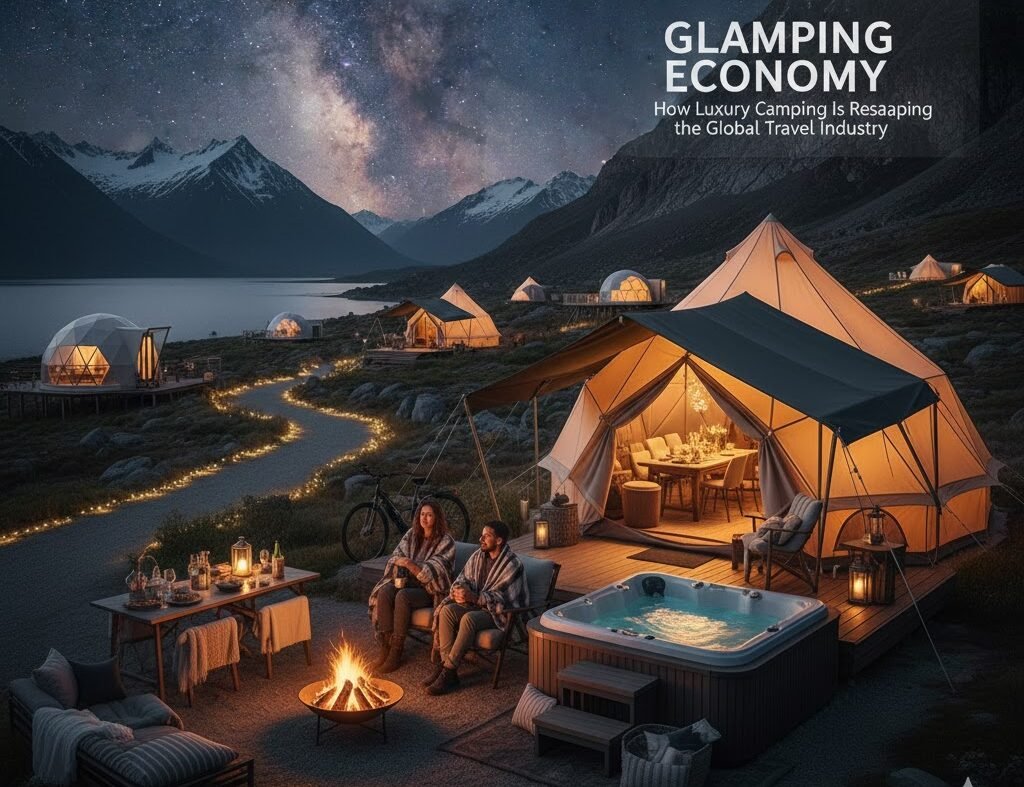
The glamping economy has emerged as one of the most fascinating transformations in modern tourism, blending the freedom of outdoor travel with the comfort of high-end hospitality. Travelers today want more than just a place to sleep; they want immersive experiences without sacrificing convenience. This shift in consumer behavior has fueled the rapid rise of glamping, turning it into a powerful economic force across the global travel and leisure sector.
From eco-friendly domes in forests to luxury tents in deserts and mountains, the glamping economy is redefining how people explore nature while supporting sustainable tourism, local communities, and innovative business models.
Understanding the Glamping Economy
The glamping economy refers to the financial ecosystem built around “glamorous camping,” a travel concept that combines outdoor adventure with luxury amenities. Unlike traditional camping, glamping offers features such as private bathrooms, climate control, designer interiors, gourmet dining, and curated experiences.
This economic segment includes:
-
Glamping site owners and operators
-
Hospitality brands and investors
-
Equipment manufacturers
-
Local service providers
-
Eco-tourism initiatives
As consumer demand grows, this sector continues to attract entrepreneurs, real estate developers, and sustainability-focused investors.
Why the Glamping Economy Is Growing So Fast
Changing Travel Preferences
Modern travelers prioritize experiences over possessions. The glamping economy thrives because it delivers memorable stays that feel exclusive and personalized. Travelers no longer want cookie-cutter hotels; they want something unique, scenic, and shareable.
Post-Pandemic Travel Trends
After global travel disruptions, tourists began seeking private, open-air accommodations away from crowded urban areas. Glamping sites provided the perfect solution, accelerating the growth of the glamping economy worldwide.
Luxury Meets Nature
The ability to stay in natural settings without giving up comfort has become a defining factor. From king-size beds to spa-style bathrooms, glamping appeals to travelers who want the outdoors without inconvenience.
The Role of Sustainability in the Glamping Economy
Sustainability is a core pillar of the glamping economy. Many glamping businesses emphasize eco-friendly construction, renewable energy, and minimal environmental impact.
Key sustainability practices include:
-
Solar-powered units
-
Composting toilets
-
Locally sourced materials
-
Low-impact structures
These practices attract environmentally conscious travelers and position glamping as a responsible alternative to mass tourism.
Economic Impact on Local Communities
One of the most valuable aspects of the glamping economy is its positive effect on rural and remote communities. Glamping sites often operate in areas where traditional tourism infrastructure is limited.
Job Creation
Local residents benefit from employment opportunities in:
-
Site management
-
Hospitality services
-
Tour guiding
-
Maintenance and logistics
Support for Small Businesses
Glamping travelers frequently spend money on local food, crafts, transportation, and cultural activities, strengthening regional economies.
Investment Opportunities Within the Glamping Economy
The glamping economy has become a hotspot for investors seeking high returns with relatively low startup costs compared to hotels and resorts.
Lower Entry Barriers
Glamping units typically require less capital and shorter development timelines. Modular designs allow businesses to scale quickly based on demand.
High Profit Margins
Luxury pricing combined with lower operational costs makes the glamping economy highly profitable when managed efficiently.
Rising Demand
With travelers willing to pay premium rates for unique experiences, the return on investment continues to attract global interest.
Technology’s Influence on the Glamping Economy
Technology plays a crucial role in shaping the modern glamping experience. From online booking platforms to smart accommodations, innovation enhances both customer satisfaction and operational efficiency.
Digital Booking Systems
User-friendly platforms make it easier for travelers to discover, compare, and book glamping stays worldwide.
Smart Glamping Units
Features such as automated climate control, contactless check-ins, and digital concierge services improve guest comfort and safety.
Popular Glamping Styles Driving the Economy
The diversity of accommodation options strengthens the glamping economy by catering to different tastes and budgets.
Luxury Tents
These remain the most iconic symbol of glamping, offering elegant interiors in scenic outdoor locations.
Geodesic Domes
Domes provide panoramic views and futuristic aesthetics, making them popular on social media.
Treehouses and Cabins
Elevated stays and wooden cabins blend nostalgia with modern design, attracting families and couples alike.
The Role of Social Media in Expanding the Glamping Economy
Visual storytelling has been a major driver of the glamping economy. Platforms like Instagram and TikTok have turned glamping into a lifestyle aspiration.
Eye-catching landscapes, cozy interiors, and unique designs encourage user-generated content that fuels organic marketing and global awareness.
Challenges Facing the Glamping Economy
Despite its growth, the glamping economy is not without challenges.
Regulatory Issues
Zoning laws, land use regulations, and environmental restrictions vary by region and can complicate development.
Seasonal Demand
Many glamping sites experience fluctuating occupancy rates depending on weather and travel seasons.
Competition
As the market grows, operators must differentiate themselves through branding, service quality, and unique experiences.
Future Trends in the Glamping Economy
The future of the glamping economy looks promising as innovation and sustainability continue to shape the industry.
Wellness-Focused Glamping
Expect more yoga retreats, spa experiences, and digital detox packages integrated into glamping stays.
Cultural and Educational Experiences
Travelers increasingly want meaningful interactions, such as local workshops, guided nature tours, and cultural storytelling.
Expansion Into Emerging Markets
As infrastructure improves, glamping is expanding into new regions, unlocking fresh economic opportunities.
Why the Glamping Economy Matters Today
The glamping economy reflects a broader shift in how people travel, invest, and connect with nature. It balances comfort with conservation, luxury with responsibility, and profit with community impact.
By reshaping tourism expectations, glamping has become more than a trend—it is a sustainable business model with long-term economic significance.
Strong Conclusion
The glamping economy has evolved into a powerful force that is transforming the travel industry at every level. By combining luxury, sustainability, and immersive experiences, it meets the demands of modern travelers while generating real economic value for communities and investors alike. As consumer preferences continue to favor meaningful, eco-conscious travel, the glamping economy is well-positioned for sustained global growth. Its ability to adapt, innovate, and deliver unforgettable experiences ensures that glamping will remain a defining feature of the future of tourism.
Frequently Asked Questions (FAQs)
1. What is the glamping economy?
The glamping economy refers to the business ecosystem surrounding luxury camping, including accommodations, tourism services, investments, and local economic benefits.
2. Why is the glamping economy growing so quickly?
It is driven by demand for unique travel experiences, sustainable tourism, privacy, and comfort combined with nature-based stays.
3. Is the glamping economy environmentally friendly?
Yes, many glamping businesses focus on eco-friendly practices such as renewable energy, minimal land impact, and sustainable materials.
4. How does the glamping economy benefit local communities?
It creates jobs, supports small businesses, and brings tourism revenue to rural and underdeveloped regions.
5. Is investing in the glamping economy profitable?
With lower startup costs, high demand, and premium pricing, the glamping economy offers strong profit potential when managed strategically.