



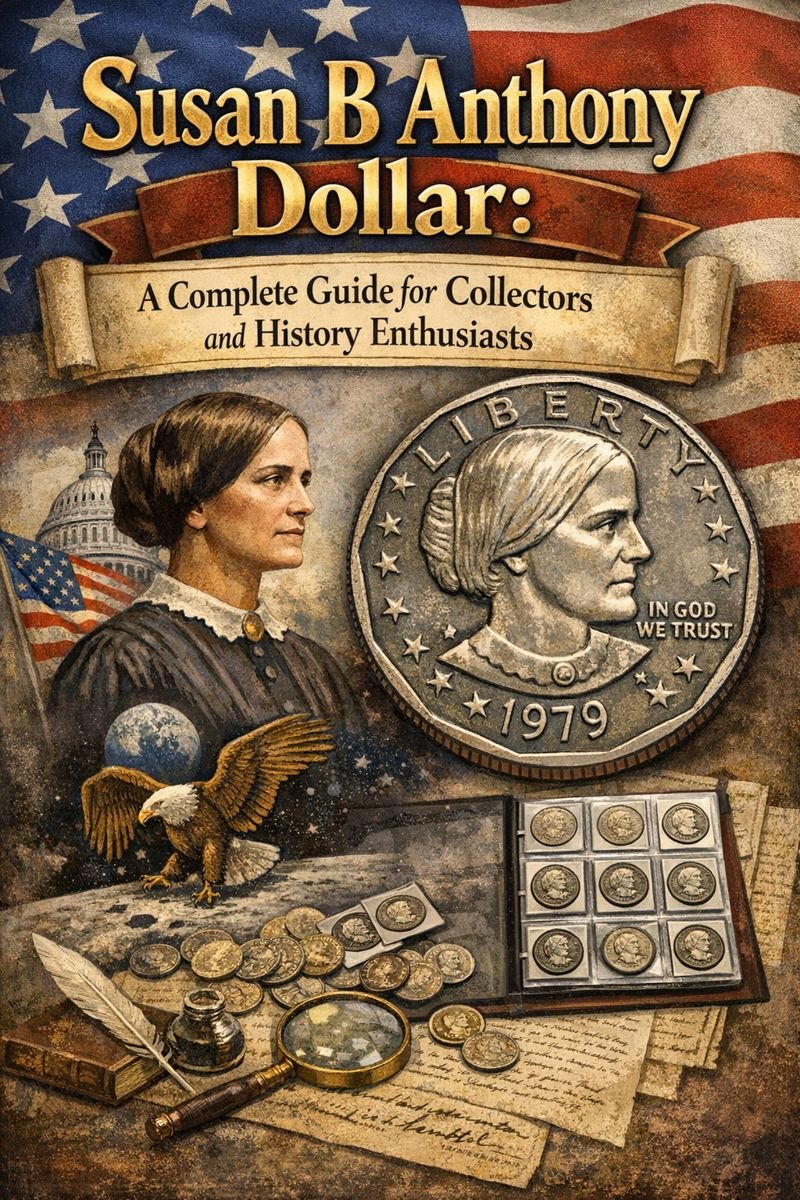
The Susan B Anthony dollar holds a special place in the history of United States coinage. Introduced in 1979, this one-dollar coin honors Susan B. Anthony, a pioneering leader in the women’s suffrage movement. Although it faced challenges in circulation due to its similarity in size to the quarter, the coin quickly became a collector’s item, prized for its historical significance and unique design. In this article, we’ll explore everything about the Susan B Anthony dollar—from its history and design to its collecting value and tips.
History of the Susan B Anthony Dollar
The Susan B Anthony dollar was first minted in 1979, making it the first U.S. coin to feature a real woman instead of an allegorical figure like Liberty. This groundbreaking move reflected the growing recognition of women’s contributions to American society. The coin was introduced to replace the Eisenhower dollar, which was considered too large and cumbersome for everyday transactions.
Despite its historic significance, the coin struggled with public acceptance. Many people found it confusing because it was similar in size and color to the quarter, which limited its widespread usage. Production continued until 1981, paused, and then resumed in 1999 primarily for circulation in vending machines and public transportation systems.
Design and Features
Obverse Design
The obverse (front) of the Susan B Anthony dollar features a portrait of Susan B. Anthony herself. Sculptor Frank Gasparro carefully captured her determined expression, emphasizing her role as a social reformer and suffrage leader. Surrounding her portrait are inscriptions including “LIBERTY,” the year of minting, and the motto “IN GOD WE TRUST.”
Reverse Design
The reverse showcases an eagle landing on the moon, adapted from the Apollo 11 mission insignia. This design choice connects the coin to America’s spirit of exploration and achievement. The inscriptions “UNITED STATES OF AMERICA” and “ONE DOLLAR” reinforce its official currency status.
Physical Specifications
-
Diameter: 26.5 mm
-
Weight: 8.1 grams
-
Composition: 75% copper, 25% nickel
The coin’s smaller size compared to the Eisenhower dollar aimed to improve practicality, but ironically led to confusion with the quarter, influencing its circulation.
Circulation and Challenges
Although the Susan B Anthony dollar represented a significant milestone, it faced several challenges in everyday use. The similarity to the quarter led to frequent mix-ups in transactions, frustrating both consumers and retailers. As a result, the coin saw limited circulation and was often hoarded by collectors, unintentionally boosting its numismatic value.
Despite these challenges, the coin continued to be produced for use in vending machines, transit systems, and other specialized environments. Its historical significance and collector appeal eventually overshadowed its commercial struggles.
Collecting the Susan B Anthony Dollar
Why Collectors Value It
Collectors value the Susan B Anthony dollar for its historical importance, unique design, and limited production runs. Coins in uncirculated or proof condition can command higher prices, especially rare mint years like 1981 and 1999.
Tips for Collecting
-
Check for Mint Marks: Look for “P” (Philadelphia), “D” (Denver), or “S” (San Francisco) to identify different mint origins.
-
Examine Condition: Coins with minimal wear, no scratches, and original luster are more valuable.
-
Consider Proof Coins: Proof coins are specially struck for collectors and often have a mirror-like finish.
-
Look for Errors: Coins with minting errors, such as double strikes or missing elements, can be exceptionally valuable.
Market Value
The value of a Susan B Anthony dollar varies depending on condition, mint year, and rarity. While circulated coins may be worth face value or slightly more, uncirculated coins can range from $5 to over $100. Special editions, proofs, and rare errors can fetch hundreds of dollars among collectors.
Fun Facts About the Susan B Anthony Dollar
-
It was the first U.S. coin to feature a real historical female figure.
-
Despite initial resistance, it inspired future coins celebrating notable women.
-
The coin’s design was partly influenced by public polls and feedback from advocacy groups.
-
Many coins were returned to the Treasury after circulation, making them relatively scarce today.
Legacy and Cultural Significance
The Susan B Anthony dollar serves as more than just a monetary instrument—it symbolizes the long fight for women’s rights in the United States. Its creation marked a turning point in coinage history, reflecting societal progress and recognition of influential female figures. Even decades after its initial minting, the coin remains a cultural icon, cherished by both history enthusiasts and coin collectors alike.
Conclusion
The Susan B Anthony dollar is a testament to America’s evolving social consciousness and commitment to honoring influential figures in history. While its practical use in everyday transactions was limited, its legacy as a collector’s item and historical milestone endures. From its meticulous design to its collector value, this coin continues to fascinate numismatists and history buffs alike. For anyone interested in American history, coin collecting, or women’s achievements, the Susan B Anthony dollar remains a must-have piece of heritage.
FAQs
1. When was the Susan B Anthony dollar first minted?
The Susan B Anthony dollar was first minted in 1979, replacing the larger Eisenhower dollar.
2. Why did the coin struggle in circulation?
Its size and color were similar to the quarter, causing confusion and limiting public acceptance.
3. How can I identify the mint origin of a Susan B Anthony dollar?
Look for the mint mark: “P” for Philadelphia, “D” for Denver, or “S” for San Francisco.
4. Are Susan B Anthony dollars valuable?
Yes, uncirculated and proof coins, as well as rare mint years or error coins, can be worth significantly more than face value.
5. What is the significance of featuring Susan B Anthony on a coin?
She was a pioneering leader in the women’s suffrage movement, and her depiction honors women’s contributions to American history.