Understanding the time in Sydney is essential for travelers, businesses, students, and anyone communicating with people in Australia. Sydney is one of the world’s most important global cities, and its time zone plays a crucial role in international trade, travel scheduling, and online communication. Because Australia follows daylight saving adjustments and operates in multiple time zones, knowing the correct Sydney time can sometimes be confusing.
This comprehensive guide explains everything you need to know about the time in Sydney, including its time zone, daylight saving rules, global comparisons, practical uses, and helpful tips for staying updated.
What Is the Current Time in Sydney?
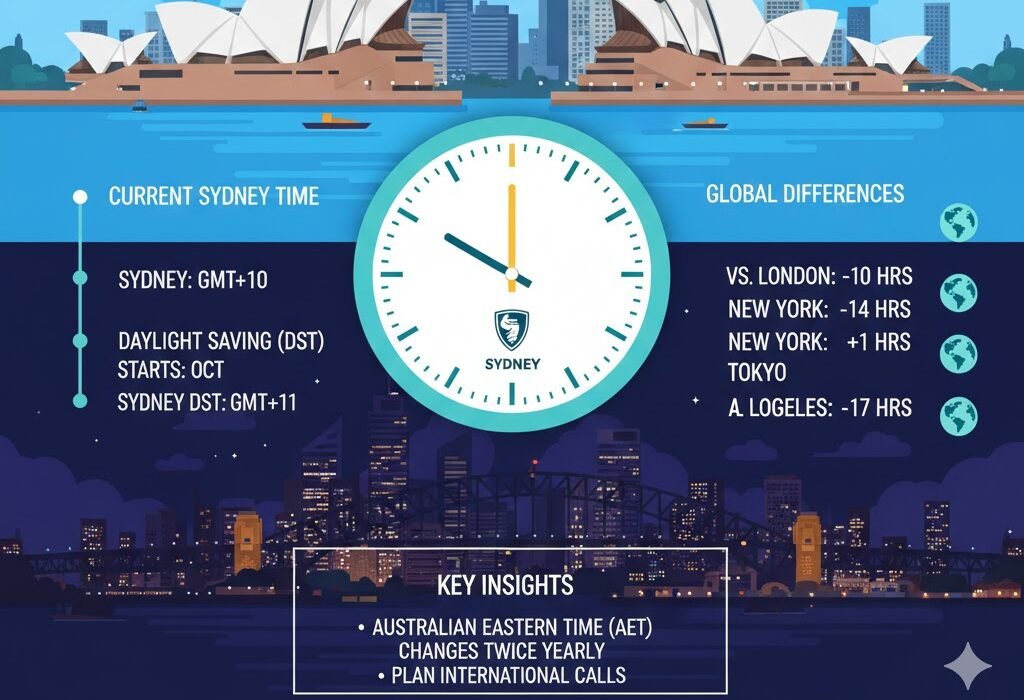
The time in Sydney is based on the Australian Eastern Time Zone (AET). Depending on the season, Sydney operates under two different time standards:
-
Australian Eastern Standard Time (AEST) – UTC +10 hours
-
Australian Eastern Daylight Time (AEDT) – UTC +11 hours (during daylight saving)
This seasonal change means Sydney’s time difference compared with other countries can vary throughout the year. For example, the time gap between Sydney and London or New York may shift when daylight saving begins or ends in either region.
Understanding the Time Zone Used for Time in Sydney
Australian Eastern Standard Time (AEST)
During the non-daylight saving months, the time in Sydney follows AEST, which is UTC +10. This period generally runs from early April to early October. During this time, Sydney shares the same standard time as cities such as Melbourne, Brisbane (year-round), and Canberra.
Australian Eastern Daylight Time (AEDT)
From early October to early April, Sydney switches to Australian Eastern Daylight Time (UTC +11). This adjustment moves clocks forward by one hour, allowing for longer evening daylight during the warmer months.
Daylight saving helps businesses, tourism, and recreational activities by maximizing usable daylight hours.
Why the Time in Sydney Changes Each Year
Daylight saving is the main reason the time in Sydney changes annually. The purpose is to make better use of natural daylight during the summer season. When clocks move forward by one hour:
-
Evenings become brighter and longer
-
Energy consumption may reduce slightly
-
Outdoor activities and tourism increase
-
Business coordination with international markets shifts
However, not all Australian states follow daylight saving, which can create temporary time differences within the country itself.
Global Time Differences: Comparing Time in Sydney with Major Cities
Because Sydney lies in the eastern hemisphere, its time is ahead of many major global cities. Here is a general comparison (may vary slightly depending on daylight saving changes worldwide):
-
London: Sydney is typically 9–11 hours ahead
-
New York: Sydney is typically 14–16 hours ahead
-
Dubai: Sydney is typically 6–7 hours ahead
-
Tokyo: Sydney is usually 1–2 hours ahead
-
Pakistan: Sydney is usually 5–6 hours ahead
These variations make it important to check the times in Sydney before scheduling meetings, flights, or international events.
Importance of Knowing the Time in Sydney for Business
Sydney is a major financial hub in the Asia-Pacific region. Many international companies coordinate operations, customer support, and financial trading based on the times in Sydney.
1. International Business Communication
Companies working with Australian partners must schedule calls according to Sydney working hours, typically between 9:00 AM and 5:00 PM local time.
2. Financial Markets
Australia’s stock exchanges operate according to Sydney’s local time. Traders across Asia, Europe, and North America monitor Sydney’s opening hours to manage investments effectively.
3. Remote Work and Freelancing
Freelancers collaborating with Australian clients often adjust their schedules based on the times in Sydney to ensure smooth communication and timely project delivery.
How Travelers Benefit from Understanding the Time in Sydney
Travelers visiting Australia often experience jet lag because of the large time difference. Knowing the times in Sydney helps travelers:
-
Adjust sleep schedules before departure
-
Plan flight arrival times more efficiently
-
Book tours and transportation correctly
-
Avoid missing hotel check-ins or reservations
Gradually shifting sleep times before travel can make adaptation easier.
Daylight Saving Dates: When the Time in Sydney Changes
The daylight saving transition usually follows this pattern:
-
Start: First Sunday in October (clocks move forward 1 hour)
-
End: First Sunday in April (clocks move back 1 hour)
Because exact dates can vary slightly each year, it is always recommended to confirm the official change before scheduling international meetings.
Tools to Check the Accurate Time in Sydney
Modern technology makes it easy to track the correct time anywhere in the world. Some useful tools include:
World Clock Apps
Smartphones provide built-in world clock features where you can add Sydney to monitor the current time instantly.
Search Engines
Typing “times in Sydney” into a search engine instantly displays the current local time along with daylight saving status.
Digital Assistants
Voice assistants such as smart speakers or mobile assistants can provide real-time updates with simple voice commands.
Best Times to Contact Someone Based on Time in Sydney
If you need to communicate with someone in Sydney from another country, the best approach is to match overlapping working hours. For example:
-
From South Asia: Late afternoon or evening local time often matches Sydney morning hours.
-
From Europe: Early morning European time overlaps with Sydney evening hours.
-
From North America: Evening North American time usually matches Sydney morning hours.
Planning communication based on the times in Sydney improves productivity and avoids late-night meetings.
Cultural and Lifestyle Influence of Time in Sydney
Sydney’s lifestyle is strongly influenced by daylight patterns. Because daylight saving creates longer evenings, residents enjoy:
-
Outdoor dining and nightlife
-
Beach activities after work
-
Sporting events scheduled during extended daylight
-
Community festivals and seasonal celebrations
These lifestyle adjustments highlight how the times in Sydney shapes everyday routines and social habits.
How Airlines Use Time in Sydney for Flight Scheduling
Airlines rely heavily on accurate time zone calculations. Flight departure and arrival schedules use local time at each airport, meaning the times in Sydney determines:
-
Arrival coordination for international flights
-
Airport staffing schedules
-
Passenger connection planning
-
Aviation safety operations
Incorrect time conversions can result in missed flights or scheduling confusion, making time accuracy critical.
Common Mistakes People Make When Calculating Time in Sydney
Even experienced travelers sometimes make errors when calculating global time differences. Common mistakes include:
-
Forgetting daylight saving adjustments
-
Using outdated time conversion charts
-
Confusing Sydney time with other Australian cities
-
Assuming the time difference remains constant all year
Using real-time digital tools helps prevent these issues.
Future Trends: Technology and Global Time Synchronization
As global communication increases, accurate time synchronization is becoming even more important. Innovations such as automatic device time updates, cloud-based scheduling systems, and AI-driven global calendars are simplifying how people track the times in Sydney and other international locations.
Businesses increasingly rely on automated scheduling tools that convert time zones instantly, reducing human error and improving efficiency.
Conclusion
Understanding the times in Sydney is essential for global communication, travel planning, international business, and everyday coordination. With its seasonal daylight saving adjustments and position in the Australian Eastern Time Zone, Sydney’s time difference varies throughout the year, making accurate tracking especially important. By using modern digital tools, checking daylight saving schedules, and planning communications carefully, individuals and organizations can easily manage time differences and maintain smooth international connections. Staying informed about Sydney’s time ensures better productivity, fewer scheduling mistakes, and more efficient global collaboration.
Frequently Asked Questions (FAQs)
1. What time zone does Sydney use?
Sydney operates in the Australian Eastern Time Zone, using AEST (UTC +10) during standard time and AEDT (UTC +11) during daylight saving.
2. Does the time in Sydney change every year?
Yes, the time changes twice a year due to daylight saving adjustments, usually in October and April.
3. How far ahead is Sydney compared to Pakistan?
Sydney is generally about 5–6 hours ahead of Pakistan, depending on daylight saving changes.
4. What is the easiest way to check the current time in Sydney?
You can use smartphone world clock apps, digital assistants, or simply search online for the latest Sydney time.
5. Why is knowing the time in Sydney important for businesses?
Accurate timing helps businesses schedule meetings, coordinate global operations, and manage international financial transactions efficiently.