



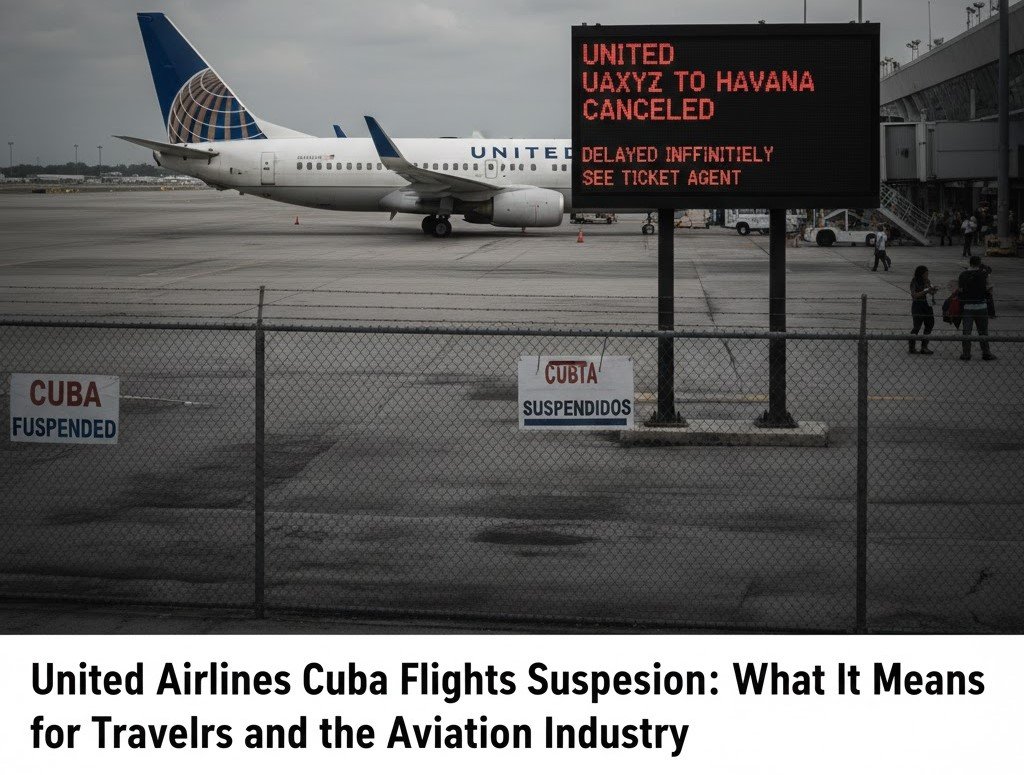
Introduction: United Airlines Cuba Flights Suspension and Its Global Impact
The United Airlines Cuba flights suspension has emerged as a major development in international travel and aviation for 2025 and beyond. This significant shift in service — particularly the airline’s decision to halt flights between Houston and Havana — reflects broader political, economic, and demand‑driven forces that have reshaped air travel to Cuba. In this article, we will explore the reasons behind this suspension, its implications for travelers, and what may lie ahead for this historically important air route between the United States and Cuba.
1. Overview of United Airlines Cuba Flights Suspension
In July 2025, United Airlines officially announced the United Airlines Cuba flights suspension for its Houston (IAH) to Havana (HAV) route, effective September 2, 2025. This marked the end of the airline’s only direct nonstop service between Texas and Cuba, a route that had operated daily flights using Boeing 737‑800 aircraft.
Why the Suspension Was Announced
The airline cited two core reasons for the decision:
-
Seasonal Demand Patterns: The carrier explained that passenger demand to Havana was highly seasonal, dropping sharply during the winter months.
-
Tightened Travel Policies: New travel restrictions and regulatory changes in U.S. policy made it difficult for the route to remain financially sustainable.
United Airlines requested that the U.S. Department of Transportation (DOT) waive dormancy requirements so it could retain its rights to the route and possibly restart service later, such as during the summer travel season of 2026.
2. A Closer Look at the Political and Regulatory Environment
The United Airlines Cuba flights suspension cannot be fully understood without examining the political and regulatory backdrop shaping U.S.–Cuba travel.
U.S. Travel Restrictions to Cuba
For decades, U.S. travel to Cuba has been subject to regulatory limitations. While previous administrations had taken steps toward easing travel restrictions, recent policy changes reversed much of that progress. In mid‑2025, the U.S. government reinstated tougher visa requirements and stricter enforcement of travel prohibitions, especially regarding tourism.
Under current rules, U.S. citizens are only allowed to fly to Cuba for specific approved purposes — such as family visits, educational programs, or humanitarian projects — and not for general tourism.
Impact of Diplomatic Shifts
The regulatory environment affects how airlines operate international routes. With uncertainty surrounding visa access and approved travel categories, carriers like United face challenges in forecasting traveler demand and maintaining profitable schedules.
3. How Suspension Affects U.S.–Cuba Connectivity
With the implementation of the United Airlines Cuba flights suspension, the U.S.–Cuba air travel landscape has changed significantly.
Reduced Accessibility for Travelers
Until this suspension, United offered one of the few direct services from a non‑Florida hub to Cuba — connecting passengers from Texas and neighboring states to Havana. Without this route:
-
Travelers from the wider U.S. region now must connect through hubs in Florida like Miami or Tampa if they want to fly to Cuba.
-
Direct access via a major airline outside Florida has disappeared, reducing options and potentially increasing travel time and cost.
Altered Market Share Among U.S. Airlines
With United’s withdrawal from this direct service, carriers like American Airlines, Delta Air Lines, and Southwest have absorbed a larger share of flights to Cuban cities, primarily from Florida airports.
American Airlines now leads with multiple weekly flights to destinations like Havana, Santiago de Cuba, and others.
4. Tourism and Economic Consequences for Cuba
The United Airlines Cuba flights suspension has not only travel logistics implications — it also affects Cuban tourism and the island’s economy.
Reduction in American Tourist Arrivals
American tourists make up a significant portion of international visitors to Cuba, especially in Havana and other key destinations. With fewer direct routes, including United’s exit from the Houston connection:
-
Fewer travelers may choose Cuba due to reduced convenience.
-
Local hotels, restaurants, attractions, and tour operators may see declines in revenue.
-
Small‑business tourism providers, which depend on consistent patient inflows, could experience hardship.
Cuba’s tourism sector has long been a major foreign‑exchange earner for the nation. The loss of even one route — particularly from a large U.S. city — represents a setback for recovery efforts since the pandemic downturn and ongoing economic challenges.
Potential Long‑Term Shift in Tourism Trends
Reduced connectivity may accelerate travel redirection toward other Caribbean nations like the Dominican Republic, Jamaica, and the Bahamas, which now appear more accessible for U.S. travelers.
5. Operational and Business Impact on United Airlines
For United Airlines itself, the decision was driven by business realities, but it carries operational and reputational effects.
Route Profitability and Demand Evaluation
Airlines regularly adjust their route networks based on profitability, seasonal travel patterns, and competitive pressures. United’s own analysis suggested that maintaining flights to Havana during the low season was not financially sustainable.
By suspending service during these periods — while retaining rights to resume — United can better allocate aircraft and resources to more profitable or growing markets.
Strategic Reallocation of Aircraft and Schedules
United has been expanding other parts of its network, including new intercontinental flights and increased domestic services. Redirecting capacity away from low‑demand routes helps improve financial performance and respond to customer demand trends.
6. What Travelers Should Know About Future Flights to Cuba
The United Airlines Cuba flights suspension does not necessarily mean that air travel between the U.S. and Cuba will halt permanently. Here’s what passengers should consider:
Possibility of Seasonal Return
United has signaled that it may resume flights when demand improves — for example, in the 2026 summer travel season — subject to regulatory and economic conditions.
Alternative Airlines and Connections
Travelers can still fly to Cuba through carriers like American Airlines, Delta Air Lines, and Southwest, whose services continue from Florida. Many travelers from outside Florida connect via these hubs.
Stay Informed on Policy Updates
Because travel categories and regulations can significantly influence air service, passengers planning trips to Cuba should monitor updates from both the U.S. government and carriers.
7. Broader Industry Implications
The United Airlines Cuba flights suspension reflects a broader aviation trend: airlines optimizing networks based on policy shifts and real demand, rather than operating services based solely on historical routes.
Regulatory Changes Influence Scheduling
As national policies affect international travel, carriers must evaluate whether routes remain viable. This often results in temporary suspensions or cancellations when regulations tighten.
Competition and Market Dynamics
Airlines continue to compete for limited international service opportunities. Carriers operating multiple daily flights from Florida benefit from existing infrastructure and larger Cuban diaspora passenger volumes.
United’s removal from the Houston‑Havana market allows other airlines to capitalize on demand momentum in key cities.
Conclusion: The Future Beyond United Airlines Cuba Flights Suspension
The United Airlines Cuba flights suspension represents a pivotal event in aviation connectivity between the United States and Cuba. Driven by a mix of seasonal demand fluctuations, tightening U.S. travel regulations, and shifting airline economics, this decision has ramified effects on travelers, tourism stakeholders, and airline strategy models. While the suspension reduces direct access from Texas to Cuba, it signals how geopolitical and market forces continue to reshape global air travel.
Travelers, tourism professionals, and industry watchers should remain attentive to future announcements — both from United Airlines and U.S. policymakers — as the landscape evolves. With potential for resumed seasonal flights and alternative services from other carriers, Cuba still remains accessible, though under a changed framework of connectivity.
FAQs: United Airlines Cuba Flights Suspension
1. Why did United Airlines suspend flights to Cuba?
United Airlines cited low seasonal demand and new U.S. travel restrictions as key reasons behind the Cuba flights suspension. Regulatory complexities and fluctuating passenger interest made the route less viable.
2. When did the suspension take effect?
The suspension took effect on September 2, 2025, with the last flights operating on September 1, 2025.
3. Will United Airlines resume flights to Cuba in the future?
United Airlines has signaled the possibility of resuming service in future high‑demand seasons, particularly summer 2026, though this depends on demand and regulatory conditions.
4. Are there alternative flights to Cuba from the U.S.?
Yes — carriers like American Airlines, Delta Air Lines, and Southwest still operate flights to Cuba primarily from Florida airports such as Miami and Tampa.
5. How does this suspension affect tourism in Cuba?
The suspension reduces direct access for travelers, potentially lowering American tourist arrivals and impacting local tourism sectors dependent on international visitors.