
You know the feeling. A room is painted, the furniture is in place, and yet something feels unfinished. A report is written, the numbers are right, and yet it does not land. A product works, every feature in place, and yet nobody quite trusts it. The work is done – but it is not finished. That gap, between done and genuinely finished, is what acamento is all about.
Acamento is the art of finishing well. It is the final polish, the last careful adjustment, the detail that turns something adequate into something that feels complete. The word comes from Portuguese, where acabamento means finishing, and it has travelled from building sites and workshops in Brazil and Portugal into design studios, factories and offices around the world. In recent years it has also grown into something bigger: a way of thinking about work itself, and about why the last ten percent of any job matters more than the first ninety.
Quick Facts: Acamento
- Meaning: The art of finishing well; the final touch that makes something polished, durable and complete.
- Origin: A stylized, shortened form of the Portuguese word “acabamento”, from the verb “acabar”, meaning to end, finish or conclude.
- What acabamento means: In Portuguese, finishing (the act of finishing something), polish and refinement, and the final minor details or steps in the production of something.
- Where it is used: Construction and architecture, interior design, furniture making, manufacturing, product design, and, more recently, technology and business.
- Not a person: Acamento is not a person’s name, a place or a company. It is a concept word.
- Status of the word: A recent, niche term. It appears in online articles and design discussions, but it is not an established entry in major English dictionaries – unverified as a standard English word.
What Is Acamento?
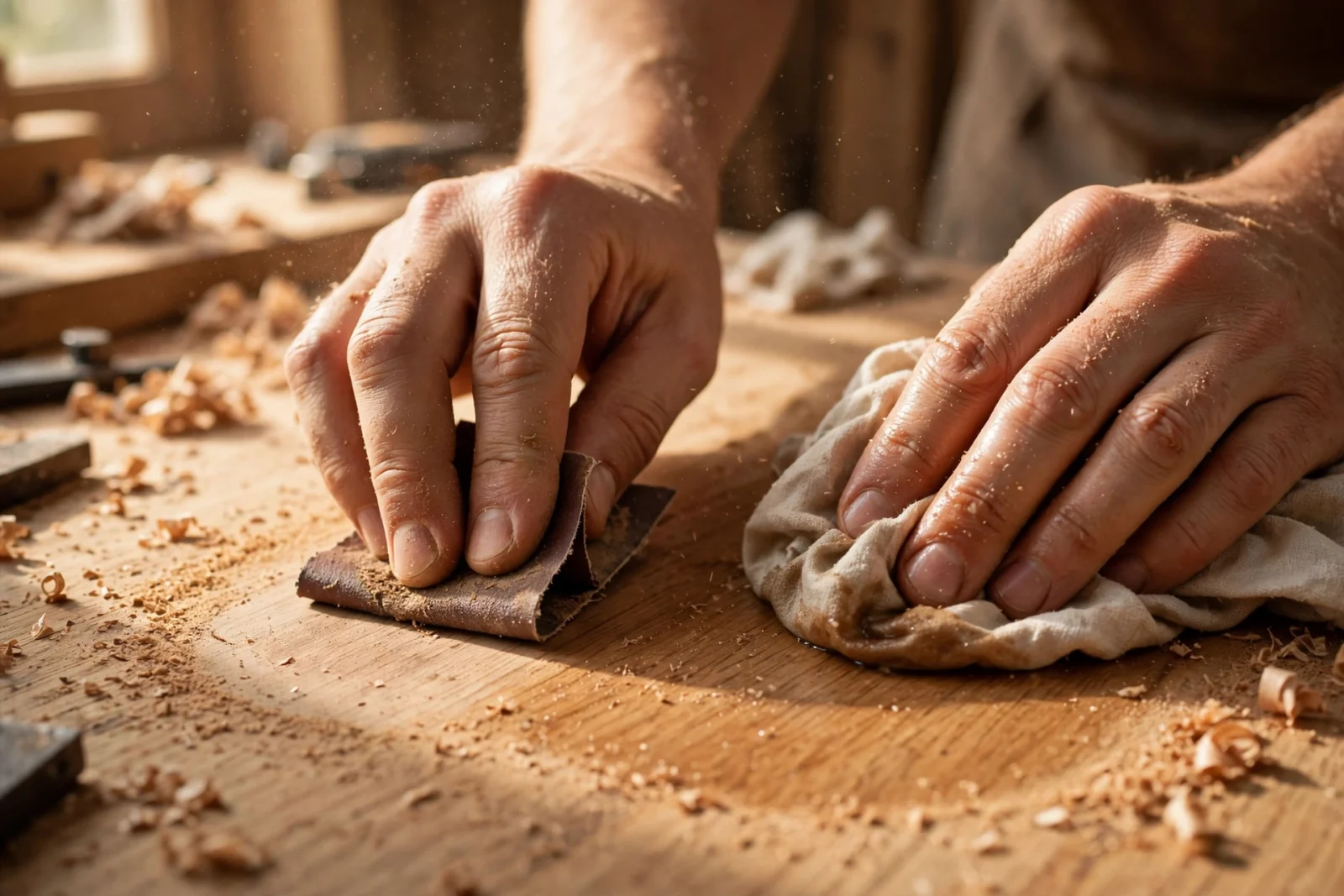
The simplest way to understand acamento is to picture a carpenter finishing a table. The cutting, joining and sanding are done. The table stands, solid and usable. Then the carpenter applies the oil, rubs it in slowly, checks the edges by hand, and stands back to look at the grain in the light. Nothing structural has changed. Everything has changed. That final stage is acamento.
In its most literal sense, acamento is the finishing process applied to a surface or a product at the end of production. It is the paint on the wall, the polish on the metal, the varnish on the wood, the seal on the stone. It is the layer that people see and touch, and it is often the layer that decides whether something lasts. A well-finished surface resists water, wear and time. A poorly finished one does not, however good the structure underneath may be.
But the word means more than a coat of paint. Across the articles and guides that have started using it, acamento carries a second, wider meaning: the care and attention applied in the final stages of any creation or process. It is the last edit of a written report, the final check of a design before it goes to the client, the careful handover at the end of a project. In this wider sense, it is the difference between work that is merely completed and work that is truly finished.
The Origins of Acamento
Acamento comes from Portuguese, and its roots are easy to trace. The verb “acabar” means to end, to finish or to conclude. Add the suffix “-mento”, which turns an action into a noun, and you get “acabamento”: the act of finishing, the finish itself. Wiktionary lists three senses for acabamento in Portuguese: finishing as an act, polish or refinement, and the final, minor details or steps in the production of something.
In Brazil and Portugal, acabamento is an everyday working word. Builders talk about the acabamento of a house the way English-speaking builders talk about the finish. It is the final visible layer of a building: the paint, the tiles, the flooring, the fixtures, the details that give a space its character. A building glossary from Lisbon defines acabamento simply as the final layer or treatment that determines how a surface looks and is used. It is practical, not poetic – and that practicality is the point. In construction, the finish is not decoration added on top. It is part of how the building works.
The spelling “acamento” is a shortened, anglicized variant of acabamento. It drops a syllable, which makes it easier to say and to brand in English, and it has been picked up as a creative reinterpretation for global markets. That is an important distinction: acabamento is a real, standard Portuguese word with a dictionary definition, while acamento is a newer coinage built from it. The idea is old. The word, in this form, is new.
There is also a small confusion worth clearing up at the start. Acamento is not Sacramento, the capital city of California, and no reliable source found during research describes a person, place or company of that name. It is a concept word, and it should be read as one.
Acamento in Architecture and Construction
Construction is where acamento begins, and it is still where the word makes the most literal sense. A building is not finished when the walls go up. It is finished when the surfaces are treated, the joints are sealed, the floors are laid and the details are resolved. In Portuguese-speaking building practice, that whole final phase is the acabamento, and it includes everything from wall textures and paint to flooring surfaces, wood treatments, metal polishing and decorative detailing.
This is not fussy work. A sealant applied to a junction is not there to make a building prettier; it is there to keep rain and wind out for decades. A floor finish is not only about how the room looks; it is about how the floor survives years of footsteps, spills and cleaning. A door that closes but does not seal is complete in one sense and unfinished in another, and the difference shows up over time in draughts, damp and repair bills. Good finishing also decides how a space feels: two rooms with the same dimensions can feel entirely different, and the difference is almost always in the finishing – the alignment of the tiles, the quality of the paintwork, the way light falls on a polished surface.
Acamento in Design and Manufacturing
From construction, the idea spread naturally into design and manufacturing, where the same principle applies at a smaller scale. A chair, a phone, a pair of shoes, a piece of clothing – each one is judged, in the end, by its finish. The edge of a table, the stitching on a seam, the weight of a hinge, the smoothness of a surface: these are the details that tell a buyer whether something was made with care or merely assembled.
In manufacturing, acamento covers the final treatments applied to a product’s surface to improve its appearance, its durability or its function. Polishing, coating, sealing, painting and plating all belong here. The treatment is chosen for the material and the purpose: a polished metal finish resists corrosion, a sealed wooden surface resists moisture, a coated fabric resists stains. The finish is engineering as much as it is aesthetics, and in safety-critical industries such as aerospace and medical devices, the quality of the finish can be a matter of safety, not style.
Designers have taken the idea further. In product design, it has come to mean the whole discipline of getting the final details right: the way a button feels when it is pressed, the way a screen responds, the way a package opens. None of these details is the product itself, and all of them shape how the product is experienced. A product that is technically complete but poorly finished feels unreliable, and people notice that feeling even when they cannot name its cause.
Acamento as a Philosophy of Work
The most interesting recent development is that acamento has escaped the workshop altogether and become a philosophy of work. Writers describing the idea now use it to talk about any job, not just a physical one. Modern work rewards speed and the appearance of productivity, and that pressure pushes people to declare things finished before they are. The report is sent, the product is shipped, the project is closed – and the finishing never happens. The result is work that is technically complete but experientially hollow.
In this wider sense, acamento is the discipline of intentional finishing. It rests on three principles that appear again and again in the guides that discuss it. The first is intent: every finishing decision is made deliberately, not by default. The second is alignment: the final form serves the original purpose, rather than drifting from it under deadline pressure. The third is responsibility: the person doing the work takes ownership of how it will be received and what it will do in the world once it is released.
That framework applies to almost anything. A presentation should not trail off into a vague question-and-answer session; it should close with a decisive, memorable statement. A customer journey should not end with an invoice; it should end with a confirmation of value. In each case, the finishing is not an extra. It is the work.
There is also a psychological side to this. Behavioural psychology has long noted that people judge an experience largely by its peak moment and by its ending – the idea known as the Peak-End Rule. A good ending can redeem a mediocre middle, and a bad ending can spoil an otherwise good experience. The Zeigarnik Effect, the tendency to remember interrupted tasks more vividly than completed ones, adds another layer: work left in a state of “good enough” keeps nagging at the mind long after it is nominally done. True finishing, by contrast, releases that energy.
Why Acamento Matters Now
There are good reasons why a word about finishing has started appearing now. The first is that the bar for creating something adequate has never been lower. Mass production, templates and AI-assisted tools can produce a passable version of almost anything in minutes. The supply of “good enough” is inexhaustible. The supply of genuinely finished work is scarce, and scarcity is valuable. The care required to finish something well cannot be automated away.
The second reason is trust. Trust is not declared; it is demonstrated through accumulated evidence. When a product, a service or a piece of work consistently delivers on its implicit promise – that it will do what it appears to do, that it will hold up under use, that it will resolve as expected – it earns trust at a rate no marketing can replicate. A frayed edge, a broken link, a presentation that ends with a shrug: each of these is a small withdrawal from the trust account. Individually they seem trivial. Collectively they define a reputation.
The third reason is cost. Finishing properly is cheaper than fixing things later, and the gap is usually large. In construction, the cost of applying a proper waterproof membrane during the initial build is a fraction of the cost of repairing water damage five years later. In software, the cost of writing clear, tested, well-documented code is a fraction of the cost of debugging an undocumented system under production pressure. Every organisation that moves fast and finishes poorly is quietly accumulating a rework debt, and when that debt comes due, it arrives with interest.
How to Practise Acamento
The idea sounds like a grand philosophy, but in practice it comes down to a few habits that anyone can adopt, whatever kind of work they do.
The first habit is to define what finished looks like before the work begins. Most projects fail at the finishing stage not because the team lacks skill, but because nobody agreed on what finishing meant. Before starting anything significant, ask what the output must do, how it must feel to the person who receives it, and what its condition must be for it to count as genuinely complete.
The second habit is the intentional pause. Finishing cannot happen in the same mental state as producing. Production needs forward momentum and a tolerance for rough edges. Finishing needs stillness, critical distance and a willingness to break something that is nearly right in order to make it fully right. Build a pause into the plan as a non-negotiable phase, not a luxury to be squeezed in if time permits.
The third habit is to check the ending specifically. Read the last paragraph of the report. Walk through the last step of the customer journey. Open the finished product and use it the way a stranger would. Endings are where trust is won or lost, and they are the part of the work most often rushed. A small amount of attention at the end is worth more than a large amount in the middle.
What Is Not Verified About Acamento
Because acamento is an unusual and recent word, this section matters. The honest position is that several things about it are not settled, and readers should know that rather than being given a false sense of certainty.
First, the word itself is not an established English dictionary entry. It does not appear in the major English dictionaries as a standard word, and its use is largely confined to online articles, blogs and design discussions, many of them published in 2025. Whether it will become a standard term or remain a niche coinage is unverified, and this article does not claim otherwise.
Second, the broader philosophy built around the word – the pillars, the frameworks, the claims about psychology and economics – comes from online guides and opinion pieces, not from peer-reviewed research or established academic sources. The underlying ideas they draw on, such as the Peak-End Rule and the Zeigarnik Effect, are real concepts from behavioural psychology, but the specific framework of acamento as a discipline is a recent construction by individual writers, and it has not been tested or endorsed by any recognised authority. That does not make it wrong. It makes it unverified as a formal system.
Third, there is no single agreed definition. Different writers use the word slightly differently: some use it strictly for physical surface finishing, others for design and manufacturing, others for a general philosophy of completion. The core meaning – finishing well, with care and intention – is consistent across them, but the boundaries of the term are loose, and no standards body or dictionary has fixed them.
Finally, acamento is not a person, a place, a brand with a documented history, or a company. No reliable source found during research describes a person or organisation of that name, and this article does not invent one. For general background on the Portuguese language and its history, Wikipedia is a useful starting point.
Frequently Asked Questions About Acamento
What does acamento mean?
Acamento means the art of finishing well. It comes from the Portuguese word acabamento, meaning finishing or completion, and it describes the final stage of any process where careful refinement turns ordinary work into something polished, durable and complete.
Is acamento the same as acabamento?
Almost, but not exactly. Acabamento is the original, standard Portuguese word for finishing, used widely in Brazil and Portugal. Acamento is a shortened, anglicized variant that has been used in English-language design and business writing to carry a broader meaning, covering not just physical finishing but the general discipline of finishing work well.
Where does the word acamento come from?
It comes from the Portuguese verb “acabar”, meaning to end, finish or conclude, plus the suffix “-mento”. The full Portuguese noun is acabamento. Acamento is a stylized shortening of that word, created for English-speaking audiences.
What is acamento in construction?
In construction, acamento is the final phase of a build: the surface treatments and details that complete a space, including paint, tiles, flooring, wood treatments, metal polishing and sealing. It determines both how a building looks and how well it survives use over time.
How is acamento used in design?
In design and manufacturing, acamento covers the finishing treatments applied to a product’s surface, such as polishing, coating and sealing, and more broadly the discipline of getting the final details right – the feel of a button, the clarity of an interface, the way a package opens.
Is acamento a real word?
That depends on what “real” means. Acabamento is a real, standard Portuguese word with a dictionary definition. Acamento is a recent, stylized variant used in English-language articles and design discussions. It is not, as far as research can confirm, an established entry in major English dictionaries, so its status as a standard English word is unverified.
Conclusion
Acamento is a small word with a large idea inside it. It names the moment when work stops being merely complete and starts being finished: the polish on the wood, the seal on the joint, the last edit of the report, the closing line of the presentation. It comes from the Portuguese acabamento, a working word from building sites and workshops, and it has grown into a way of thinking about quality, trust and care in almost any field.
The idea is older than the word. Craftspeople have always known that the finish decides whether something lasts and whether it is loved. What is new is having a single word for it, and a growing conversation about why the final stage of any job deserves more attention than it usually gets. In a world that rewards speed and the appearance of productivity, finishing well is a quiet form of resistance – and a durable advantage.
The verified facts are these: acamento derives from the Portuguese acabamento, from the verb acabar, meaning to finish; acabamento means finishing, polish and refinement, and the final details of production; and the term is used in construction, design, manufacturing and, increasingly, as a general philosophy of intentional completion. The rest – its status as a standard English word, the formal frameworks built around it, and its future – is unverified, and this article has said so plainly. You can find more guides and features like this one on the The Night Times homepage where new articles are published regularly.