
Introduction
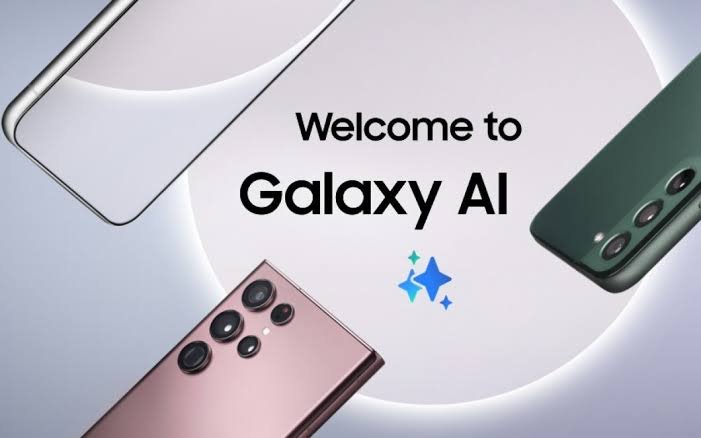
Galaxy AI has become one of the defining features of Samsung’s modern smartphone experience, changing the way people communicate, search, create content, edit photographs, and interact with their devices. Rather than being a single application, Galaxy AI represents a collection of artificial intelligence-powered capabilities integrated into Samsung Galaxy phones and the wider Galaxy ecosystem. In 2026, Samsung is expanding this approach further with more context-aware assistance, intelligent camera functions, personalized experiences, and deeper connections between devices.
The development of Galaxy AI reflects a broader shift in mobile technology. Smartphones are no longer being designed simply as communication devices. They are increasingly expected to understand what users are trying to accomplish and reduce the number of manual steps required to complete everyday tasks. Samsung’s latest Galaxy devices and One UI 9 software continue this direction, with the company describing its newer AI experience as more personal, helpful, and context-aware.
Quick Bio
| Feature | Details |
|---|---|
| Technology | Samsung’s integrated artificial intelligence experience |
| Main Platform | Samsung Galaxy smartphones and connected Galaxy devices |
| Software Integration | One UI and selected Samsung applications |
| Core Areas | Communication, productivity, photography, search, personalization, and assistance |
| Recent Generation | Galaxy AI experiences expanded with the Galaxy S26 family |
| 2026 Software | One UI 9 introduces enhanced Galaxy AI capabilities |
| AI Approach | Combines device-based processing with cloud-connected capabilities where supported |
| Ecosystem | Extends across compatible phones, foldables, earbuds, watches, and other Galaxy products |
What Is Galaxy AI?
Galaxy AI is Samsung’s name for a group of intelligent features built into compatible Galaxy products. These features use artificial intelligence and machine-learning technologies to help with tasks that traditionally required several manual actions.
For example, an AI-powered smartphone can help summarize information, translate conversations, improve photographs, identify objects, assist with writing, or provide contextual suggestions. Instead of opening separate applications for every task, users can access several intelligent functions directly through Samsung’s software environment.
The exact features available depend on the device, software version, region, language, and application. This distinction is important because Galaxy AI is not identical across every Galaxy smartphone.
Samsung introduced its first major wave of Galaxy AI features with the Galaxy S24 generation, and the technology has since expanded into newer flagship phones, foldables, and other parts of the Galaxy ecosystem.
How Galaxy AI Has Changed Samsung Phones
Traditional smartphone software generally waits for the user to issue a command. Galaxy AI moves toward a more proactive model.
Consider a simple example. A person might receive a message containing information about an event. Instead of manually copying the details into a calendar, searching for a location, and looking up related information, intelligent software can potentially recognize the context and present useful actions.
This concept is becoming increasingly important in Samsung’s 2026 software strategy. Samsung has described newer Galaxy AI experiences as capable of understanding user intent, anticipating needs, and taking actions on the user’s behalf.
The goal is not simply to add more artificial intelligence features. It is to make the phone feel more responsive to the user’s situation.
Galaxy AI and Intelligent Communication
Communication is one of the areas where AI can provide immediate practical value.
Samsung’s Galaxy AI ecosystem has included features designed to assist with calls, messages, translations, and writing. Language barriers are particularly important because modern smartphones are frequently used by people who communicate across different languages.
AI-assisted translation can help users understand foreign-language content without manually copying text into a separate translation service. Depending on the supported feature and language, translation may also be integrated into communication workflows.
Writing assistance is another important area. AI can help users adjust the tone of a message, improve grammar, summarize information, or make written communication easier to understand.
For professionals, students, travelers, and multilingual users, these capabilities can reduce repetitive work while keeping communication inside the phone’s existing software environment.
Galaxy AI for Photography and Image Editing
Smartphone photography has become another major area of AI development.
Modern Galaxy phones already rely heavily on computational photography. Artificial intelligence can help analyze a scene, recognize subjects, process multiple frames, improve detail, and optimize images.
Galaxy AI extends this concept into editing.
Instead of treating a photograph as a fixed file, intelligent editing tools can allow users to make more sophisticated changes. Depending on the compatible Galaxy model and software version, AI-assisted editing can help remove unwanted elements, reposition objects, improve composition, or generate changes that would previously have required specialized editing software.
This does not mean every AI edit will automatically produce a perfect result. Users should still inspect important photographs carefully, particularly when editing faces, text, architectural details, or other elements where accuracy matters.
Samsung’s 2026 devices continue to place AI and photography together. For example, the Galaxy S26 FE includes My FanCam, which can automatically track a selected person in video and keep that subject centered as the scene changes.
Galaxy AI and Camera Intelligence
The relationship between artificial intelligence and cameras goes beyond editing.
AI can assist during image capture by understanding subjects and environmental conditions. Modern computational photography systems can analyze lighting, movement, colors, depth, and other characteristics to determine how an image should be processed.
This can be especially useful for difficult situations such as:
- Low-light photography
- Moving subjects
- Portrait photography
- Group photographs
- Zoom photography
- Night scenes
- Video recording
Samsung’s recent Galaxy devices demonstrate how AI is becoming part of the complete photography workflow, from capturing an image to refining it afterward.
Galaxy AI for Productivity
Another major use case is productivity.
Smartphones are now used for emails, meetings, documents, notes, research, scheduling, and business communication. AI can help reduce the amount of time spent handling routine information.
For instance, summarization can turn lengthy content into shorter notes. Writing assistance can help organize thoughts before a message is sent. Intelligent search can make it easier to locate information on a device.
The advantage of this approach is convenience. A user does not necessarily need to become an AI expert. Instead, AI capabilities can operate as part of familiar smartphone functions.
Samsung’s newer software direction also emphasizes contextual assistance. One UI 9 includes enhanced Galaxy AI experiences intended to make the Galaxy environment more personalized and responsive.
Galaxy AI and Search
Searching on a smartphone is also changing.
Traditional search usually requires a user to enter keywords and examine results. AI-powered search can make the interaction more conversational and contextual.
Visual search is particularly interesting. A user may encounter an unfamiliar object, landmark, product, plant, or piece of information and use the phone’s camera or screen-based tools to obtain additional information.
The underlying idea is simple: smartphones increasingly understand not only words but also images, screen content, and context.
This makes AI search useful for education, travel, shopping research, and everyday curiosity.
Galaxy AI in 2026: One UI 9
One of the most important developments for Galaxy AI in 2026 is its integration with One UI 9.
Samsung began the official rollout of One UI 9 on September 16, 2026, initially for the Galaxy S26, S26+, and S26 Ultra after the software debuted with Samsung’s latest foldable devices. Samsung says the update brings enhanced Galaxy AI capabilities designed to make the experience richer, more personal, and more useful.
One UI 9 also places greater emphasis on contextual assistance. Samsung has highlighted functions intended to help users understand information, personalize content, organize daily activities, and interact with device-care features more efficiently.
This represents an important change in the role of AI. Rather than appearing as an isolated tool, AI is increasingly becoming part of the operating system itself.
Galaxy AI and Context-Aware Assistance
Context awareness is one of the most important directions in modern mobile AI.
A context-aware assistant does more than respond to a direct command. It attempts to understand what is happening around the user’s request.
For example, the useful response to a calendar-related question may depend on the user’s schedule. A travel-related request could involve location, time, language, and transportation information. A shopping question might involve an image currently displayed on the screen.
Samsung’s newer Galaxy AI strategy increasingly focuses on this type of interaction.
The company has described its latest AI vision as moving toward an “agentic” companion capable of understanding intent and helping perform tasks rather than simply answering isolated questions.
Galaxy AI Across the Samsung Ecosystem
Galaxy AI is not limited to smartphones.
Samsung is developing a connected ecosystem involving phones, foldable devices, earbuds, watches, and other products. This matters because users increasingly move between devices throughout the day.
Someone might begin a task on a smartphone, continue it through earbuds, check information on a watch, and return to the phone later.
Samsung’s 2026 ecosystem strategy specifically highlights deeper connections between Galaxy smartphones and wearable devices.
The wider ecosystem can make AI more useful because different devices have different strengths. A smartphone has a large screen and camera, earbuds are useful for audio interactions, and a smartwatch can provide information directly from the wrist.
Privacy and Galaxy AI
Privacy is an important consideration whenever artificial intelligence interacts with personal information.
AI-powered features may process text, images, voice, documents, or other forms of user-generated content. The exact processing method can differ between features and devices.
Some AI operations can be performed on the device, while others may rely on cloud-based processing. Users should therefore review Samsung’s information for their particular device and feature before assuming that all AI processing happens locally.
Samsung has also emphasized privacy and security as part of its newer One UI strategy. Its 2026 One UI 9 announcement highlights regular security checks and AI-powered alerts intended to help identify potential privacy risks.
For users, the practical lesson is straightforward: AI convenience should be balanced with awareness of permissions, connected services, account settings, and the type of information being processed.
Which Galaxy Phones Support Galaxy AI?
Galaxy AI availability varies considerably.
Newer premium Galaxy smartphones generally receive the broadest collection of AI capabilities, while older or less expensive models may receive only selected features. Software updates can also expand or change availability over time.
The Galaxy S26 family is a central part of Samsung’s 2026 AI strategy. Samsung has positioned the series as a new generation of AI-focused Galaxy smartphones, while the latest foldables also integrate expanded intelligent capabilities.
The Galaxy S26 FE also launched with One UI 9 and additional context-aware Galaxy AI experiences, showing Samsung’s effort to bring newer AI functions to more than just its highest-priced flagship models.
Before buying a Galaxy phone specifically for an AI feature, users should verify compatibility for their exact model, country, language, and software version.
Benefits of Galaxy AI
There are several practical advantages to integrating AI directly into a smartphone.
Less Manual Work
AI can automate repetitive activities such as summarizing information, translating content, organizing text, and editing photographs.
Better Accessibility
Language translation, voice-related assistance, intelligent text processing, and visual recognition can make smartphones easier to use for different groups of people.
Faster Content Creation
AI-assisted editing and writing can help users produce content without needing advanced technical skills.
More Personalized Experiences
Context-aware features can make recommendations and assistance more relevant to individual situations.
Stronger Device Integration
AI becomes more useful when it can work across smartphones, earbuds, watches, and other connected products.
Limitations to Consider
Despite its potential, Galaxy AI is not perfect.
Artificial intelligence can occasionally misunderstand instructions, generate incorrect information, make an unsuitable edit, or interpret context incorrectly. AI-generated content should therefore be reviewed before it is used for important work.
Feature availability is another limitation. Not every Galaxy phone supports every AI capability, and availability may depend on software, region, language, account status, or hardware.
There can also be a learning curve. Some users may find traditional smartphone functions more predictable than AI-driven tools, particularly when they want complete manual control.
The best approach is to treat AI as an assistant rather than an unquestionable authority.
The Future of Galaxy AI
The direction of Galaxy AI suggests that smartphones are gradually moving from command-based interfaces toward intent-based computing.
In the future, users may spend less time opening individual applications and more time describing what they want to accomplish. The smartphone could then coordinate several functions behind the scenes.
Samsung’s 2026 focus on agentic AI provides an indication of this direction. Instead of AI merely generating an answer, the broader objective is to understand a user’s intent and help complete a multi-step task.
This could affect communication, travel planning, productivity, entertainment, photography, shopping research, and device management.
However, the quality of this experience will depend on accuracy, privacy controls, transparency, battery efficiency, and how much control users retain over automated actions.
Final Thoughts
Galaxy AI has evolved from a collection of interesting smartphone features into a broader part of Samsung’s mobile strategy. Its influence can be seen across communication, photography, writing, search, productivity, personalization, and connected-device experiences.
The arrival of One UI 9 and the continued development of the Galaxy S26 generation show that Samsung is moving toward a more contextual form of mobile computing.
The most important point is that Galaxy AI is not simply about putting a chatbot inside a phone. Its larger purpose is to make everyday interactions more intelligent and reduce unnecessary manual steps. At the same time, users should remain aware of feature limitations, privacy settings, device compatibility, and the possibility of AI-generated mistakes.
As Samsung continues developing its Galaxy ecosystem, artificial intelligence is likely to become increasingly embedded in the ordinary functions people perform on their devices. For consumers, the real value will ultimately come from how reliably these tools solve practical problems rather than simply how advanced they sound.
Frequently Asked Questions About Galaxy AI
1. What is Galaxy AI?
Galaxy AI is Samsung’s collection of artificial intelligence-powered features integrated into compatible Galaxy smartphones and other Galaxy devices. It covers areas such as communication, photography, writing, search, productivity, and personalized assistance.
2. Is Galaxy AI available on every Samsung Galaxy phone?
No. Availability depends on the specific Galaxy model, software version, region, language, and individual feature. Newer flagship devices generally receive the widest range of capabilities.
3. What can Galaxy AI do?
Depending on the device, Galaxy AI can assist with tasks such as translation, writing, summarization, photo editing, visual search, camera functions, and contextual assistance.
4. Does Galaxy AI work without an internet connection?
Some AI functions can use on-device processing, while others may require network or cloud services. The requirements vary by feature, device, and software version, so users should check the details for the specific function they want to use.
5. What is new about Galaxy AI in 2026?
Samsung’s 2026 Galaxy AI strategy places greater emphasis on contextual and agentic assistance. One UI 9 expands AI integration across compatible Galaxy devices, while the Galaxy S26 family and newer foldables provide the latest generation of Samsung’s AI experiences.