
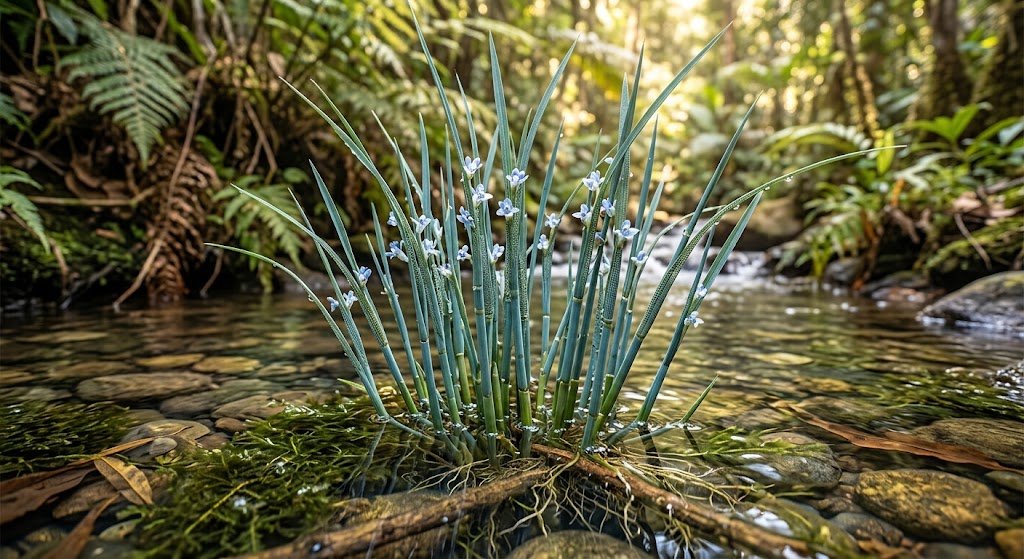
Lyposingrass is appearing across wellness blogs, gardening pages, supplement discussions, and search results—but the most important fact is also the one many articles skip: there is no clearly established botanical species, drug, nutrient, or standardized health product recognized under this exact name.
That makes the topic unusually easy to misunderstand. Some websites describe it as a tropical perennial grass. Others connect it with lemongrass, Liriope, detox powders, weight-management products, herbal tea, ornamental ground cover, or sustainable agriculture.
So what should a careful reader believe?
Start with identity, not benefits. Before discussing nutrition, cultivation, dosage, medicinal effects, or environmental advantages, a trustworthy source first has to establish what substance or plant is actually being discussed.
What Is Lyposingrass?
At present, Lyposingrass is best treated as an ambiguous internet term, rather than a verified scientific plant name.
Recent medical guidance from Acıbadem Hospitals Group similarly notes that the word is not a standard diagnosis, established treatment, or conventional medical term. Depending on where it appears, it could refer to a supplement, herbal mixture, commercial name, or even a misspelled term.
That distinction matters more than it might seem.
In botany, a plant can normally be connected to a scientific name, taxonomic authority, family, geographical distribution, herbarium record, or recognized plant database. In medicine and nutrition, an ingredient should have an identifiable substance, formulation, amount, composition, and evidence base before reliable health conclusions can be made.
Without that identity layer, claims about what something supposedly “does” become very difficult to verify.
Search results demonstrate the problem clearly. One site portrays Lyposingrass as a hardy Southeast Asian perennial associated with tea, food, traditional medicine, livestock feed, and soil stabilization. Another identifies the term with Liriope, a very different ornamental plant. Other publishers frame it primarily as a wellness or supplement label.
Those descriptions should not automatically be treated as descriptions of the same biological material.
Is Lyposingrass a Real Plant?
There is currently no reliable evidence establishing Lyposingrass as an accepted botanical name.
That does not mean nobody uses the word. Common plant names can emerge regionally, commercially, informally, through translation errors, or through online communities.
But an informal common name becomes scientifically useful only when it can be mapped to an identifiable organism.
Why a Scientific Name Changes Everything
Imagine buying something labeled simply “green grass powder.”
That tells you almost nothing.
Wheatgrass, barley grass, lemongrass, ornamental lilyturf, lawn grasses, and dozens of other monocotyledonous plants can look superficially similar while having dramatically different chemistry, culinary uses, essential oils, fiber profiles, pharmacology, and safety considerations.
A scientific name functions as an identity key.
If a company sells a product under the name Lyposingrass, ideally you should be able to determine:
- Its genus and species
- The plant part being used
- Whether it is whole plant material or an extract
- The extraction method, if applicable
- Geographic origin
- Amount per serving
- Manufacturer or supplier
- Batch or lot information
- Relevant purity and contaminant testing
Without those details, research conducted on another plant cannot safely be transferred to the product in front of you.
That is one of the biggest weaknesses in existing online discussions of this subject.
Is Lyposingrass the Same as Lemongrass?
There is currently no good evidence that Lyposingrass and lemongrass are interchangeable names.
Lemongrass has a clear botanical identity.
Cymbopogon citratus is an accepted species documented by Kew Science’s Plants of the World Online database. Kew identifies it as a perennial grass and records its established taxonomy, geographical distribution, and recognized uses.
This provides researchers with something crucial: a defined organism.
Some online pages associate the newer term with a citrus-scented grass or appear to use lemongrass studies as indirect evidence for supposed benefits. That is not enough to prove the two names describe the same species.
Appearance isn’t proof.
A similar smell isn’t proof either.
And marketing phrases such as “aromatic tropical grass” certainly do not establish taxonomic equivalence.
If a commercial package uses both names, inspect its botanical identification. A label that states Cymbopogon citratus provides far more useful information than one that simply uses an unfamiliar marketing name.
Could Lyposingrass Actually Mean Liriope or Monkey Grass?
Here the confusion deepens.
Some gardening websites associate the term with Liriope, plants commonly known as lilyturf or monkey grass. That interpretation should not automatically be accepted as the standard definition either.
Kew recognizes Liriope muscari as an accepted species in the family Asparagaceae and describes its native range as extending from China through temperate East Asia.
Liriope and culinary lemongrass are not simply two varieties of the same thing.
They belong to different botanical groups.
Liriope muscari is placed in Asparagaceae, while Cymbopogon citratus belongs to Poaceae, the true-grass family.
This creates a practical safety issue.
If one publisher uses Lyposingrass to describe an ornamental Liriope and another uses the same word for a supposedly edible aromatic herb, blindly following advice about teas, recipes, propagation, pets, herbal preparations, or supplementation could result in serious confusion.
Never infer edibility from the word “grass.”
Identify the species first.
Why Is Lyposingrass Suddenly Trending Online?
The word itself has characteristics that make it unusually clickable.
“Lypo” sounds similar to terminology associated with lipids, lipolysis, slimming, or body-fat reduction. “Grass,” meanwhile, signals naturalness, greenery, herbs, plant-based nutrition, and wellness.
Put those sounds together and you get a term that feels simultaneously scientific and natural.
That is powerful branding psychology.
It does not, however, create scientific evidence.
Emerging internet terms can spread through a surprisingly simple feedback loop. A phrase appears somewhere online. Several websites attempt to define it. New pages borrow descriptions from those earlier pages. Search volume begins increasing, encouraging even more publishers to create content.
Eventually, repetition starts looking like consensus.
But repeated claims are not independent evidence.
Ten websites repeating the same vitamin profile do not equal one authenticated laboratory analysis.
Twenty articles calling something a traditional medicinal herb do not establish ethnobotanical history.
And a collection of wellness blogs cannot substitute for botanical taxonomy, human clinical trials, toxicological data, or regulatory documentation.
That distinction is central to Google’s E-E-A-T philosophy as well: reliable information should demonstrate experience, expertise, authoritativeness, and trustworthiness, especially when health decisions are involved.
Claimed Lyposingrass Benefits: What Does the Evidence Actually Support?
Common online claims include improved digestion, antioxidant protection, stronger immunity, reduced inflammation, better cardiovascular function, increased energy, detoxification, metabolic support, and weight management.
Those effects should not currently be presented as established benefits of Lyposingrass.
Why?
Because there is still no consistently defined ingredient to investigate.
That does not mean every underlying biological concept is false. Dietary fiber can support bowel regularity. Certain plant compounds demonstrate antioxidant activity. Specific herbs contain phytochemicals that have been studied for physiological effects.
The scientific problem is known as evidence extrapolation.
Research on wheatgrass does not automatically prove claims about barley grass.
Research on lemongrass does not automatically prove claims about another plant.
And research on a known botanical species certainly cannot establish the effects of an unidentified substance merely because both are described as “green,” “herbal,” or “antioxidant-rich.”
A Better Four-Level Evidence Test
Before believing any benefit claim, examine four levels of evidence.
1. Identity evidence: Has the actual ingredient been identified scientifically?
2. Composition evidence: Has that material been analyzed to show what nutrients, phytochemicals, or active compounds it contains?
3. Human evidence: Has the same authenticated material been studied in people at a clearly defined dose?
4. Outcome relevance: Did those studies demonstrate meaningful health outcomes rather than merely changes in laboratory markers?
This hierarchy exposes weak claims quickly.
If a product fails at level one, conclusions at levels two through four become speculative.
Lyposingrass for Weight Loss: Marketing vs. Physiology
Weight-loss claims require particular caution.
The name Lyposingrass may naturally evoke associations with fat metabolism or lipolysis. That linguistic connection should never be confused with physiological evidence.
At present, there is no established clinical evidence showing that a standardized substance under this name causes meaningful human fat loss.
Be especially cautious around phrases such as:
- “Melts stubborn belly fat”
- “Activates fat burning”
- “Flushes fat-producing toxins”
- “Supercharges metabolism”
- “Targets abdominal fat”
- “Detoxes the body for rapid weight loss”
These statements may sound mechanistic, yet a scientific-sounding mechanism is not the same as a demonstrated clinical outcome.
Body-weight regulation involves energy intake, energy expenditure, appetite signaling, dietary patterns, muscle mass, physical activity, sleep, medications, metabolic adaptations, genetics, endocrine conditions, and numerous behavioral factors.
A catchy botanical label does not bypass that physiology.
If a seller relies heavily on dramatic testimonials, before-and-after photography, proprietary blends, countdown timers, or vague descriptions of “fat-burning compounds” while providing little ingredient transparency, consider that a marketing signal rather than efficacy evidence.
Is Lyposingrass Safe?
The safest answer is that safety cannot be established from the name alone.
Risk depends on what the substance actually contains, what dose is consumed, how the material was processed, whether it is contaminated, and who is taking it.
Possible concerns around poorly identified herbal products include allergic reactions, adulteration, unexpected pharmacologically active compounds, pesticide residues, microbial contamination, heavy metals, medication interactions, and confusion between edible and ornamental species.
An unidentified plant powder creates another problem: traceability.
If you do not know the organism, you cannot reliably investigate its contraindications, documented toxicology, allergenic potential, or interactions.
The U.S. Food and Drug Administration advises consumers that dietary supplements are not approved for safety and effectiveness before marketing in the same manner as pharmaceutical drugs. The agency also recommends discussing supplement use with an appropriate healthcare professional.
Who Should Be Especially Careful?
Additional caution is warranted for pregnant or breastfeeding people, children, older adults taking several medications, and individuals with chronic liver or kidney conditions.
People taking anticoagulants, diabetes medications, blood-pressure medicines, sedatives, immunosuppressants, or other therapies with meaningful interaction potential should also avoid experimenting with unidentified supplements without professional guidance.
The practical principle is straightforward:
Unknown identity means an unknown risk profile.
How to Evaluate a Lyposingrass Product Before Buying
If you encounter capsules, tea, powder, extracts, seedlings, seeds, or another commercial product carrying this name, ignore the dramatic front-label messaging for a moment.
Read the technical information instead.
Look for:
- A full botanical or chemical identity, not merely a trademark or common name
- The precise plant part used, such as leaf, stem, root, rhizome, or seed
- A disclosed amount per serving
- Manufacturer identity and physical contact information
- Lot or batch number
- Expiration or best-before information
- Appropriate third-party testing
- Contaminant screening where relevant
- Allergen information
- Storage instructions
- Appropriate warnings
- Claims proportionate to the available evidence
For supplements sold in the United States, FDA guidance explains that labels generally must provide dietary ingredient and amount information within a Supplement Facts panel. FDA also distinguishes between health claims, nutrient-content claims, and structure/function claims.
This distinction is critical.
A statement that a supplement “supports” a normal bodily function is not equivalent to FDA establishing that the product treats or prevents disease. Structure/function claims operate under different regulatory requirements from authorized health claims.
If a company cannot clearly explain what Lyposingrass represents in Latin botanical nomenclature or another precise ingredient standard, that should be considered a significant due-diligence failure.
Can You Grow Lyposingrass at Home?
Only after determining which plant the seller actually means.
Many online cultivation guides give instructions such as “provide full sun,” “allow six to eight hours of sunlight,” “water moderately,” “plant after frost,” or “space clumps 18 to 24 inches apart.”
These details sound authoritative.
Without species identification, however, they are unreliable.
A tropical Cymbopogon species and an ornamental Liriope have different growth habits, temperature preferences, landscape applications, water requirements, and propagation methods.
Even the word “grass” is misleading here. Liriope muscari belongs to Asparagaceae, not Poaceae, while Cymbopogon citratus is a true grass.
Gardeners should therefore obtain the scientific botanical name from the nursery, seller, or seed supplier first. Then use species-specific cultivation recommendations from recognized botanical gardens, horticultural institutions, or university extension programs.
Seven Red Flags That an Article or Seller Is Overclaiming
A trustworthy source should be willing to say “the evidence is insufficient.”
That is particularly important when covering new or ambiguous wellness terminology.
Be cautious when a page:
- Publishes an exact vitamin or mineral profile without laboratory evidence
- Claims centuries of traditional use without identifying a specific culture, historical source, region, or botanical species
- Quietly transfers research from lemongrass, wheatgrass, or another plant to Lyposingrass
- Recommends medical doses without identifying a standardized ingredient
- Provides detailed cultivation instructions without establishing botanical identity
- Cites mainly other blogs that repeat the same unsupported statements
- Promises rapid weight loss, detoxification, disease treatment, or guaranteed health outcomes
None of these signs alone automatically proves that a business is fraudulent.
They do show, however, that the burden of verification has not been satisfied.
What We Can Responsibly Say About Lyposingrass Today
The most defensible definition is narrower—and ultimately more useful—than the elaborate descriptions found across many websites.
Lyposingrass is an emerging, inconsistently defined term appearing in plant, gardening, wellness, and supplement content.
Its precise botanical or chemical identity has not been standardized across credible sources.
As a result, claims concerning its nutritional composition, medicinal properties, agricultural value, sustainability benefits, weight-loss potential, or environmental impact cannot responsibly be generalized until researchers or sellers establish exactly what material is being discussed.
The picture could change.
A manufacturer may formalize a branded ingredient. A botanist could document the word as a genuine regional common name. A commercial product might publish authenticated taxonomic identification, chemical analysis, toxicological testing, and eventually human clinical research.
If that happens, the evidence should be evaluated against that specific substance.
It should not be retroactively inferred from older pages that were discussing something else.
Precision beats hype.
FAQ About Lyposingrass
1. What is Lyposingrass used for?
Online sources associate the term with herbal tea, dietary supplements, digestive wellness, weight management, gardening, ornamental ground cover, livestock feed, and soil stabilization.
The problem is that these descriptions may refer to entirely different plants or commercial concepts. Until the exact ingredient or botanical species is established, there is no single scientifically validated use profile that applies to everything carrying the name.
2. Is Lyposingrass scientifically proven?
No robust scientific evidence currently establishes it as a standardized botanical ingredient with proven clinical health benefits.
A persuasive evidence chain would require a defined plant species or chemical substance, authenticated samples, reproducible composition, standardized dosing, toxicological evaluation, and appropriately designed human studies. Research borrowed from another herb or grass cannot fill those gaps.
3. Is Lyposingrass the same as lemongrass?
There is no reliable basis for assuming the two terms are synonyms.
Lemongrass can be specifically identified as Cymbopogon citratus, an accepted botanical species documented by Kew Science. If a seller claims its product is lemongrass, confirm that the scientific species name actually appears on the label rather than relying solely on a similar-sounding common or commercial name.
4. Can Lyposingrass help with weight loss or belly fat?
There is currently no established human clinical evidence demonstrating that a standardized substance specifically identified by this name produces meaningful weight loss or selectively reduces abdominal fat.
Any company making such claims should identify the actual ingredient, disclose the effective dose, and provide credible human research performed on that same material. Testimonials, theoretical mechanisms, and phrases such as “metabolism support” are not substitutes for controlled clinical evidence.
5. How can I tell whether a Lyposingrass supplement is legitimate?
Begin with traceability rather than advertising.
Look for the ingredient’s scientific identity, exact amount per serving, manufacturer details, batch number, appropriate third-party testing, contaminant screening, warnings, and a properly presented Supplement Facts panel where legally required.
Most importantly, ask one basic question:
What exactly is inside the product?
If the manufacturer cannot provide a precise answer, there is little reason to trust highly specific claims about what that ingredient supposedly does inside your body.
Conclusion: Verify the Identity Before You Trust the Benefits
Lyposingrass is a useful case study in how quickly an undefined term can acquire an elaborate history online.
Search results can make it sound like an established superfood, ancient medicinal grass, metabolism-enhancing supplement, sustainable agricultural crop, or easy-care ornamental plant. Yet those narratives conflict on the most fundamental question:
What organism or ingredient are they actually describing?
That question should come first.
If you are considering a supplement or herbal product, ask the seller for the scientific ingredient name, plant part, complete ingredient list, amount per serving, testing documentation, and evidence connected specifically to that material.
If you are considering growing the plant, obtain its botanical name before buying seeds, following care instructions, consuming any part of it, or preparing it as tea.
And if a website presents sweeping health benefits without first establishing identity, composition, and evidence, keep searching.
Until credible identification is available, treat Lyposingrass as a term that still needs to be defined—not a health benefit that has already been proven.