
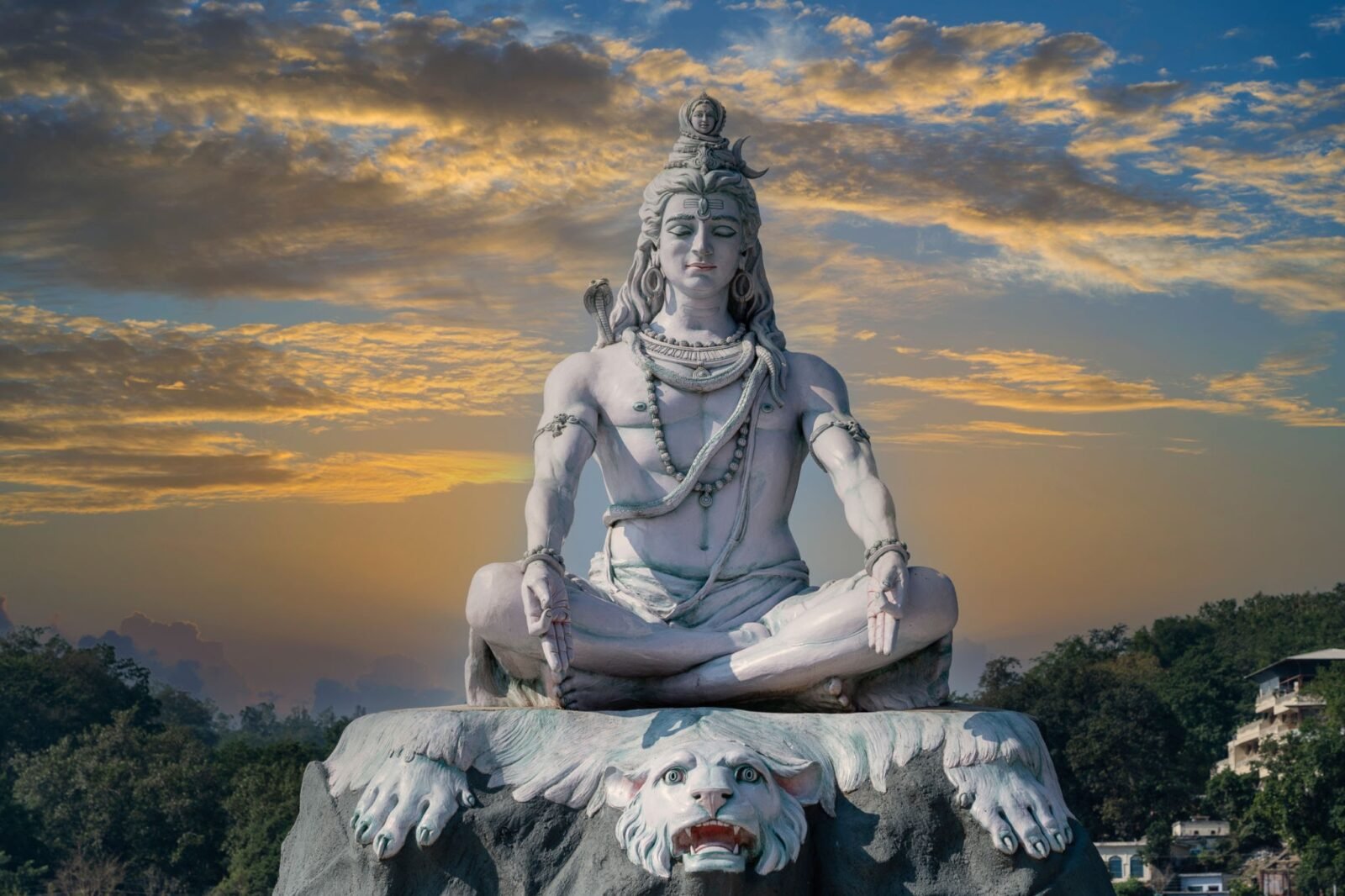
In the vast tapestry of ancient Indian spirituality, Lord Shiva represents the ultimate paradox—he is both the silent, motionless ascetic meditating in the snowy peaks of Mount Kailash and the ecstatic cosmic dancer whose movements dissolve and recreate the universe. For millions of seekers navigating the chaotic currents of modern life, connecting with this profound energy can feel daunting. However, the Shiv Chalisa serves as an incredibly accessible, highly poetic bridge that brings the expansive, infinite nature of Mahadev directly into our daily conscious awareness.
For generations, this forty-verse hymn has echoed through humble village courtyards, bustling metropolitan temples, and quiet home altars. Devotees instinctively turn to its rhythmic verses to soothe a stressed mind, ward off deep-seated fears, and seek a sense of divine protection during difficult transitions. Because it is composed in a lyrical, vernacular language rather than rigid, academic Sanskrit, it allows any speaker to experience deep devotion (bhakti) without needing years of linguistic training.
Yet, to view this sacred text as a mere repetitive ritual is to miss its deeper brilliance. Behind its comforting cadence lies a rich historical legacy, profound cosmological lessons, and a genuine science of sound that can systematically calm our nervous system. By exploring the history, authorship, and layered symbolism of these verses, you can transform your daily chanting from a mechanical habit into a deeply conscious, life-altering spiritual practice.
Shiv chalisa
Quick Bio
The word Chalisa is derived from the Hindi word chalees, which translates to the number forty. Therefore, the Shiv Chalisa is literally a forty-verse poetic hymn designed to glorify, contemplate, and invoke the energy of Lord Shiva.
In ancient times, highly complex Sanskrit stotras (like the Shiva Tandava Stotram) were the primary means of praising the divine. While beautiful, they required precise grammar, flawless pronunciation, and a deep understanding of complex Vedic rules. The Chalisa format revolutionized this. By condensing vast, complex mythologies into exactly forty easily singable, rhythmic verses, it made spirituality democratic. It meant that a farmer, a householder, or a child could connect with the supreme consciousness of Shiva with the same ease and depth as a high priest.
A Journey Through Time: History and True Authorship
A common misconception is that all popular Chalisas were penned by the famous saint Tulsidas, the legendary author of the Hanuman Chalisa. While Tulsidas certainly popularized the Avadhi-based 40-verse structure, the Shiv Chalisa is historically credited to a lesser-known but deeply realized saint named Sant Ayodhya Das (often referred to as Ayodhya Prasad).
During the Bhakti Movement in medieval India (roughly between the 14th and 17th centuries), there was a powerful cultural shift away from dry, intellectual rituals toward emotional, direct, and personal relationships with God. Saint-poets realized that language was the ultimate barrier. By choosing Awadhi—a rich, sweet dialect of the common people spoken in Northern India—Ayodhya Das managed to take the towering, often intimidating concepts of the Shiva Purana and weave them into a warm, accessible folk song. The text concludes with his humble signature, where he asks Shiva to erase his worldly miseries and bless his readers with fearlessness.
The Literary Blueprint: How the Hymn is Structured
The Shiv Chalisa is built with an intentional poetic architecture that guides the chanter’s mind through a progressive journey of focus, visualization, and deep surrender.
-
-
The Invocation (Opening Dohas): The hymn begins with two classic Dohas (two-line couplets). Curiously, the first line begins by bowing to Lord Ganesha, the elephant-headed deity of wisdom and remover of obstacles, who also happens to be Shiva’s son. This aligns with the ancient tradition of never starting any holy work without invoking Ganesha first.
-
The Main Body (40 Chaupais): These are four-line verses (quatrains) with a quick, bouncing rhythm. They are highly visual, painting descriptive portraits of Shiva’s physical form, describing his weapons, introducing his family, and recounting his famous cosmic victories.
-
The Prayer of Grace (Concluding Doha): The hymn closes with a final couplet that serves as a spiritual guarantee. It lists the Phalashruti—the spiritual and material benefits that naturally blossom in the life of anyone who recites these verses with absolute focus and a pure heart.
-
Unveiling the Legends Within the Verses
The forty verses of the Shiv Chalisa are not just decorative adjectives; they are concentrated summaries of epic stories from the Puranas. When you understand these stories, the words carry far more weight when you chant them:
1. The Taming of the Wild River Ganga
One of the verses describes how the holy river Ganga descended from heaven with immense pride, threatening to sweep the entire Earth away with her torrential force. To protect the planet, Lord Shiva stood calmly and caught her massive, raging waters in his thick, matted locks (Jata). This story is a beautiful metaphor for mental control: Ganga represents our wild, rushing thoughts, while Shiva’s matted hair represents the meditative poise that can capture and calm even the most chaotic mental currents.
2. The Great Cosmic Poison (Samudra Manthan)
The text praises Shiva as Neelkanth—the blue-throated one. During the churning of the cosmic ocean, a deadly poison called Halahala emerged, threatening to instantly destroy all of creation. While other gods fled in terror, Shiva quietly stepped forward, gathered the poison, and drank it. His consort, Goddess Parvati, pressed his throat to keep the poison from reaching his stomach, turning his neck dark blue. This reminds us that a mature mind does not pass its pain onto others; instead, it processes, holds, and neutralizes life’s toxicity with grace.
3. Lord Rama’s Devout Sacrifice
The Chalisa recounts how Lord Rama worshipped Shiva in Rameshwaram before crossing the ocean to Lanka. Rama wished to offer one thousand lotuses to Shiva. To test his devotion, Shiva secretly hid one of the flowers. When Rama realized he was one flower short, he immediately prepared to pluck out his own beautiful, lotus-shaped eye (Kushal-Nain) to complete the offering. Deeply moved by this absolute surrender, Shiva appeared, stopped him, and granted him the victory he sought.
Sound, Mind, and Body: The Neuro-Acoustic Impact of Chanting
While the spiritual aspects of chanting are beautiful, modern neuroscience provides an equally fascinating perspective on why chanting the Shiv Chalisa feels so profoundly calming to our physiology:
The Vagus Nerve Stimulation: The repetitive, rhythmic pronunciation of Avadhi syllables requires structured, sustained exhalations. This practice of slow, deep breathing directly stimulates the vagus nerve, the main pathway of our parasympathetic nervous system. When the vagus nerve is activated, it instantly signals your heart rate to slow down, lowers blood pressure, and dramatically reduces circulating cortisol (the primary stress hormone).
Furthermore, the physical vibrations produced in the vocal cords, mouth, and nasal passages during chanting act as a gentle internal massage for the brain. It shifts brainwave activity away from high-frequency Beta waves (associated with anxiety, overthinking, and fight-or-flight states) and coaxes the brain into deeply restorative Alpha and Theta waves, which are associated with deep meditation, creative flow, and healing.
Astrological Relevance and Sacred Timings
In Vedic Astrology (Jyotish), Lord Shiva is recognized as the ultimate master of the Moon (Chandra), which sits beautifully as a crescent on his forehead. Because the Moon directly governs human emotions, moods, mental health, and peace of mind, chanting the Shiv Chalisa is often prescribed as a highly effective remedial practice (Upaya) for individuals experiencing emotional distress, chronic anxiety, or difficult astrological phases.
-
Mondays (Somvar): Historically dedicated to Shiva, chanting the Chalisa on Mondays is believed to clear mental fog and bring emotional stability.
-
Trayodashi & Pradosh: The thirteenth day of both the waxing and waning moon phases is considered a highly charged spiritual window. Fasting on this day and chanting the Chalisa during the twilight hours is said to dissolve deep karmic burdens.
-
The Holy Month of Shravan: During this monsoon season, cosmic energies are believed to be highly receptive, making daily recitations incredibly fruitful.
Comparing Shiva Chants: Which One is Right for You?
Depending on your current state of mind and spiritual goals, different chants resonate with different energies. Here is how the Shiv Chalisa compares to other popular hymns dedicated to Lord Shiva:
Debunking Common Misconceptions
As with many ancient practices, several unhelpful myths have gathered around the recitation of the Shiv Chalisa over the centuries. Let’s look at the facts:
-
Misconception 1: Women should not chant it.
-
The Reality: This is a completely baseless cultural myth. Shiva is the ultimate embodiment of Ardhanarishvara—the divine, non-dual union of masculine and feminine energies. Shiva belongs to all living beings equally, regardless of gender.
-
-
Misconception 2: If you make a pronunciation error, you will face divine wrath.
-
The Reality: Shiva’s most beloved name is Bholenath, which literally means “the innocent, simple, and easily pleased Lord”. He values the purity of your devotion and the love in your heart infinitely more than flawless linguistic articulation.
-
-
Misconception 3: It must only be done in front of a consecrated temple idol.
-
The Reality: While a quiet, dedicated altar is beautiful, you can chant the Shiv Chalisa anywhere—in a park, in your car during a long commute, or silently in your mind before sleep. Shiva is omnipresent; your own consciousness is his truest temple.
-
A Practical Step-by-Step Guide to Reciting the Shiv Chalisa
To get the absolute most out of your practice, try incorporating this mindful workflow into your daily routine:
Bringing It All Together: A Lifelong Path of Peace
At its core, the Shiv Chalisa is much more than an ancient piece of religious literature; it is a timeless manual for mental and emotional self-regulation. By detailing the glorious, compassionate acts of Lord Shiva, it gently coaxes our minds away from trivial, everyday worries and points us toward a larger, more expansive reality.
Whether you chant it daily as a sacred discipline or turn to it only during times of personal crisis, its simple, rhythmic verses are always ready to offer a sanctuary of peace, strength, and quiet clarity in an unpredictable world.
Frequently Asked Questions
1. What is the best time of day to chant the Shiv Chalisa?
While you can chant it at any hour of the day, the most auspicious times are considered to be Brahma Muhurta (the quiet hours of dawn, between 4:00 AM and 6:00 AM) or during the evening twilight (Sandhya Kaal). During these transitional times of day, the atmosphere is naturally still, making it much easier for your mind to settle into deep meditation.
2. Is it mandatory to fast while reciting the Shiv Chalisa?
No, fasting is not mandatory. While some devotees choose to fast on Mondays or during Pradosh Vrats as a form of physical and mental purification, your internal devotion, focused attention, and sincerity of heart are far more important to Lord Shiva than whether or not you have eaten.
3. Can I recite the Shiv Chalisa in English or other regional translations?
Absolutely. While the original Awadhi verses carry a unique rhythmic charm and sonic resonance, understanding the meaning of what you are saying is key to true devotion. Reading an accurate translation in English, Tamil, Bengali, or any other language with deep focus is incredibly beneficial.
4. How long does it take to chant the Shiv Chalisa?
Because it consists of 40 short, rhythmic verses, a standard, steady recitation takes approximately 7 to 10 minutes. If you are a beginner or are reading along with an English translation, it may take 12 to 15 minutes as you familiarize yourself with the pronunciation.
5. Why does the Shiv Chalisa mention other deities like Ganesha, Kartikeya, and Rama?
Shiva’s divinity is deeply intertwined with the stories of those around him. The Shiv Chalisa includes Ganesha and Kartikeya because they are his divine sons, representing wisdom and courage. It mentions Lord Rama to highlight the beautiful, reciprocal relationship of devotion between different avatars, showing that all spiritual paths ultimately lead to the same singular, divine consciousness.