
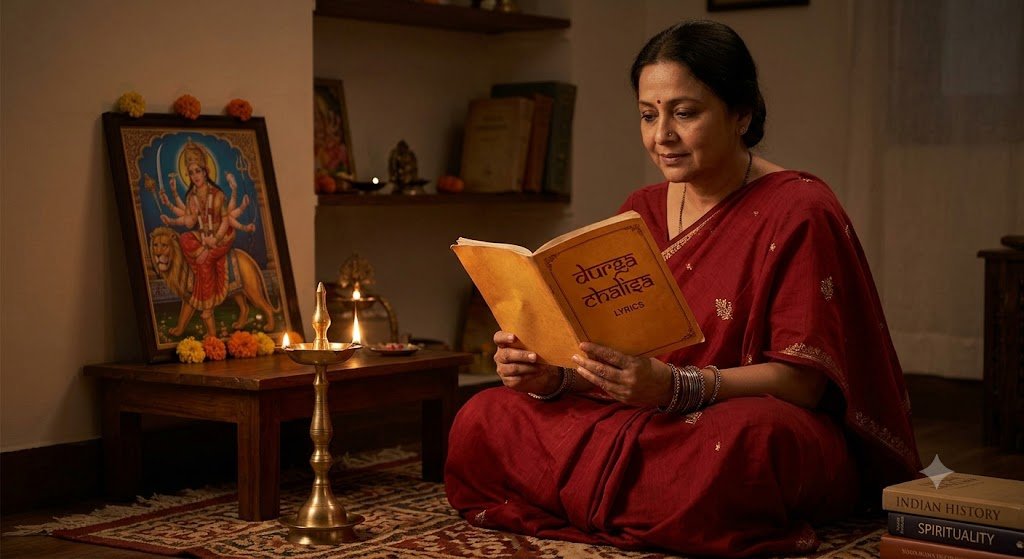
In the vast tapestry of ancient Indian spirituality, the concept of the Divine Feminine, or Shakti, stands as the absolute source of cosmic energy, creation, and protection. For centuries, seekers and householders alike have sought refuge in this maternal force to navigate the turbulent waters of worldly life. Among the various spiritual tools available in the Vedic and Bhakti traditions, chanting the sacred durga chalisa lyrics has emerged as one of the most accessible and extraordinarily powerful ways to establish a direct, personal link with Goddess Durga.
The word Chalisa is derived from chalis, the Hindi word for forty, denoting the forty poetic verses (Chaupais) that constitute this devotional hymn. Unlike complex Vedic fire rituals or highly technical Sanskrit mantras that require precise initiations and flawless pronunciations, this beautiful composition is designed to be easily sung, memorized, and understood by everyone. It functions as a portable spiritual shield, a poetic roadmap of divine qualities, and a heartfelt plea for comfort in times of distress.
By exploring the deeper history, symbolic metaphors, and psychological impacts of these verses, we discover that the hymn is far more than a simple prayer. It is a transformational psychological and spiritual tool that balances our inner energies, builds mental resilience, and aligns us with the supreme protective force of the universe. Whether you are a lifelong devotee or a curious seeker exploring Eastern mysticism, understanding the essence of these verses can fundamentally shift your spiritual practice.
durga chalisa lyrics
The Sacred Origins and Historical Evolution of the Hymn
To fully appreciate the beauty of the durga chalisa lyrics, we must journey back to the historical climate of medieval India. During the rise of the Bhakti Movement, a profound cultural shift occurred across the subcontinent. Prior to this era, spiritual knowledge and sacred liturgies were primarily preserved in Sanskrit, a language tightly guarded by the priestly class and inaccessible to the common person.
Saints and poets of the Bhakti era sought to democratize spirituality. They believed that divine love and salvation should not be gatekept by linguistic or social barriers. By composing prayers in vernacular languages like Awadhi, Braj Bhasha, and regional dialects, they returned the power of worship directly to the people.
The Durga Chalisa belongs to this beautiful wave of devotional literature. It was created to condense the massive narratives found in ancient texts like the Devi Mahatmya (also known as the Durga Saptashati) into a highly concise, rhythmic forty-verse format. Instead of chanting seven hundred complex Sanskrit verses, a devotee could achieve the same meditative focus and spiritual connection by reciting these forty simple, emotionally charged lines.
Within the Shakta tradition, Goddess Durga is not merely a mythological character; she is the absolute supreme reality. She represents the active, dynamic energy of the universe (Prana), without which the passive consciousness of Shiva cannot manifest. The history of this hymn is therefore deeply intertwined with the human urge to communicate directly with this supreme life-force in a language of pure love, surrender, and absolute trust.
Decoding the Inner Meanings within the durga chalisa lyrics
Every line of the Chalisa is packed with rich symbolism, esoteric philosophy, and vivid imagery that describes the balance of nature. Let us look at some of the most critical thematic sections of the hymn:
1. The Opening Salutation (The Doha)
The prayer begins with a formal couplet designed to settle the mind and clear away intellectual pride:
Namo Namo Durge Sukh Karani, Namo Namo Durge Dukh Harani.
Meaning: Salutations to the Divine Mother Durga, who is the creator of true joy and the absolute destroyer of all suffering.
This opening immediately sets a dual tone of compassion and strength. The devotee acknowledges that the same maternal hands that nurture and bring happiness (Sukh) also possess the fierce strength required to cut down emotional and physical pain (Dukh).
2. The Universal Forms of the Goddess
As the verses progress, the text beautifully highlights that Durga is not a limited deity but the ultimate source of all goddess archetypes:
Laxmi Roop Dharo Jag Mahi, Shri Narayan Ang Samahi.
Ksheer Sindhu Mein Karat Vilasa, Daya Sindhu Deeje Man Aasa.
Here, the text reveals that she is also Goddess Lakshmi, who brings material and spiritual prosperity, residing alongside Lord Vishnu. This teaches the practitioner a profound lesson in non-duality: the warrior goddess who slays demons is identical to the gentle goddess who bestows wealth, abundance, and peace.
3. The Symbology of the Lion and Her Weapons
The verses depict Durga riding a fierce lion and wielding ten different weapons. In Hindu iconography, the lion represents our untamed, wild animal instincts—such as raw anger, uncontrolled passion, pride, and greed. By riding the lion, Goddess Durga demonstrates complete mastery over these dangerous forces. The ten weapons she holds are symbolic of the tools needed to protect our minds from negativity coming from any of the ten cosmic directions.
The Practical and Spiritual Benefits of Daily Chanting
Regularly reciting or listening to the durga chalisa lyrics produces a tangible, transformative impact on the human mind, body, and spiritual structure.
Inner Strength and Overcoming Fear
Fear is one of the most paralyzing human emotions. Whether it is the fear of failure, fear of illness, or deep-seated anxiety about the future, it blocks our potential. Because Goddess Durga represents absolute fearlessness (Abhaya), meditating on her qualities naturally transfers that courage into the heart of the devotee. The rhythmic, steady cadence of the Awadhi verses acts as a powerful psychological anchor, bringing a racing mind back to the present moment and washing away feelings of vulnerability.
Shatru Nash: Overcoming Vices
Historically, “Shatru Nash” referred to the destruction of physical enemies or hostile forces. However, in modern psychological terms, our greatest enemies are rarely outside of us. They are the internal blockages that destroy our peace:
-
Chronic self-doubt and imposter syndrome
-
Uncontrolled anger and resentment
-
Greed, jealousy, and toxic comparison
When the Chalisa says “Shatru Nash Keejai Maharani” (O Great Queen, destroy my enemies), it acts as a prayer for the removal of these internal mental toxins. The divine feminine energy gently purifies our subconscious, replacing chaotic thoughts with clarity, focus, and emotional maturity.
Cognitive and Neurological Harmony
Modern scientific studies on the power of rhythmic chanting suggest that repeating structured sounds has a soothing effect on the human nervous system. The specific sound vibrations of the Chalisa help:
-
Lower cortisol (the primary stress hormone) levels in the body.
-
Activate the vagus nerve, which triggers a deep relaxation response.
-
Improve cognitive focus, memory retention, and mental stamina, making it highly beneficial for students and professionals alike.
Rituals and Guidelines: Chanting Correctly
While Goddess Durga is a deeply loving maternal figure who welcomes sincere devotion over rigid rules, following certain traditional guidelines can help you maximize the spiritual vibrations of your practice:
-
Create a Clean Space: Before you begin, take a bath or wash your hands and face to signal a transition from mundane activities to sacred space. Sit in a quiet, clean corner of your home.
-
Face the East or North: In Vastu Shastra, facing East or North during prayer is highly recommended, as it aligns your personal energy fields with the earth’s natural magnetic flow.
-
Light a Flame: Light a simple diya (lamp) with ghee or sesame oil, and burn a high-quality incense stick. The flame represents the internal light of awareness rising above the darkness of ignorance.
-
Focus on the Sound: Do not rush through the verses. Read or sing the durga chalisa lyrics slowly, letting the sound vibrations resonate within your chest. Sincerity and emotional surrender are far more powerful than intellectual perfection.
Common Misconceptions Surrounding the Durga Chalisa
Misconception 1: “It is only meant to be read during Navratri.”
The Reality: While Navratri is an incredibly auspicious time when the cosmic feminine energy is highly active, the Chalisa can—and should—be chanted daily. Regular daily practice builds an ongoing, cumulative shield of peace and positive energy around you.
Misconception 2: “If I make a pronunciation mistake, I will face divine anger.”
The Reality: Goddess Durga is first and foremost a compassionate mother. The Bhakti saints who composed these regional prayers did so specifically to bypass rigid, punitive rules. If your intention is pure, loving, and humble, minor vocal slips or accent variations do not dilute the grace you receive.
Comparing Chalisa Chanting to Sanskrit Mantras
To understand where the Chalisa fits into Hindu devotional practices, it is helpful to look at how it compares to traditional Sanskrit chanting:
Cultivating an Unshakable Foundation
Ultimately, engaging with the durga chalisa lyrics is an invitation to step into your own power. Life will always bring unexpected challenges, stressful situations, and emotional storms. By turning to this sacred hymn, we do not ask for a magic wand to make our responsibilities disappear. Instead, we ask the Divine Mother to awaken the dormant lion of courage, wisdom, and resilience within our own souls. When we chant with absolute devotion, we realize that the protective, all-powerful energy of Durga is not distant—it is a light that has always been shining brightly inside us.
Frequently Asked Questions (FAQs)
1. What is the best time of day to chant the Durga Chalisa?
While you can chant the hymn at any time, the early morning hours during Brahma Muhurta (roughly between 4:00 AM and 6:00 AM) are considered highly auspicious. The atmosphere at this time is naturally quiet, pure, and free of mental distractions, allowing for deeper meditative focus.
2. Can women chant the Durga Chalisa during their menstrual cycle?
Yes. Goddess Durga represents the cosmic life-giving force of nature, and menstruation is a natural biological aspect of that very creative cycle. While some traditional customs suggest taking a rest from formal altar rituals during this time, you can always recite, listen to, or mentally chant the Chalisa wherever you are. Sincere devotion is purely mental and spiritual.
3. Is it necessary to read the Hindi script, or can I use English transliterations?
You can absolutely use English transliterations or any regional script of your choice. The divine energy recognizes your inner feelings (Bhava) and intentions, not merely the script on the page. Ensure you read slowly so you can absorb the phonetic sounds accurately.
4. How long does it take to recite the entire Durga Chalisa?
On average, a calm and steady recitation of the forty verses takes about 7 to 10 minutes. Rushing through it is not recommended; it is far more beneficial to chant slowly and feel the vibrational impact of each verse.
5. What are the key days of the week dedicated to Goddess Durga?
Tuesdays and Fridays are traditionally dedicated to the worship of the Divine Mother. Chanting the Chalisa on these days, especially while lighting a simple lamp, is believed to bring profound peace and harmony to your household.